Raptors of North America
Raptors are powerful birds of prey with keen eyesight, strong feet, and sharp talons for catching prey. North America is home to an impressive variety of raptors, from soaring Bald Eagles and Red-tailed Hawks to swift Peregrine Falcons, graceful kites, fish-catching Ospreys, and soaring vultures. They occupy nearly every habitat, including forests, deserts, grasslands, wetlands, mountains, coastlines, and even cities.
Explore our raptor guides to learn how to identify these remarkable birds by their size, plumage, wing and tail shape, flight style, behavior, habitat, and range. Each guide provides identification tips, range information, hunting and feeding behavior, nesting details, photographs, and other useful facts to help you recognize and better understand the birds of prey you encounter.
Eagles
Eagles are among North America’s largest and most powerful birds of prey, recognized by their broad wings, strong talons, hooked bills, and impressive soaring flight. The continent’s two regularly occurring eagle species—the Bald Eagle and Golden Eagle—occupy habitats ranging from lakes, rivers, and coastlines to open grasslands, deserts, and rugged mountains.
Explore our eagle guides to learn how to identify these magnificent raptors, understand their hunting and feeding behavior, discover where they live, and recognize them in flight. Each guide covers key identification features, habitat, range, diet, nesting, breeding, conservation, and other fascinating facts.


Falcons
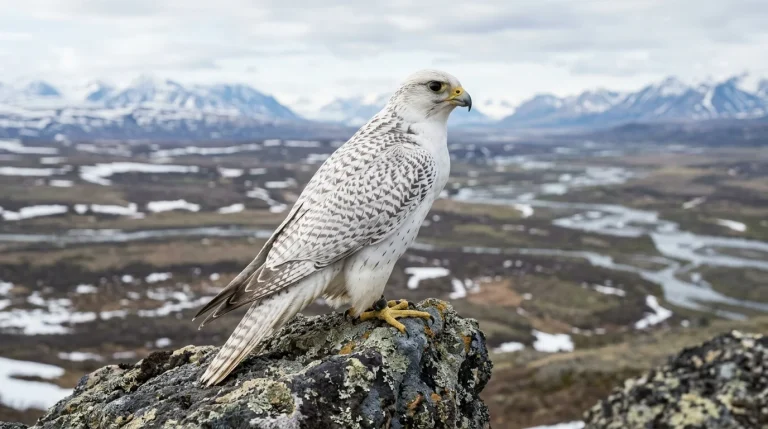
Falcons are fast, agile birds of prey known for their pointed wings, streamlined bodies, keen eyesight, and spectacular aerial hunting skills. North American falcons range from the small American Kestrel to the powerful Gyrfalcon and Peregrine Falcon, one of the fastest animals on Earth. You can find them in grasslands, deserts, forests, mountains, coastal areas, and increasingly in towns and cities.
Explore our falcon guides to learn how to identify these remarkable raptors by their plumage, size, wing shape, flight style, and behavior. Each guide covers key identification features, habitat, range, diet, hunting techniques, nesting, breeding, conservation, and other fascinating facts.


Hawks
Hawks are among North America’s most familiar and widespread birds of prey, ranging from small, agile woodland hunters to large, broad-winged raptors that soar high above open country. Species such as the Red-tailed Hawk, Cooper’s Hawk, and Northern Harrier occur in forests, grasslands, deserts, wetlands, farmland, and even suburban neighborhoods.
Explore our hawk guides to learn how to identify these impressive raptors by their size, plumage, wing and tail shape, flight style, and behavior. Each guide covers key identification features, habitat, range, diet, hunting techniques, nesting, breeding, conservation, and practical tips for distinguishing similar species.
Soaring Hawks (Buteos)
Soaring hawks are generally large, broad-winged raptors built to ride rising air currents and cover large areas with relatively little effort. They typically have broad, rounded wings, sturdy bodies, and fairly broad tails, making them easy to spot circling high above forests, grasslands, deserts, and open countryside. Familiar examples include the Red-tailed Hawk, Red-shouldered Hawk, Swainson’s Hawk, and Ferruginous Hawk.
These hawks often hunt by soaring over open habitat or watching from an elevated perch before swooping down on prey. Their diet commonly includes rodents, rabbits, reptiles, birds, and other small animals. Wing shape, tail pattern, underside markings, and the way the bird holds its wings while soaring are often among the best clues for identifying soaring hawks in the field.


Woodland Hawks (Accipiters)
Woodland hawks are agile, fast-flying raptors adapted for pursuing birds and other prey through forests and wooded areas. Compared with soaring hawks, they generally have shorter, rounded wings and longer tails, giving them exceptional maneuverability as they weave between trees and vegetation. North America’s best-known woodland hawks include the Sharp-shinned Hawk, Cooper’s Hawk, and American Goshawk.
Rather than spending long periods soaring over open country, woodland hawks often hunt from concealed perches or make sudden, rapid pursuits through trees and across clearings. Their long tails act like rudders during tight turns, while powerful bursts of wingbeats provide quick acceleration. Size, tail shape, head proportions, plumage, and flight pattern are especially useful for distinguishing these similar-looking hawks.


Osprey
The Osprey is a distinctive fish-eating raptor found around lakes, rivers, reservoirs, wetlands, and coastlines across much of North America. Easily recognized by its white head, bold dark eye stripe, long angled wings, and dark patches at the wrists, the Osprey is superbly adapted for catching fish. It hunts by hovering or circling over water before plunging feet-first to seize fish with its powerful talons.
Although the Osprey is sometimes casually called a “fish hawk,” it is neither a true hawk nor an eagle. It belongs to its own family, Pandionidae, and is the only living species in that family. Its specialized feet, reversible outer toes, gripping pads, and long curved talons help it capture and carry slippery prey, making the Osprey one of North America’s most specialized and recognizable birds of prey.

Harriers
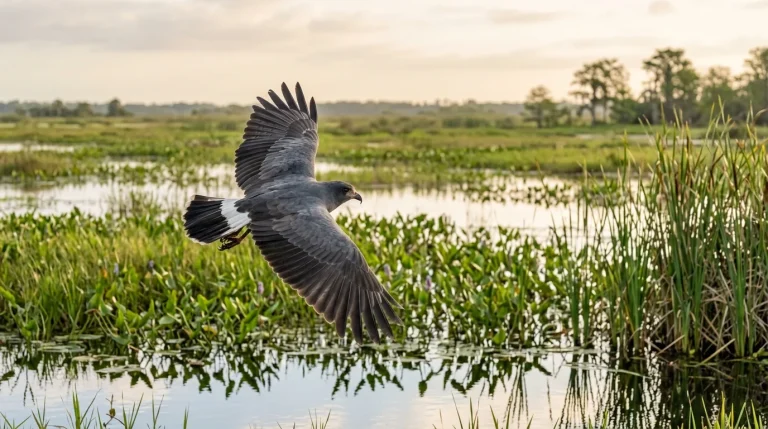
Harriers are slender, long-winged raptors known for flying low over open country while searching for prey. North America is home to the Northern Harrier, a distinctive bird of prey commonly found over marshes, grasslands, fields, and other open habitats. Its long wings, long tail, prominent white rump patch, and characteristic low, buoyant flight make it relatively easy to recognize.
Unlike most other daytime raptors, the Northern Harrier has an owl-like facial disk that helps direct sound toward its ears, allowing it to use both sight and hearing while hunting. Harriers typically glide and weave just above vegetation before dropping suddenly onto small mammals and birds. Males and females also look noticeably different: adult males are primarily gray, and adult females are mostly brown.

Kites
Kites are graceful, agile birds of prey known for their long wings, buoyant flight, and remarkable ability to maneuver through the air. North American species such as the Mississippi Kite, Swallow-tailed Kite, and White-tailed Kite can often be seen soaring over forests, wetlands, grasslands, and open countryside while searching for insects, small mammals, reptiles, and other prey.
Explore our kite guides to learn how to identify these distinctive raptors by their plumage, wing and tail shape, flight style, and behavior. Each guide covers key identification features, habitat, range, migration, diet, hunting techniques, nesting, breeding, conservation, and tips for distinguishing similar species.



Vultures & Condors
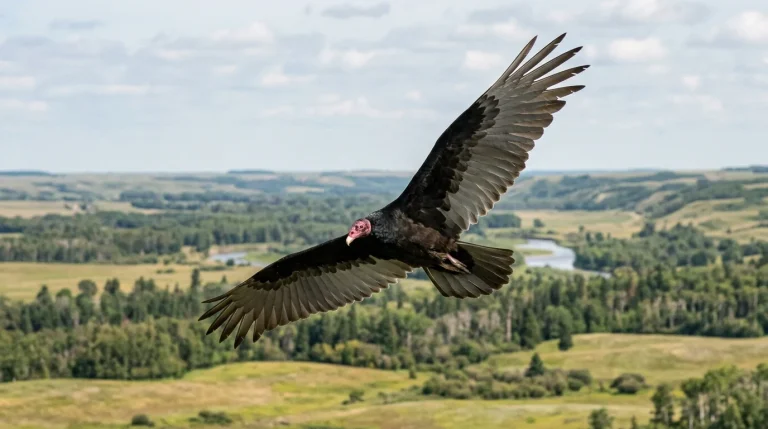
Vultures are large soaring raptors that play an essential role in nature by feeding primarily on carrion and helping remove dead animals from the environment. North America’s Turkey Vulture, Black Vulture, and California Condor are superb soaring birds, using broad wings and rising air currents to travel long distances while searching for food.
Explore our vulture guides to learn how to identify these distinctive birds by their size, plumage, wing shape, flight style, and behavior. Each guide covers key identification features, habitat, range, diet, feeding behavior, nesting, breeding, conservation, and practical tips for distinguishing vultures from eagles, hawks, and other soaring birds.