Golden Eagle Guide
Keep Track of What You See
Create a free Wild Things Guide membership to record this Golden Eagle in My Sightings and build your personal wildlife list.
Join to Add This SightingThe Golden Eagle is one of the most powerful and impressive raptors in the world. For birdwatchers, photographers, hikers, and anyone who loves wild landscapes, seeing a Golden Eagle soaring over open country is an unforgettable experience. Unlike the Bald Eagle, which is closely associated with lakes, rivers, and coastlines, the Golden Eagle inhabits mountains, cliffs, grasslands, deserts, and remote open terrain.
Spotting a Golden Eagle can be a highlight of any wildlife observation.
Golden Eagles are often seen in pairs or alone, and their majestic flight is a sight to behold.
This guide introduces the Golden Eagle to the general public while offering practical field tips for people who want to identify, observe, and photograph this remarkable bird responsibly. You will learn what Golden Eagles look like, where to find them, how they hunt, how to distinguish them from similar raptors, and how to enjoy sightings without disturbing the birds or their habitats.
The Golden Eagle’s remarkable vision allows it to spot prey from great distances.
Many birdwatchers seek to capture images of the Golden Eagle due to its striking appearance.
With a wingspan that can exceed seven feet, the Golden Eagle is a breathtaking sight in flight.

When you see a Golden Eagle, it often means you are in an area rich with wildlife.
What Is a Golden Eagle?
Golden Eagles can often be seen soaring high above the landscape.
Unlike other raptors, the Golden Eagle has a unique hunting style that sets it apart.
A Golden Eagle will often hunt from a high perch before diving down to catch its prey.
When observing a Golden Eagle, you may notice its impressive wingspan and powerful flight.
The Golden Eagle (Aquila chrysaetos) is a large bird of prey found across parts of North America, Europe, Asia, and North Africa. In North America, it is most often found in the western United States, Canada, Alaska, and other open areas with rugged terrain. It is a true eagle, built for speed, strength, and hunting in wide landscapes.
Golden Eagles play an important role in their ecosystems as top predators.
The name comes from the golden-brown feathers on the back of the head and neck, called the nape. In good light, these feathers can glow warmly against the bird’s darker brown body. Golden Eagles are not as boldly patterned as adult Bald Eagles, but their size, shape, and commanding flight style make them one of the most thrilling raptors to watch.
How to Identify a Golden Eagle
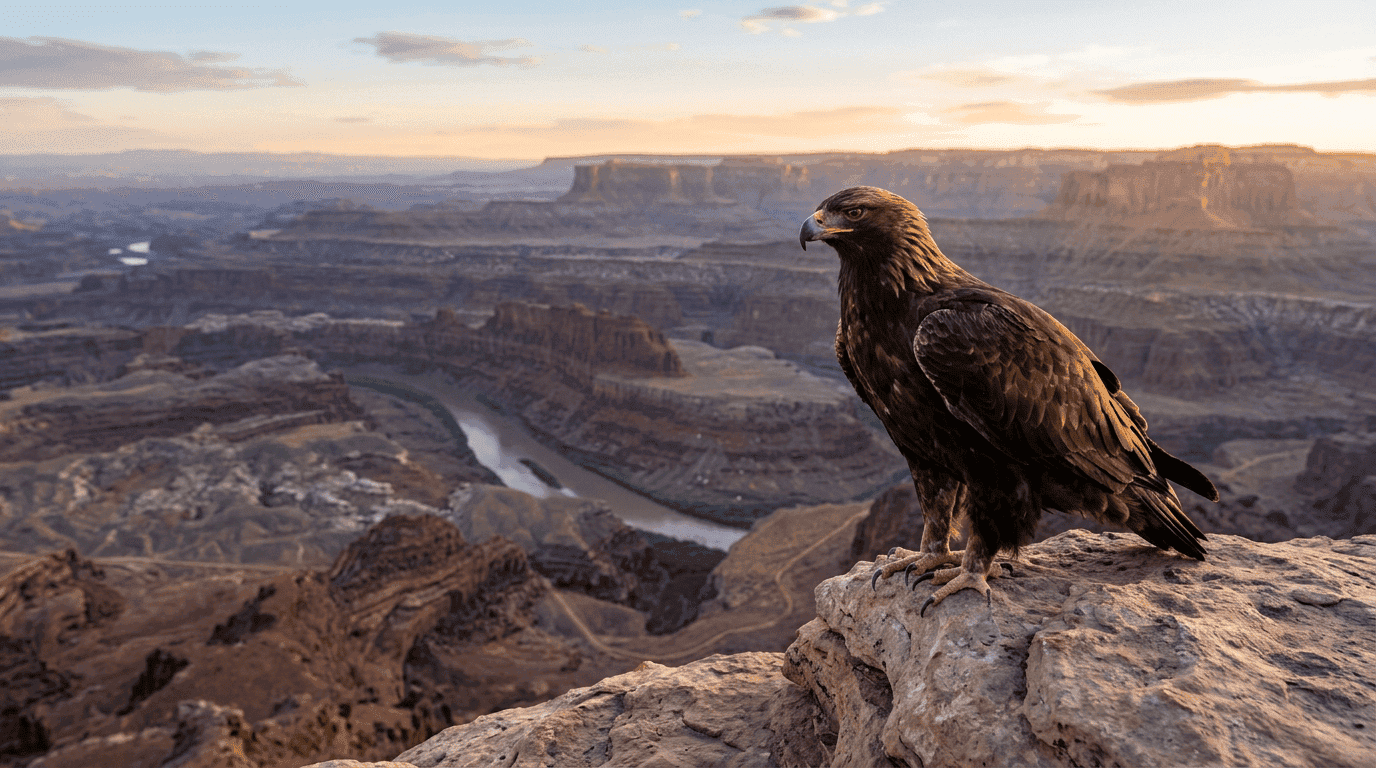
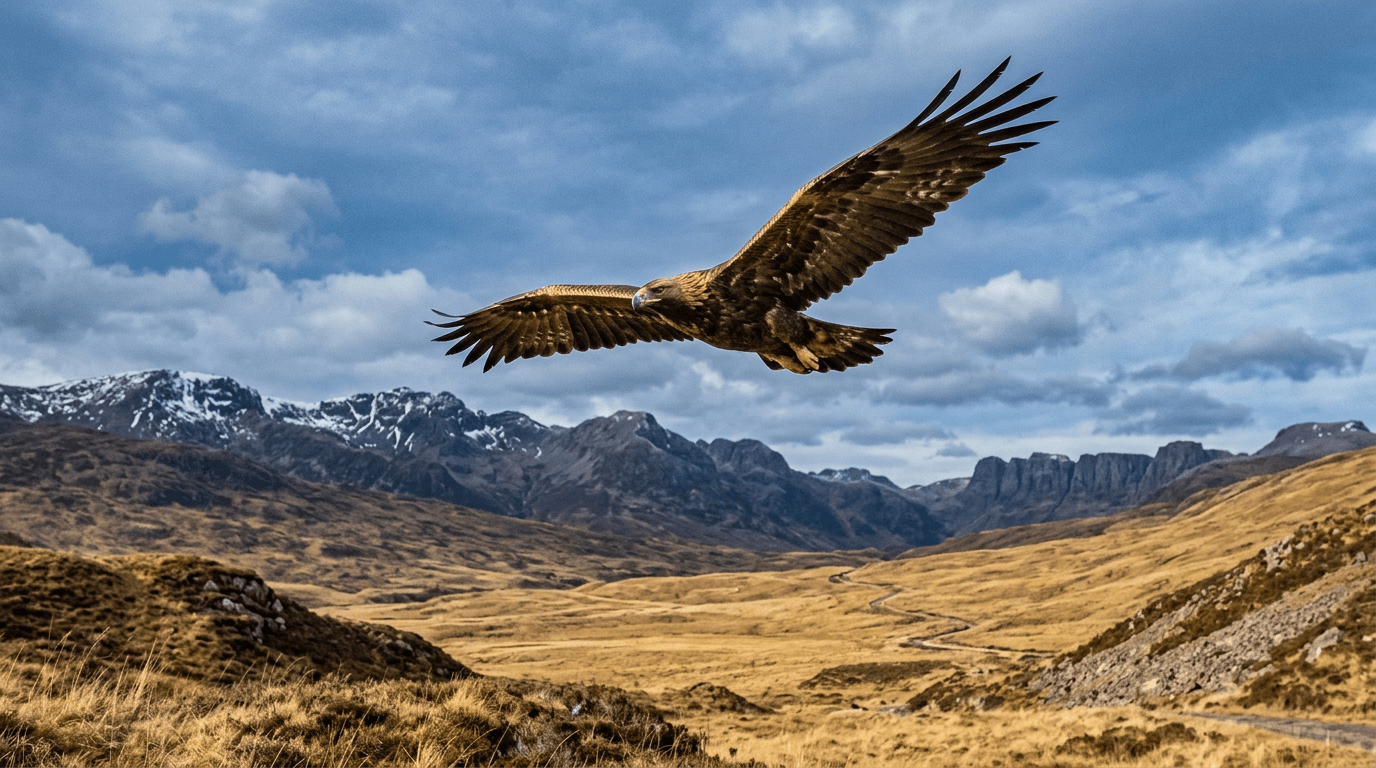
Golden Eagles are large, dark brown raptors with long, broad wings and a relatively small head compared with their overall body size. Adults show a rich golden wash on the nape, dark flight feathers, and a strong, hooked bill. They often soar with their wings held in a slight upward V, though posture can change with wind and flight conditions.
- Size: Very large raptor, usually larger and heavier-looking than most hawks.
- Color: Mostly dark brown with golden tones on the back of the head and neck.
- Wings: Long and broad, with a powerful, steady shape in flight.
- Head profile: Smaller-looking than a Bald Eagle’s, with a strong but less massive bill.
- Habitat clue: Frequently seen in open mountains, canyons, cliffs, grasslands, shrublands, and deserts.
Juvenile Golden Eagle Identification
Wildlife enthusiasts are often captivated by the majestic presence of the Golden Eagle.
Young Golden Eagles can be especially striking. Juveniles often show white patches near the base of the tail and white areas in the wings. These markings can be visible from a long distance and may help separate them from adults. As the bird matures, these white patches become less obvious and eventually fade or disappear.
The flight patterns of the Golden Eagle can vary based on its surroundings.
Golden Eagles are often found in regions that provide ample hunting opportunities.
Many people travel great distances to observe the Golden Eagle in its natural habitat.
Understanding the behavior of the Golden Eagle can enhance your birdwatching experience.
Golden Eagles typically mate for life, returning to the same nesting sites each year.
Because young Golden Eagles can look different from adults, it is helpful to study shape as much as color. A juvenile still has the long wings, powerful build, and open-country habits of the species. Watch how the bird moves through the air: Golden Eagles often combine soaring, gliding, and strong wingbeats with control and purpose.
Watching a Golden Eagle hunt is a thrilling experience for any wildlife lover.
Golden Eagle vs. Bald Eagle
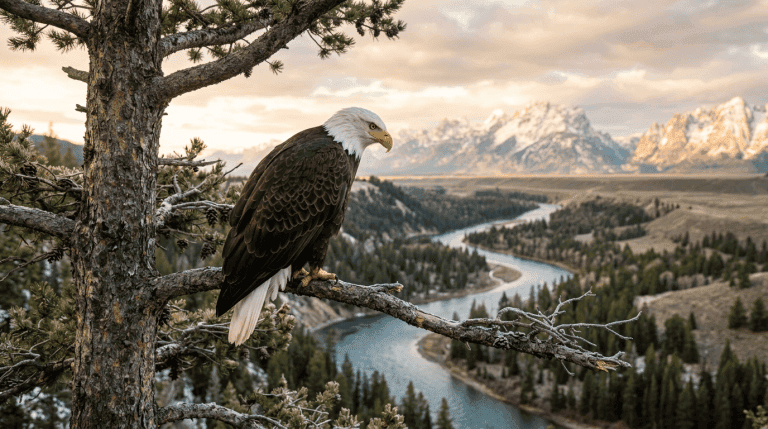
Golden Eagles and Bald Eagles can overlap in some regions, and immature Bald Eagles are sometimes mistaken for Golden Eagles. Adult Bald Eagles are easy to distinguish because they have a white head and tail, a dark body, and a large yellow bill. The challenge is with younger Bald Eagles, which are brown and mottled before reaching adult plumage.
Some conservation efforts are focused on protecting the habitats of Golden Eagles.
- Habitat: Bald Eagles are usually near water; Golden Eagles are more often in open uplands, mountains, cliffs, and grasslands.
- Head and bill: Bald Eagles look heavy-headed with a large bill; Golden Eagles often look smaller-headed and more streamlined.
- Flight posture: Golden Eagles may soar with a slight dihedral, or raised wing angle; Bald Eagles often soar with broad wings held flatter.
- Plumage: Adult Golden Eagles are brown with a golden nape; adult Bald Eagles have the famous white head and tail.
Where Golden Eagles Live
Golden Eagles favor wide, open landscapes where they can hunt efficiently and use cliffs, ledges, or large trees to nest and perch. In North America, they are most common in the West, including mountain ranges, high desert, sagebrush country, open foothills, plateaus, and grasslands. They may also occur in parts of Alaska and Canada and can be seen during migration in some eastern regions.
Their habitat often has a mix of open hunting ground and elevated perches. Cliffs, ridgelines, rocky outcrops, and isolated trees provide places to rest, scan, and nest. Because they require large territories and suitable prey, they are usually less common than smaller raptors and may require patience to find.
What Golden Eagles Eat
Golden Eagles are skilled hunters. Their diet varies by region, but it often includes rabbits, hares, ground squirrels, prairie dogs, marmots, birds, reptiles, and other medium-sized prey. They also scavenge carrion when available, especially in winter or harsh conditions.
Their hunting strategy depends on terrain and prey. A Golden Eagle may soar high while scanning below, perch on a ridge and watch patiently, or fly low across slopes and grasslands to surprise prey. Their speed, strength, and long talons make them formidable predators in open country.

Behavior to Watch For
Golden Eagles spend much of their time soaring, gliding, and scanning. On windy days, they may use ridges and thermals to travel with little effort. A distant eagle circling over a canyon or drifting along a mountainside may be searching for prey or moving between territories.
Perched birds can be hard to spot because their brown plumage blends into rocks, soil, and dry vegetation. Scan prominent points such as cliff ledges, boulders, dead trees, and ridge tops. If smaller birds or ravens are harassing a large raptor, take a closer look; other birds sometimes mob Golden Eagles.
Nesting and Breeding
They often nest on cliffs, ledges, or large trees, depending on what is available. Their nests are large platforms of sticks, lined with softer materials. A pair may use the same nesting territory for many years and maintain more than one nest within it.
Nesting eagles are sensitive to disturbance, so birdwatchers and photographers should use extreme care around potential nest sites. Stay far away, use optics, and follow seasonal closures or local guidelines. If an eagle repeatedly circles, calls, leaves the nest, or appears agitated, move back immediately.
Best Times to See Golden Eagles
The best time to look for them depends on your region. In many western areas, they may be present year-round. In migration corridors, spring and fall can bring sightings as birds move along ridges and open landscapes. Winter can also be productive in areas where eagles concentrate near carrion, open hunting grounds, or lower-elevation valleys.
- Morning: Good for perched birds and early hunting activity.
- Midday: Thermals may encourage soaring, especially in open country.
- Late afternoon: Warm light improves photography and may reveal birds moving to roosts.
- Migration seasons: Hawk watches and ridgelines can be excellent places to scan.
Birdwatching Tips for Golden Eagles
Finding Golden Eagles often requires scanning big spaces. Bring binoculars, and if possible, a spotting scope. Choose viewpoints that overlook open valleys, cliffs, ridgelines, or broad grasslands. Instead of constantly walking, stop often and scan slowly. Large raptors can appear as tiny shapes in a huge sky.
- Look for soaring birds along ridgelines, cliffs, and canyon edges.
- Scan rock outcrops and isolated trees for perched eagles.
- Watch for ravens, crows, and other birds that may mob a large raptor.
- Use habitat as a clue: open uplands are more promising than dense forest or urban areas.
- Be patient; Golden Eagles may cover huge territories and appear only briefly.
Photography Tips for Golden Eagles
Golden Eagle photography is challenging because the birds are often distant, wary, and found in wide landscapes. A long lens helps, but fieldcraft matters as much. Use natural cover, stay low when appropriate, and avoid sudden movement. Never approach a nest or attempt to flush an eagle for a flight shot.
For flight photography, use a fast shutter speed, continuous autofocus, and burst mode. Golden Eagles are dark birds so that exposure can be tricky against bright skies. Check your highlights and shadows, and consider adding exposure compensation if the bird appears too dark. For perched birds, include habitat in the frame: cliffs, mountains, and grasslands help tell the species’ story.
Responsible Golden Eagle Viewing
Golden Eagles deserve space. They are sensitive to disturbance, particularly around nests and feeding areas. Responsible viewing means observing from a distance, staying on established roads or trails where required, respecting private land, and following all closures. Do not bait eagles, play calls, or pressure birds to move for a better photo.
A good rule is simple: if your presence changes the eagle’s behavior, you are too close. The best sightings happen when the bird continues to soar, hunt, perch, or rest naturally while you watch quietly from afar.
Conservation Notes
Golden Eagles are widespread globally, but local populations face challenges. Threats can include habitat loss, disturbance near nests, collisions, electrocution on power infrastructure, lead poisoning from scavenged carcasses, and reductions in prey populations. Conservation efforts that protect open landscapes, reduce hazards, and maintain healthy prey communities benefit Golden Eagles and many other wildlife species.
Birdwatchers and photographers can help by reporting sightings to citizen science platforms, supporting habitat protection, following ethical wildlife photography practices, and sharing accurate raptor information.
Frequently Asked Questions About Golden Eagles
Are Golden Eagles bigger than Bald Eagles?
They are similar in overall size, though proportions and weight vary by sex and region. Females are typically larger than males in both species.
Where is the best place to see a Golden Eagle?
Look in open mountains, canyons, grasslands, deserts, and high plateaus, especially where cliffs, ridges, and prey-rich open terrain occur.
Do Golden Eagles eat fish?
They may occasionally take fish or scavenge near water, but they are not primarily fish-eaters. Mammals such as rabbits, hares, and ground squirrels are more typical prey.
How can I tell a juvenile Golden Eagle from an immature Bald Eagle?
Use a combination of habitat, shape, and plumage. Golden Eagles are more tied to open uplands and often look smaller-headed and more streamlined. Juveniles may show white in the wings and tail. Immature Bald Eagles often appear bulkier-headed and are more often near water.
Final Thoughts
The Golden Eagle is a symbol of wild open country. For birdwatchers, it offers a rewarding identification challenge and a glimpse into the life of a top predator. For photographers, it demands patience, distance, strong field ethics, and respect for remote landscapes. Whether you see one perched on a cliff or soaring high above a canyon, a Golden Eagle sighting reminds you how much drama and beauty still exists in wild places.