Bald Eagle Guide
Keep Track of What You See
Create a free Wild Things Guide membership to record this Bald Eagle in My Sightings and build your personal wildlife list.
Join to Add This SightingThe Bald Eagle is one of North America’s most recognizable birds of prey and one of the most exciting species to encounter in the field. With its white head, dark body, broad wings, and powerful presence, the adult Bald Eagle is unmistakable. Yet for birdwatchers and photographers, there is much more to learn than simply spotting the classic white-headed adult. Juvenile Bald Eagles can look very different, eagles behave differently by season, and the best viewing locations often depend on water, food, wind, and patience.
This Bald Eagle guide is written for the general public, including beginner birdwatchers, wildlife photographers, hikers, paddlers, and anyone who wants to observe these birds responsibly. Use it to improve your identification skills, understand eagle behavior, choose better viewing locations, and capture stronger photos while keeping a respectful distance.
What Is a Bald Eagle?
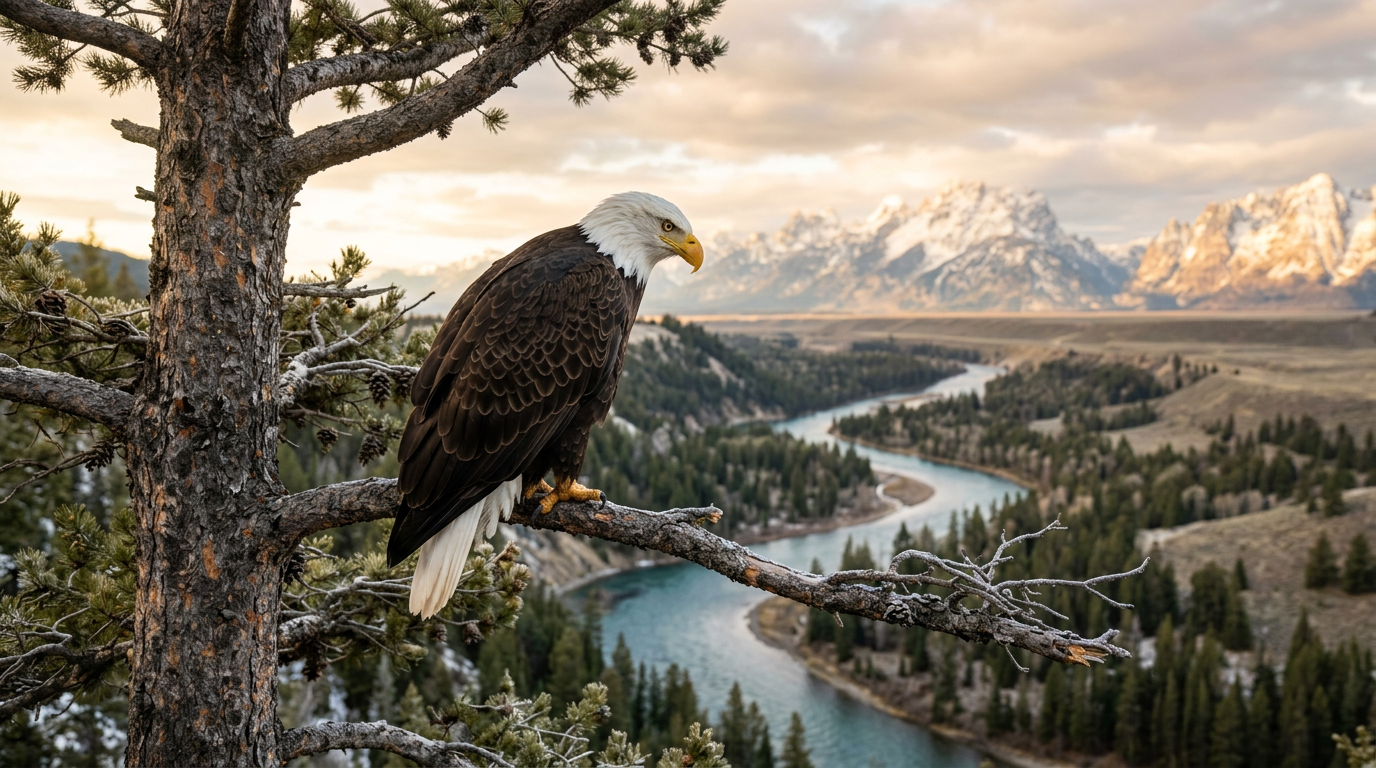
The Bald Eagle (Haliaeetus leucocephalus) is a large raptor native to North America. Despite the name, it is not bald. The word “bald” comes from an older meaning of the word, referring to a white or pale head. Adults have a bright white head and tail, a dark brown body and wings, yellow feet, and a heavy yellow hooked bill.
Bald Eagles are often associated with wilderness, rivers, lakes, coasts, and large wetlands. They are powerful hunters, skilled scavengers, and opportunistic feeders. Fish make up a major part of their diet, but they also eat waterbirds, small mammals, carrion, and food stolen from other birds when the opportunity arises.
How to Identify a Bald Eagle
Adult Bald Eagles are fairly easy to identify, especially when seen well. Look for a large bird with long, broad wings held flat in flight. The white head and tail contrast strongly with the dark body. The bill is large, deep, and yellow, giving the bird a powerful profile even from a distance.
- Size: Very large raptor with broad wings and a heavy body.
- Adult plumage: White head and tail with dark brown body and wings.
- Bill: Large, hooked, and bright yellow in adults.
- Flight style: Slow, deep wingbeats mixed with soaring on flat wings.
- Habitat clue: Often found near large bodies of water or open landscapes with tall perches.
Juvenile Bald Eagle Identification
Young Bald Eagles are where identification gets more challenging. Juveniles do not have the clean white head and tail of adults. Instead, they are mostly dark brown with uneven white mottling on the body, wings, and tail. Their bill may appear darker than an adult’s, and their overall look can be messy or patchy. It takes about five years for a Bald Eagle to develop full adult plumage.
When identifying a juvenile, focus on size, wing shape, and habitat. A young Bald Eagle is still a very large bird with long, broad wings. If it is soaring near a river, lake, reservoir, or coastline and appears much larger than nearby hawks, Bald Eagle is a strong possibility.
Bald Eagle vs. Golden Eagle
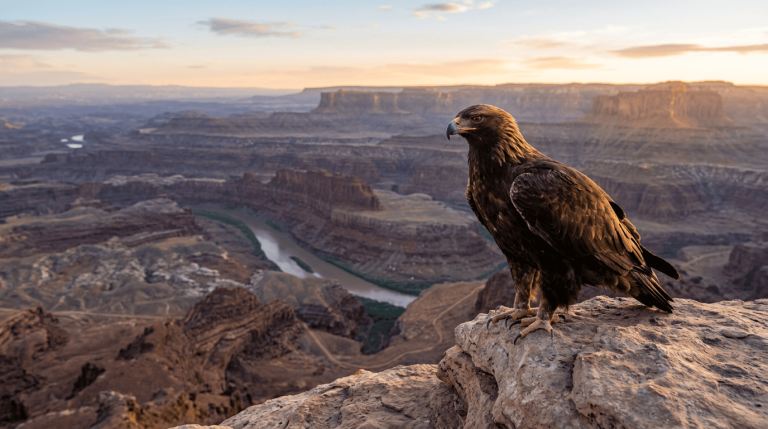
In some areas, Bald Eagles may be confused with Golden Eagles, especially when the Bald Eagle is immature. Golden Eagles are generally more associated with open mountains, cliffs, grasslands, and rugged country, while Bald Eagles are more tied to water. Golden Eagles often show a smaller head, slightly different wing proportions, and golden-brown tones on the nape. Bald Eagles typically look heavier-headed and are more likely to be seen near fish-rich waters or perched in tall trees along shorelines.

Where Bald Eagles Live
Bald Eagles are found across much of North America, from Alaska and Canada through the United States and into northern Mexico. They are especially common where large trees, cliffs, or other high nesting and perching sites occur near reliable food sources.
The best Bald Eagle habitat usually includes water. Rivers, lakes, reservoirs, estuaries, coastal bays, marshes, and large wetlands can all attract eagles. In winter, open water is especially important. When lakes freeze, eagles may concentrate along rivers below dams, near warm-water outflows, or along coastlines where fish and waterbirds remain available.
What Bald Eagles Eat
Fish are the classic Bald Eagle food, and many eagles are excellent at snatching fish from the surface with their talons. However, they are not limited to live fish. Bald Eagles are opportunistic and will feed on carrion, waterfowl, seabirds, rabbits, muskrats, turtles, and other available prey. They may also steal food from ospreys, gulls, or other eagles.
For birdwatchers, feeding activity is often easiest to observe near water with visible fish movement, tidal flats, salmon runs, winter waterfowl concentrations, or areas where carrion is present. Eagles often perch quietly for long periods, watching for a chance to feed.

Behavior to Watch For
Bald Eagles spend a lot of time perched. A bird sitting motionless in a dead tree, on a shoreline snag, or near a nest may be scanning for food, resting, drying its feathers, or guarding territory. In flight, eagles may circle on rising air, travel along shorelines, or make direct flights between perches and feeding areas.
One of the most dramatic behaviors is a fishing attempt. The eagle approaches low over the water, extends its legs forward, opens its talons, and briefly strikes the surface. Not every attempt succeeds, and photographers should be ready for fast action after long periods of waiting. Bald Eagles may also chase other birds, interact with mates, defend nests, or gather in groups where food is abundant.
Nesting and Breeding
Bald Eagles build some of the largest nests of any North American bird. A nest may be reused and expanded year after year, becoming massive over time. Nests are usually placed high in large trees, on cliffs, or occasionally on human-made structures. The pair may return to the same territory annually if the site remains suitable.
During nesting season, it is especially important to give eagles space. Disturbance near an active nest can cause stress and may affect breeding success. Use binoculars, spotting scopes, or long camera lenses rather than approaching a nest. If an eagle changes behavior because of your presence, you are too close.
Best Times to See Bald Eagles
The best time to see Bald Eagles depends on location. In many regions, winter is excellent because eagles gather around open water and food sources. In other places, breeding season offers reliable views of local pairs near established territories, though observers should remain far from nests.
- Morning: Good for active hunting and beautiful light for photography.
- Late afternoon: Excellent warm light and possible movement toward roosting areas.
- Winter: Eagles may concentrate near open water, dams, rivers, and coastlines.
- Migration periods: Some hawk watches and ridgelines record eagle movement.
Birdwatching Tips for Bald Eagles
Start by scanning tall trees, snags, power poles, and shoreline perches near water. Bald Eagles are often easier to find when perched than when flying. Look for a white head shining against dark branches, a bulky silhouette, or a large bird sitting alone with a commanding view.
- Bring binoculars or a spotting scope for distant views.
- Check shorelines, river bends, dams, and lake edges.
- Watch gulls, waterfowl, and osprey activity, which can reveal feeding opportunities.
- Be patient; eagles may perch for long stretches before moving.
- Use field marks beyond the white head, especially for juveniles.
Photography Tips for Bald Eagles
Bald Eagle photography rewards preparation. Because action can happen quickly, set your camera before the moment arrives. For flight, use a fast shutter speed, continuous autofocus, and burst mode. A longer lens helps maintain distance while still filling the frame. For perched birds, pay attention to background, light direction, and eye contact.
Morning and late-day light can add warmth and detail to the white head without harsh glare. If photographing a bright adult against dark trees, watch your exposure so the white head is not overexposed. For flight shots, leave room in the frame in the direction the eagle is moving. For ethical photography, never bait eagles, disturb nests, or pressure birds into flight for a photo.

Responsible Bald Eagle Viewing
Responsible observation protects both birds and people. Bald Eagles are powerful wild animals and should be watched from a respectful distance. Stay on public trails and viewing areas, follow local rules, and avoid lingering too close to nests or feeding sites. If an eagle vocalizes repeatedly, flushes from a perch, circles nervously, or stops feeding because of your presence, back away.
Good eagle watching should not change the bird’s behavior. The best encounters happen when the eagle continues its natural routine while you observe quietly from a distance.
Conservation Success Story
The Bald Eagle is one of the great wildlife conservation success stories. Populations declined sharply in the 20th century because of habitat loss, persecution, and pesticides such as DDT. Legal protection, pesticide restrictions, habitat conservation, and public support helped the species recover dramatically in many areas.
Today, Bald Eagles are much more widespread than they were several decades ago, but conservation still matters. Clean waterways, healthy fish populations, protected nesting areas, and reduced disturbance all help keep eagle populations strong.
Frequently Asked Questions About Bald Eagles
Are Bald Eagles really bald?
No. The name refers to the white head of the adult bird, not a lack of feathers.
How long does it take a Bald Eagle to get a white head?
It typically takes about five years for a Bald Eagle to develop full adult plumage with a white head and tail.
Where is the best place to look for Bald Eagles?
Look near large bodies of water, including rivers, lakes, reservoirs, coastlines, and wetlands, especially where tall perches and food are available.
Do Bald Eagles mate for life?
Bald Eagles often maintain long-term pair bonds and may return to the same nesting territory year after year, though pair bonds can change if one bird dies or disappears.
Final Thoughts
Seeing a Bald Eagle in the wild is always memorable. Whether it is perched above a river, soaring over a lake, or dropping toward the water after a fish, this species brings drama and beauty to any outdoor experience. For birdwatchers, the key is learning shape, age, behavior, and habitat. For photographers, success comes from patience, good light, fast reactions, and ethical distance. The more you understand Bald Eagles, the more rewarding every sighting becomes.