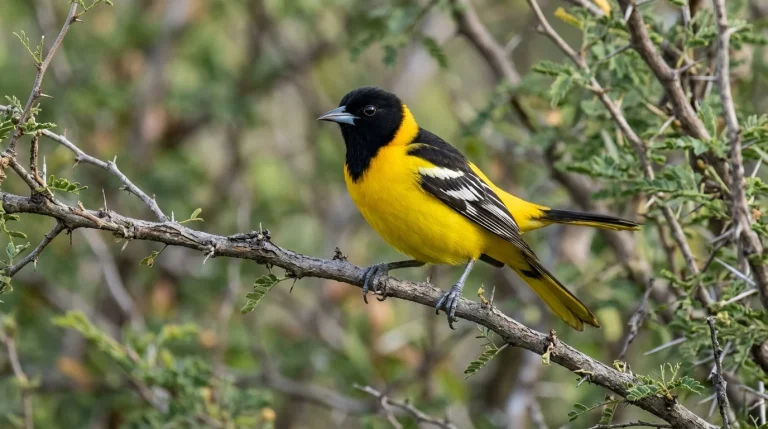
Baltimore Oriole Guide
Keep Track of What You See
Create a free Wild Things Guide membership to record this Baltimore Oriole in My Sightings and build your personal wildlife list.
Join to Add This SightingQuick Facts, Identification, Habitat, Song, and Birdwatching Tips
The Baltimore Oriole is one of the brightest and most eagerly awaited birds of spring in eastern and central North America. With the male’s vivid orange-and-black plumage, the female’s warm golden tones, and the species’ clear, flute-like song, this Oriole brings tropical-looking color to shade trees, parks, orchards, and backyards. For birdwatchers and photographers, Baltimore Orioles are especially exciting because they often arrive just as trees leaf out and flowers bloom.
This guide is written for the general public, birdwatchers, photographers, gardeners, and backyard nature lovers. It uses the same structured format as the recent bird profiles so you can compare species easily across the site.
Quick Facts
- Common name: Baltimore Oriole
- Scientific name: Icterus galbula
- Bird family: Icteridae, the blackbird and Oriole family
- Size: Medium-sized songbird, about 7 to 8.5 inches long
- Diet: Insects, caterpillars, fruit, berries, nectar, and occasional feeder foods
- Best places to look: Tall deciduous trees, woodland edges, parks, orchards, riversides, and backyards with fruit or nectar
- Best field clue: Bright orange-and-black male, warm yellow-orange female, pointed bill, and rich whistled song
Identification
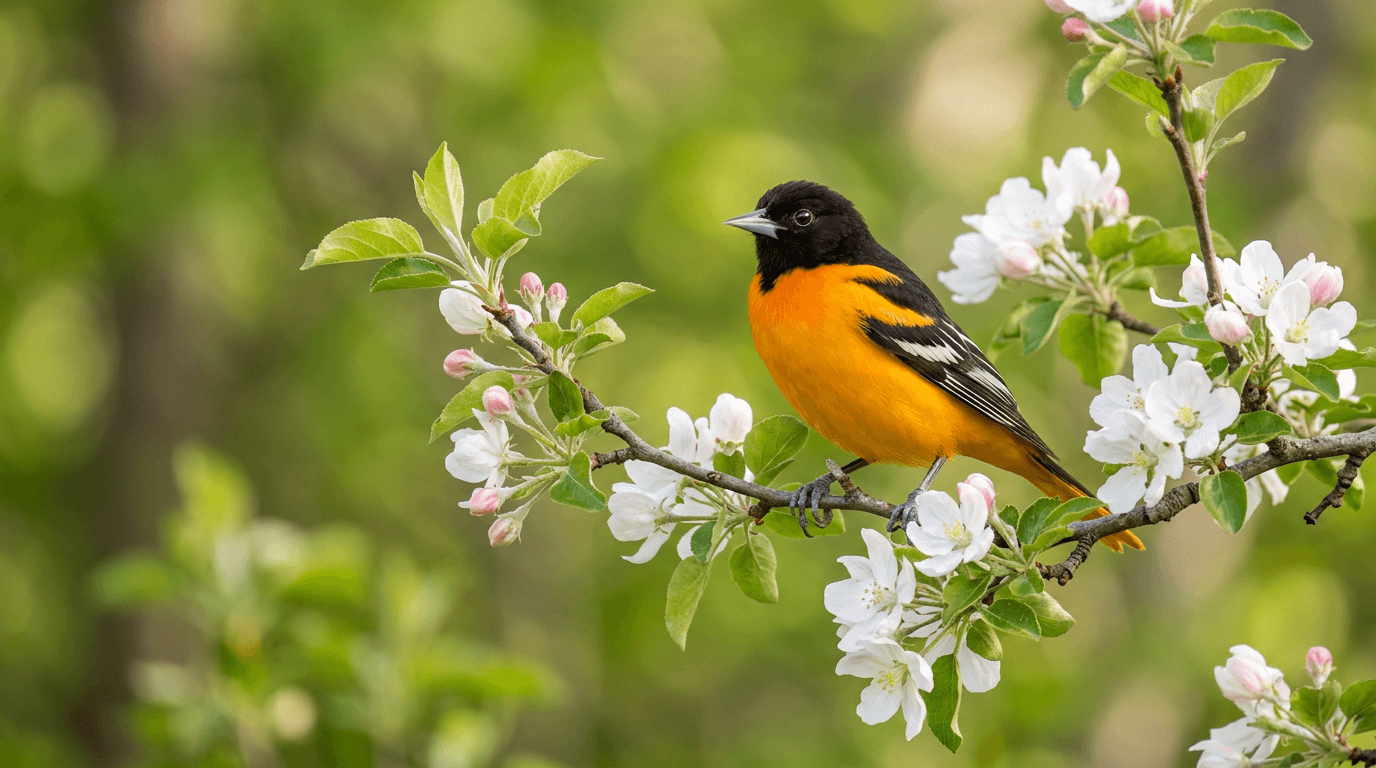
Baltimore Orioles are slender songbirds with long bodies, pointed bills, and relatively long tails. Adult males are unmistakable in good light: flame-orange below and on the shoulders, with a black head, back, and wings marked with white bars. Their pointed bill is useful for probing flowers, fruit, and leaves for food.
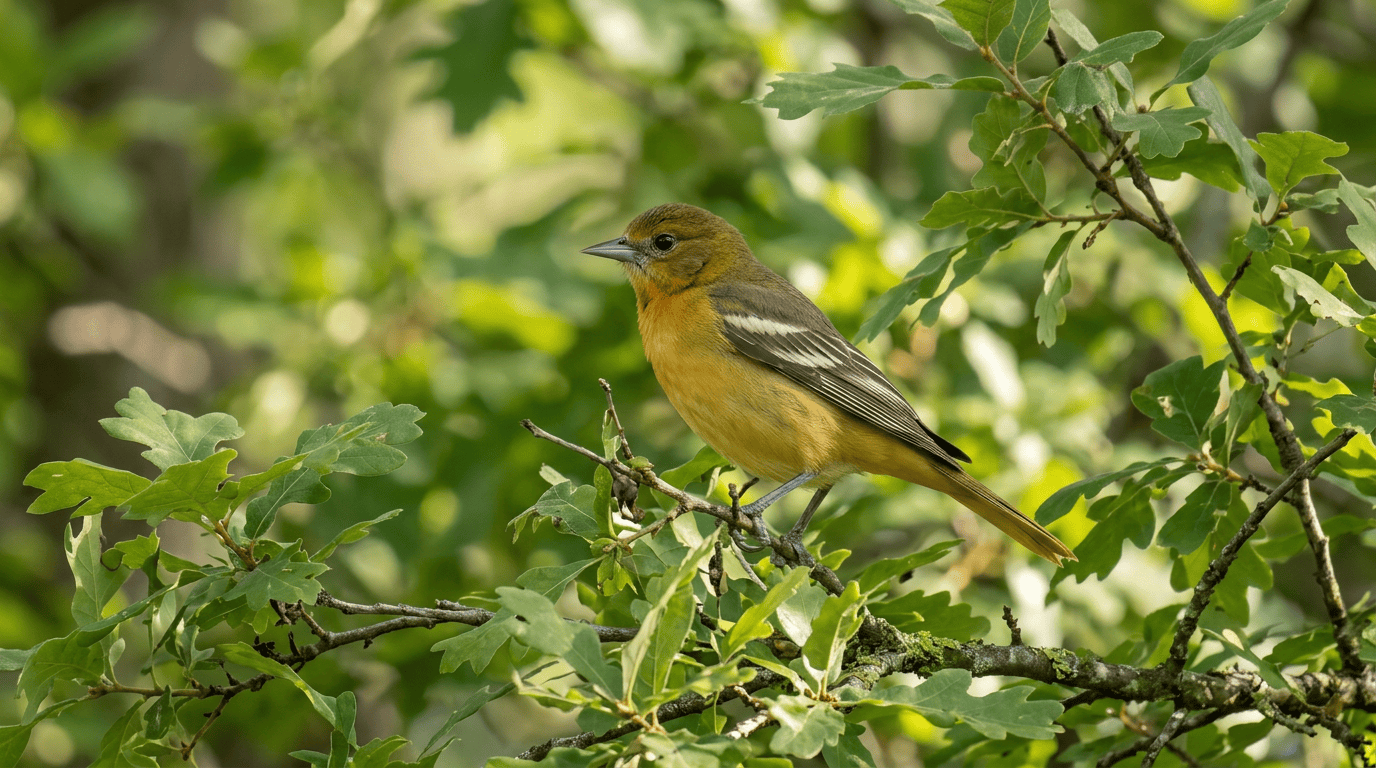
Females and young birds are less boldly colored but still distinctive. They are usually yellow-orange to warm tan below, with olive-brown or grayish upperparts and pale wing bars. Orioles often stay high in the canopy, so listen for their song and scan outer branches, treetops, and flowering or fruiting trees.
Male vs. Female
Male and female Baltimore Orioles look different, especially in breeding season. Adult males have the striking orange-and-black pattern that makes the species famous. The orange can range from bright golden-orange to deep fiery orange depending on light, age, and plumage condition.
Females are more subtle, usually showing yellow-orange underparts, brownish or olive upperparts, and whitish wing bars. Some older females can become brighter and more male-like, but most remain softer in contrast. Female plumage blends well with leaves and branches, which is helpful during nesting.
Juveniles
Juvenile Baltimore Orioles resemble females, with dull yellowish, tan, or olive tones and less contrast than adult males. Young males do not immediately show the full bright orange-and-black adult pattern. They may appear patchy or muted as they mature.
Late summer is a good time to watch family groups moving through leafy trees. Juveniles may beg from adults, follow parents through the canopy, or visit fruit and nectar feeders before migration. Their pointed bills, slim bodies, and warm colors help separate them from many other young songbirds.
Range and Distribution
Baltimore Orioles breed across much of eastern and central North America, including southern Canada, the eastern United States, and parts of the Great Plains. They winter mainly in Mexico, Central America, northern South America, and the Caribbean region.
In much of their breeding range, they are spring and summer visitors. Their arrival often coincides with leaf-out, flowering trees, and the return of abundant insects. In the fall, they migrate south, often becoming less noticeable as they leave breeding territories, move through fruiting trees, and stop in stopover habitats.
Habitat
Baltimore Orioles prefer open deciduous woodlands, forest edges, riverside trees, parks, orchards, shade trees, and mature trees in suburban neighborhoods. They are often associated with elms, maples, cottonwoods, sycamores, oaks, and other tall broadleaf trees.
They usually forage and nest high in the canopy, especially on outer branches. This can make them tricky to see even when they are nearby. Good habitat includes tall trees for nesting, insects for feeding young, and flowering or fruiting plants for nectar and fruit.
Diet
Baltimore Orioles eat insects, caterpillars, beetles, grasshoppers, spiders, fruit, berries, nectar, and sometimes flower parts. During the breeding season, insects are especially important because nestlings need protein. Orioles are valuable natural pest hunters in trees and orchards, where they search leaves and branches for caterpillars and other prey.
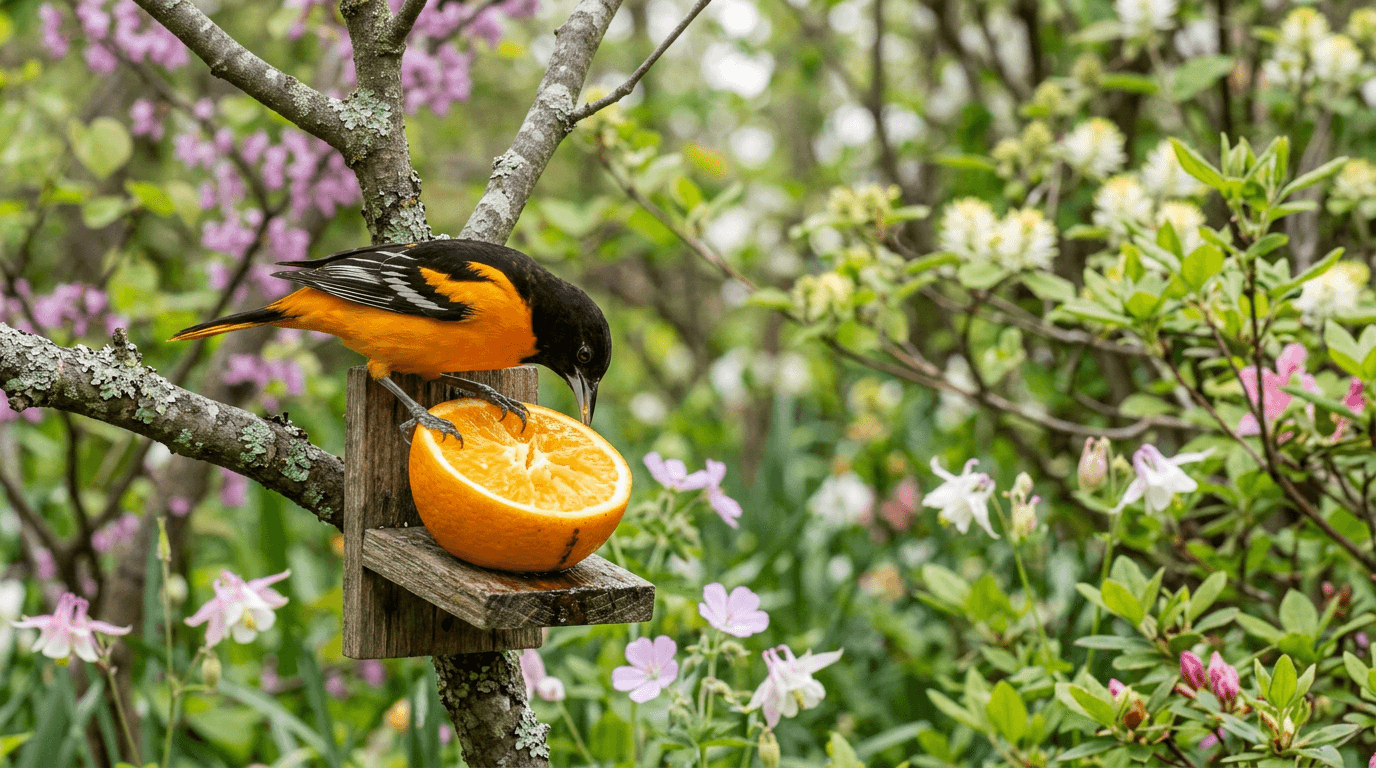
They are also famous for visiting backyard offerings such as orange halves, grape jelly, nectar feeders, and ripe fruit. These foods are most attractive during spring migration and early breeding season. Natural fruiting plants are also important, especially during migration when orioles need energy for long-distance travel.
Behavior
Baltimore Orioles are active, agile foragers. They move through leaves and outer branches, probing, gleaning, and hanging briefly to reach insects or fruit. Their slender bodies and pointed bills help them explore flowers and foliage. They may appear shy at first, but once they find a feeder, individuals can become regular visitors.
Males sing from high perches to defend territories and attract mates. Orioles can be territorial around nesting areas and sometimes around food sources. During migration, they may be seen in loose groups or mixed with other songbirds in fruiting trees.
Song and Calls
The Baltimore Oriole’s song is a rich, flute-like series of whistled notes. It often sounds clear, sweet, and slightly variable, with pauses between phrases. Males sing most frequently during spring and early summer, often from treetops or hidden perches in the canopy.
Calls include sharp chatter, short whistles, and scolding notes. A chattering Oriole in a leafy tree may be alarmed by a predator, defending a territory, or interacting with a mate. Learning the song is one of the best ways to find orioles, as they often remain partly hidden among the leaves.
Nesting and Breeding
Baltimore Orioles are famous for their hanging pouch nests. The female weaves a deep, sock-like nest from plant fibers, grasses, bark strips, hair, and other fine materials. The nest is usually suspended from a fork near the end of a high, flexible branch, where it sways safely away from many climbing predators.
A typical clutch contains several pale eggs marked with dark lines or speckles. The female does most of the incubation, while both parents help feed the young after hatching. Because nests are high and easily disturbed by attention, observers should use binoculars and avoid lingering below active nests.

Migration
Baltimore Orioles are migratory. They arrive in many northern breeding areas in spring and depart in late summer or early fall. Their migration timing varies by region, but many backyard birdwatchers notice their first orioles in late April or May.
During migration, orioles rely on fruit, nectar, and insect-rich stopover habitats. Backyards with orange halves, nectar feeders, native trees, and fruiting shrubs may attract passing birds. Keeping feeders clean is especially important in warm weather to prevent spoilage and disease.
Similar Species
Baltimore Orioles can be confused with Orchard Orioles, Bullock’s Orioles, and some tanagers. Male Orchard Orioles are smaller and darker, with a rich chestnut body rather than a bright orange one. Female Orchard Orioles are yellow-green and slimmer-looking. Bullock’s Orioles are western birds with more orange on the face and different wing and head patterns.
Scarlet Tanagers and Summer Tanagers may share bright colors, but they lack the Oriole’s long pointed bill, blackbird-like shape, and bold wing bars. If you see an orange-and-black bird high in a deciduous tree with a pointed bill and whistled song, Baltimore Oriole is a strong possibility in the eastern part of the range.
Interesting Facts
- Baltimore Orioles build hanging pouch nests that resemble woven bags suspended from branches.
- They are named for the orange-and-black colors associated with the Baltimore family crest.
- Orioles may be attracted to orange halves, grape jelly, nectar, and ripe fruit.
- They eat many caterpillars and insects during the breeding season.
- Their bright colors and spring arrival make them a favorite sign of warm weather.
Conservation Status
Baltimore Orioles are still widespread, but local numbers can be influenced by habitat changes, pesticide use, loss of mature trees, collisions, outdoor cats, and challenges on migration and wintering grounds. Because they depend on trees, insects, fruit, and safe nesting sites, healthy landscapes throughout their full annual cycle are important.
Helpful actions include planting native trees and shrubs, reducing insecticide use, keeping cats indoors, preventing window collisions, and maintaining clean feeders. Protecting riparian corridors, parks, orchards, and mature shade trees benefits orioles and many other migratory songbirds.
How to Attract Them
To attract Baltimore Orioles, offer orange halves, small amounts of grape jelly, nectar feeders designed for orioles, and fresh fruit during spring. Place feeders out before orioles arrive in your area so migrating birds can find them. Once trees leaf out, orioles may become harder to see, but they may continue visiting reliable food sources.
Natural habitat is just as important as feeders. Plant native trees and fruiting shrubs, avoid pesticides, and keep mature deciduous trees where orioles can forage and nest. Clean nectar and jelly feeders frequently, especially in warm weather, and avoid offering spoiled or excessive sugary foods.
Frequently Asked Questions
Do Baltimore Orioles migrate?
Yes. Baltimore Orioles breed in eastern and central North America and migrate south for the winter, primarily to Mexico, Central America, northern South America, and the Caribbean.
What do Baltimore Orioles eat?
They eat insects, caterpillars, fruit, berries, nectar, and sometimes feeder foods such as orange halves, grape jelly, and sugar-water nectar.
When should I put out Oriole feeders?
Put feeders out shortly before orioles typically arrive in your region, often in late April or early May in many northern areas. Local timing varies, so watch migration reports and spring weather patterns.
How can photographers get better photos of Baltimore Orioles?
Use soft morning light, natural perches, and fruit or nectar setups placed near shrubs or trees. Keep feeders clean, avoid disturbing nests, and be patient because orioles often move high in the canopy.