Blue-winged Teal Duck Guide
Keep Track of What You See
Create a free Wild Things Guide membership to record this Blue-winged Teal Duck in My Sightings and build your personal wildlife list.
Join to Add This SightingIdentification, Habitat, Diet, Migration, and Birdwatching Tips
Blue-winged Teal ducks are common across the continent, but they can be surprisingly tricky to pin down. The males are unmistakable in breeding plumage with that bold white crescent on the face. But for much of the year, they molt into drab brown feathers that make them look almost identical to the females. Add in the fact that they migrate earlier than most ducks in fall and later in spring, and your window to spot them can feel pretty narrow.
This guide covers everything you need to know about the Blue-winged Teal Duck. You’ll learn how to identify them in every plumage, where and when to find them, what they eat, how they nest, and where their population stands today.
Identifying Blue-winged Teal: Physical Characteristics and Field Marks
Male Blue-winged Teal Appearance
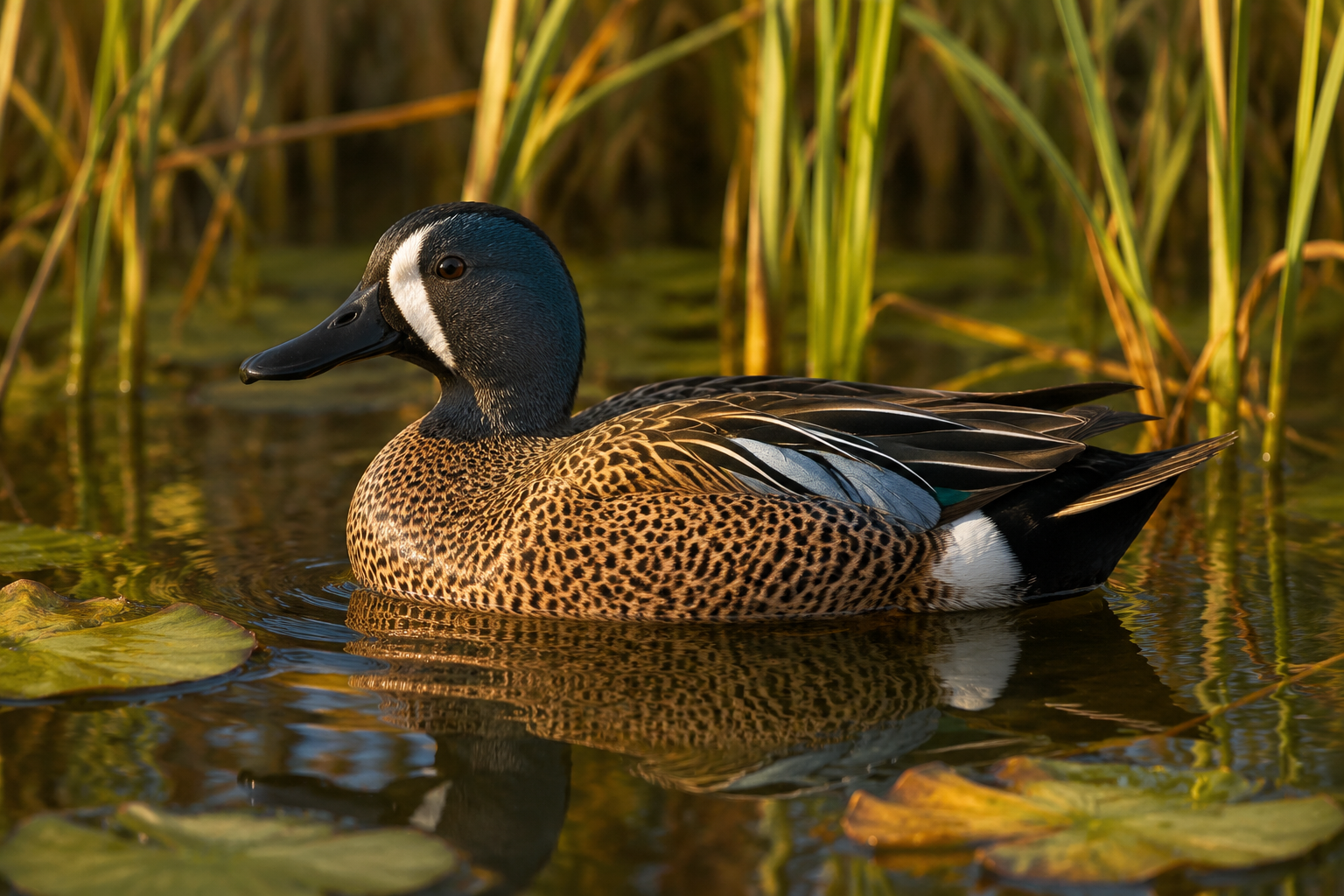
The male Blue-winged Teal Duck stands out. During breeding season, a bold white crescent marks his face, curving just in front of the eye like a bright comma on slate-blue canvas. This facial crescent is your first clue when identifying these handsome ducks in spring and early summer.
The male’s head glows with a distinctive blue-gray coloring that looks almost powdery in good light. His bill stays small and dark black, proportionally tiny compared to other duck species. When he stretches or takes flight, those famous powder-blue shoulder patches flash brilliantly, the feature that gives the species its common name. According to All About Birds, these shoulder patches catch every birdwatcher’s attention.
Look at the body, and you’ll see heavy spotting in various shades of brown throughout, creating a speckled appearance from the chest to the vent. A white flank patch appears near the rear during breeding plumage, standing out against the darker body feathers like a bright badge. But here’s where things get tricky. Late summer brings eclipse plumage, when males molt into drab feathers that make them look surprisingly similar to females. Those brilliant facial crescents disappear, and the blue-gray heads fade to mottled brown.
Female and Juvenile Identification Features
Female Blue-winged Teal Ducks wear subtler outfits year-round. Mottled brown feathers cover their entire bodies, offering excellent camouflage in wetland vegetation. Their facial markings run lighter brown with a distinctive dark line through the eye, creating a subtle but recognizable pattern once you know what to look for.
The pale blue wing patches remain visible during flight, as in males, though they appear less vibrant and slightly duller. The Audubon field guide notes these wing patches as the most reliable female identification marker.
Her bill is small and spatulate (slightly widened at the tip). The upper mandible stays dark while the lower shows lighter coloring, creating a two-toned appearance. Juveniles closely resemble adult females for their first months, maintaining this plumage until their first winter.
Key Wing and Flight Characteristics
The wing pattern tells the complete story. Those powder-blue to chalky-blue upperwing coverts become most visible when the birds take flight or preen on the water’s edge. The green speculum running along the secondary wing feathers adds another identifying layer, with clean white borders on both edges creating a distinctive triple-stripe effect.
Watch them fly, and you’ll notice fast, agile movements with rapid wingbeats. Small dabbling ducks naturally move this way. The U.S. Fish and Wildlife Service describes their characteristic flight style as energetic and swift. Listen carefully because their wings produce a distinctive whistling sound during takeoff and sustained flight.
Size and Body Proportions
Blue-winged Teal Ducks rank among North America’s smallest ducks. They measure just 14 to 16 inches in length with wingspans reaching 23 to 31 inches. Weight ranges from a mere 10 to 18 ounces, making them feel surprisingly light if you ever handle one during banding operations.
Their bodies appear compact and neat. The neck is relatively short compared to that of larger waterfowl species like mallards or pintails. Ducks Unlimited points out that their tails appear pointed when swimming, a helpful feature for distinguishing them from similar species at a distance.
Distinguishing from Similar Species
Several duck species can confuse even experienced birdwatchers. Male Cinnamon Teal sport rich cinnamon-red bodies that look completely different, but their females appear nearly identical to Blue-winged females.
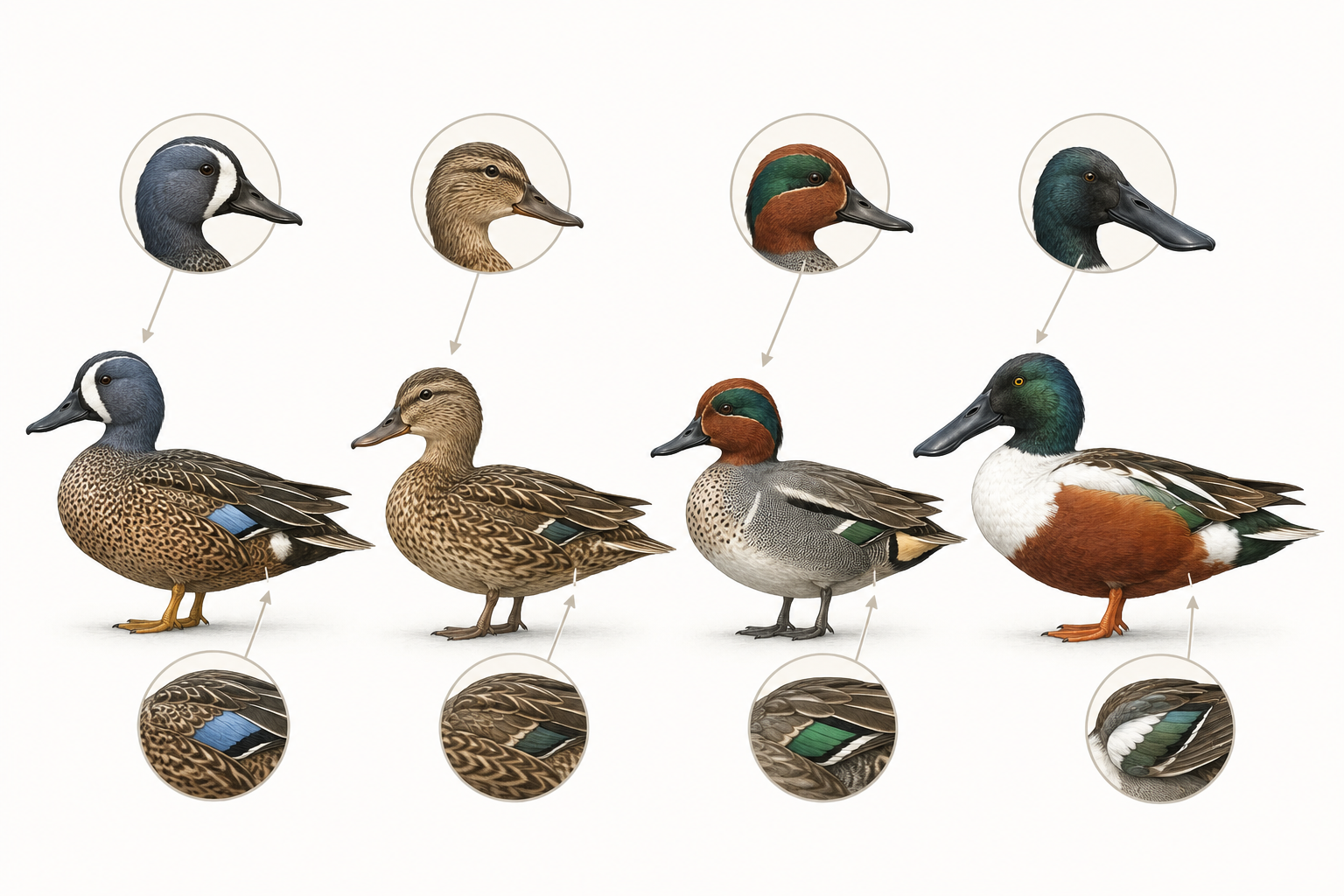 You’ll need to check wing patterns and bill shapes carefully.
Green-winged Teal lack those telltale blue wing patches entirely. They show green speculums with buff-colored borders instead of white. Northern Shovelers carry much larger, obviously spatulate bills that look almost comical, plus their wing patterns differ significantly.
For female identification, focus on bill size first. The Sibley Guide recommends checking facial patterns and wing coloration to separate Blue-winged from their close relatives, especially when dealing with female Cinnamon Teal in overlapping ranges.
Habitat, Range, and Where to Find Blue-winged Teal
Preferred Wetland Habitats
Blue-winged Teal Ducks are picky about where they hang out. You’ll almost always find them in shallow freshwater marshes where the water barely covers their webbed feet. They love those classic prairie potholes scattered across the Great Plains, along with seasonal wetlands that fill up after spring rains and snowmelt. The sweet spot? Water that’s only 2 to 12 inches deep.
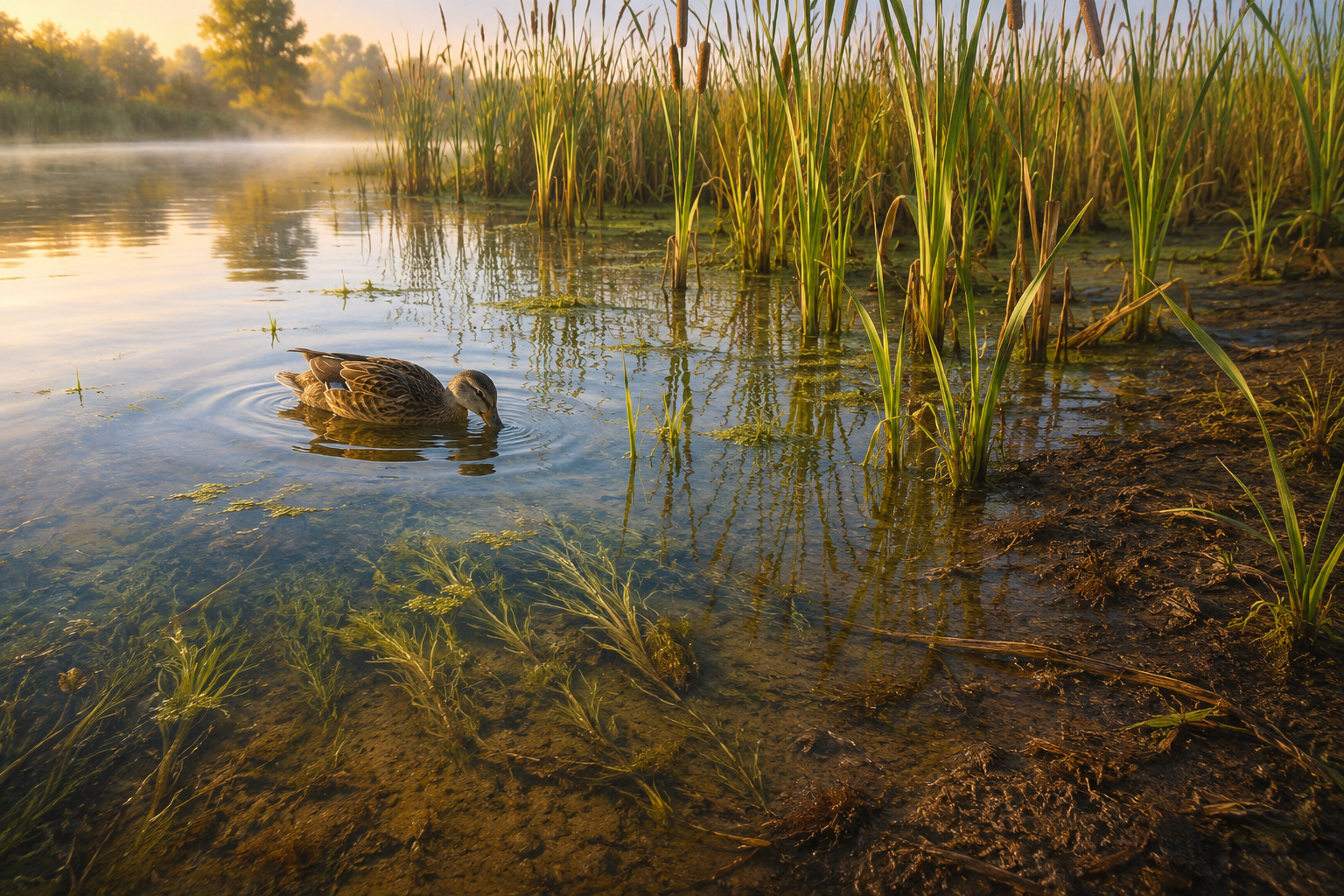
Blue-winged Teal Ducks need vegetation. Lots of it. Look for areas with emergent plants poking through the water’s surface and plenty of submerged aquatic plants waving beneath the surface. The vegetation serves multiple purposes: it provides cover from predators, supports the invertebrates they eat, and offers nearby nesting material.
Don’t be surprised to spot them in flooded agricultural fields during migration. Rice paddies are particularly popular stopovers, and managed wetlands created specifically for waterfowl attract them in large numbers. USGS research shows they consistently choose areas with exposed mudflats and shallow-water edges. These zones are perfect for their dabbling feeding style, in which they tip forward to strain food from the water and mud without diving.
Breeding Range and Nesting Areas
When breeding season arrives, Blue-winged Teal Ducks head to the prairie pothole region. This area stretches across north-central United States and south-central Canada, creating prime real estate for raising ducklings. The landscape here is dotted with small wetlands surrounded by grasslands, exactly what these ducks need.
The breeding range mapped by the U.S. Fish and Wildlife Service extends from eastern British Columbia clear across to Quebec. The southern edge dips down into Colorado and neighboring states. That’s a massive area, but it all shares similar characteristics: wetland-rich landscapes with plenty of undisturbed grassland.
Here’s something interesting about their nesting habits. Females build their nests in grasslands and meadows, sometimes up to 200 yards away from the nearest water. They’re not waterfront property seekers when it comes to nest sites. The grass needs to be thick and tall enough to hide the nest from overhead predators like hawks and crows.
Breeding season timing depends on how far north you go. May through July covers most of the activity, with northern populations starting later than southern ones.
Migration Patterns and Wintering Grounds
Blue-winged Teal are early risers in fall migration. They’re often the first ducks to head south, starting their journey between August and October. This early departure makes sense because they’re traveling much farther than most North American waterfowl.
Where are they going? Central and South America, primarily. Some stop in Mexico or along the southern coast of the United States, but many keep flying deep into South America. It’s an impressive journey for such a small duck.
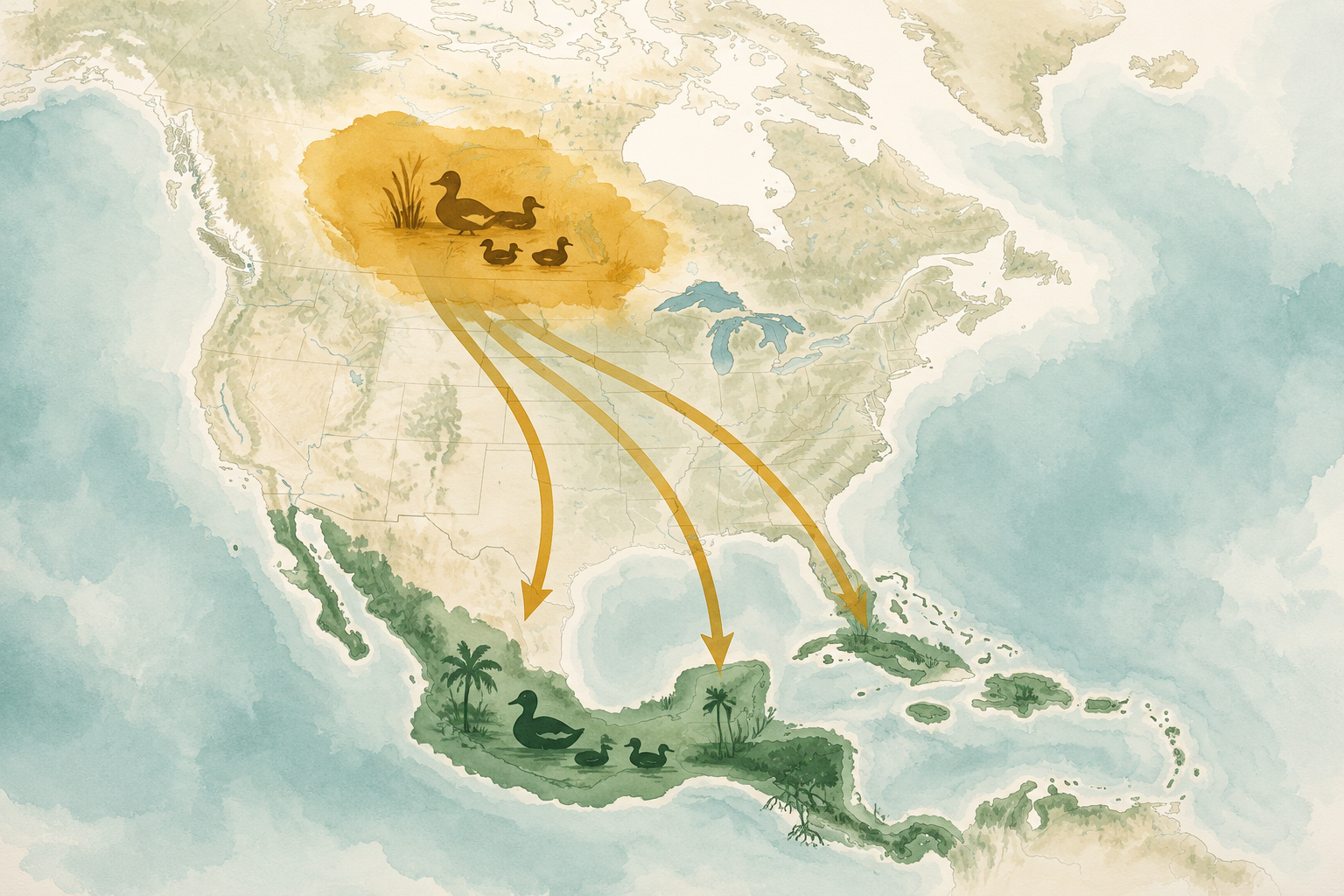
Spring migration tells a different story. These ducks are late arrivals, showing up from March through May when most other waterfowl species have already settled into breeding territories. During both migrations, wetlands throughout eastern and central North America become temporary homes for passing flocks.
Best Times and Locations for Observation
Want to see Blue-winged Teal? Timing matters. Peak viewing happens during spring migration from April through May and again during fall migration in September and October. During these windows, you might see hundreds gathered at a single wetland.
National Wildlife Refuges in prairie states offer your best breeding season viewing. Places like North Dakota’s wetland complexes or Minnesota’s wildlife management areas host significant nesting populations. Summer mornings there can provide incredible close-up views.
Winter observations work differently. Head to coastal wetlands in Texas, Louisiana, or Florida. Rice-growing regions in these southern states attract wintering flocks you can observe from December through February. eBird data show consistent hotspots where birders regularly report sightings.
Early morning and late afternoon provide optimal viewing times. That’s when they’re most actively feeding, swimming in the open rather than resting tucked into vegetation. Bring binoculars and patience, and you’ll likely be rewarded with great looks at these beautiful little ducks.
Feeding Behavior and Diet Composition
Blue-winged Teal are classic dabbling ducks. They never dive for food. Instead, they feed at the water’s surface or tip forward in shallow water, their tails pointing skyward. You’ll often see them paddling through marshes barely a few inches deep, their bills sweeping side to side as they filter food from the water.
Their bills work like tiny sieves. Specialized structures called lamellae line the edges of their bills, acting as fine filters that trap small food items while water flows through. This filtering system lets them capture seeds, aquatic invertebrates, mollusks, and fragments of aquatic plants in a single efficient motion. Watch them feeding, and you’ll notice their bills constantly opening and closing, pumping water through while catching whatever edible morsels get trapped.
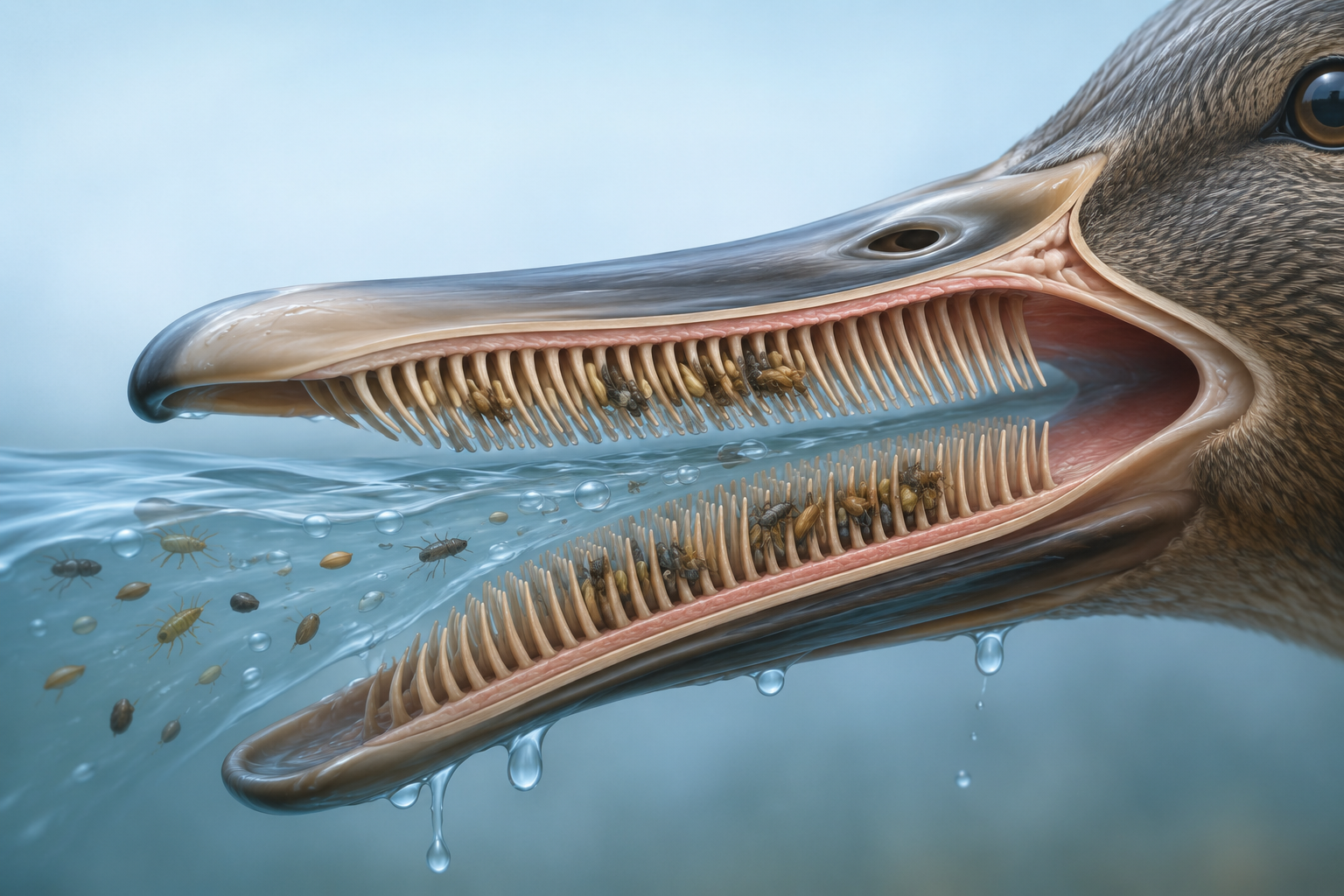
The menu changes throughout the year. During winter and migration, seeds dominate their diet. They love the seeds of smartweeds, sedges, grasses, and other wetland plants. But when breeding season arrives, protein becomes essential. Females especially need extra nutrition for egg production, so they switch to eating more insects, crustaceans, and other invertebrates. Dragonfly larvae, water beetles, snails, and tiny crustaceans all provide the protein punch needed for successful reproduction.
Social Structure and Flock Dynamics
These ducks are social butterflies of the wetland world. During migration and winter months, they gather in impressive numbers. Flocks ranging from dozens to several hundred birds cluster together on shallow ponds and marshes across their wintering grounds.
The social calendar follows a predictable pattern. Pair bonds actually form during winter, long before the birds head north to their breeding territories. Males perform elaborate courtship displays, and couples form partnerships that will carry them through spring migration. Once they reach the breeding grounds and nesting begins, the male’s job is essentially done. After incubation starts, males abandon their mates and form bachelor groups with other males. They’ll stick together through the molting period when they lose their bright breeding plumage.
Communication happens constantly. Males make soft whistling sounds, especially during courtship rituals. Females produce quiet quacks and chattering calls. The vocalizations aren’t particularly loud compared to larger duck species, but listen carefully near a Blue-winged Teal flock, and you’ll hear their gentle conversations.
Nesting and Reproductive Behavior
Female Blue-winged Teal are remarkably independent nesters. They build their nests on the ground, tucked into dense grassland vegetation. The nest site might be surprisingly far from water, sometimes 200 yards or more from the nearest wetland. She constructs a bowl-shaped nest lined with grass and down feathers, creating a cozy incubation chamber.
A typical clutch contains 9 to 12 eggs. The female incubates them alone for 23 to 24 days. She’s incredibly dedicated, leaving the nest only briefly each day to feed. If a predator approaches, she’ll perform dramatic distraction displays. She might fake a broken wing, flopping along the ground to lure foxes, raccoons, or other threats away from her precious eggs.
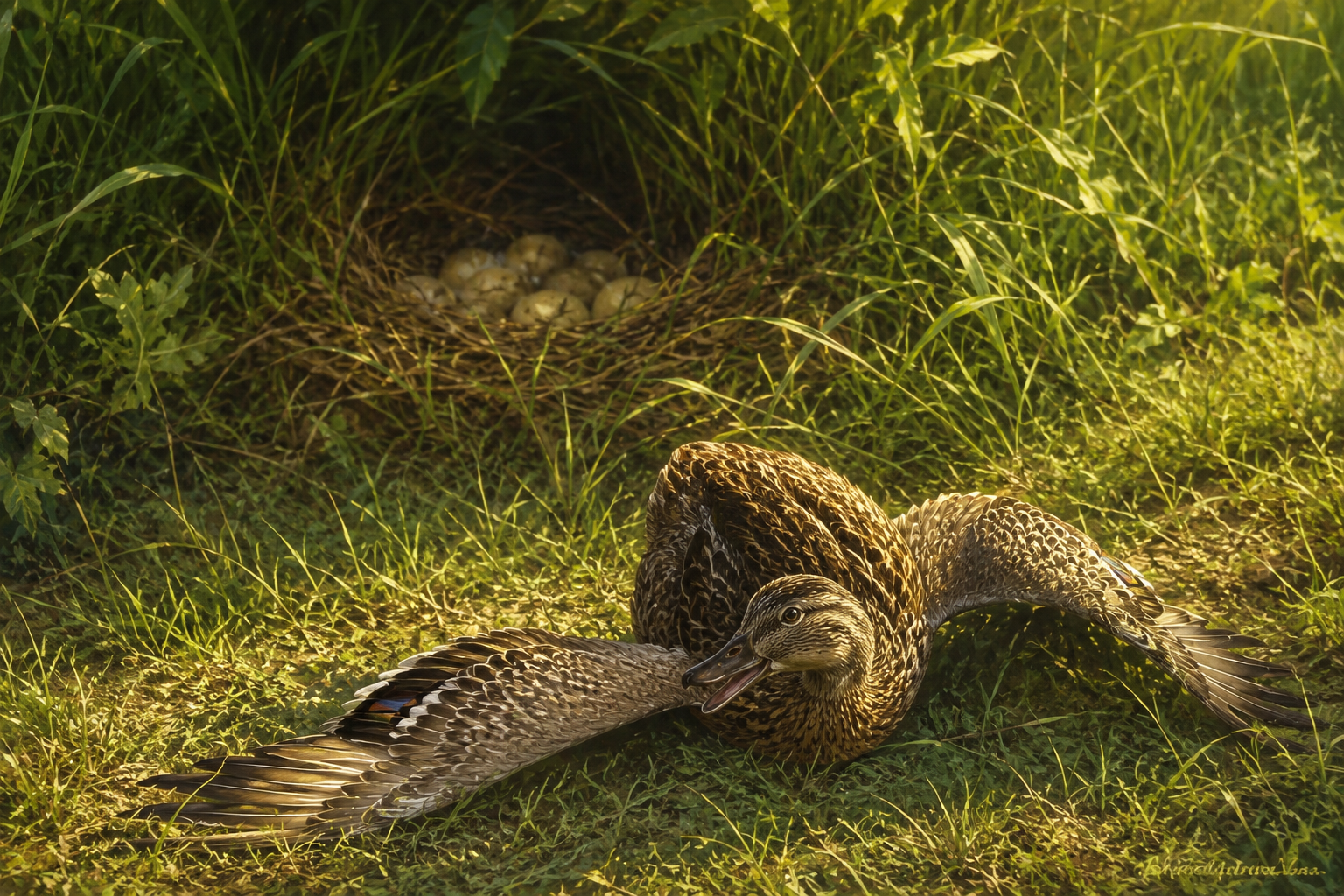
The ducklings are precocial. Within 24 hours of hatching, they leave the nest and head for water. They can feed themselves immediately, picking insects and tiny seeds from the water’s surface while their mother keeps watch. It’s a risky time, with survival depending on avoiding predators and finding adequate food.
Conservation Status and Population Trends
The news is pretty good for Blue-winged Teal. Current population estimates put their numbers between 6.5 and 7.5 million birds. That’s a healthy, stable population with some areas even showing increases.
The biggest historical threat has been wetland drainage. Prairie potholes and seasonal marshes across the Great Plains have been drained and converted to agriculture for over a century. This destroyed prime breeding habitat. Agricultural expansion eliminated the grasslands where females build their nests.
Conservation efforts have made a real difference. The North American Waterfowl Management Plan has protected and restored critical wetland habitats. Programs that incentivize farmers to maintain wetlands on their property have preserved breeding areas. Duck stamp revenues fund habitat acquisition and management that benefits Blue-winged Teal and countless other species.
Climate change presents new uncertainties. Warmer temperatures may shift migration timing, causing birds to arrive on breeding grounds earlier or later than optimal. Breeding ranges could shift northward as temperatures rise. Changing precipitation patterns might alter the availability of shallow wetlands these ducks need. Scientists continue monitoring populations to understand how environmental changes affect these adaptable little ducks.