
American Wigeon Guide
Keep Track of What You See
Create a free Wild Things Guide membership to record this American Wigeon in My Sightings and build your personal wildlife list.
Join to Add This SightingIdentification, Habitat, Diet, Migration, and Birdwatching Tips
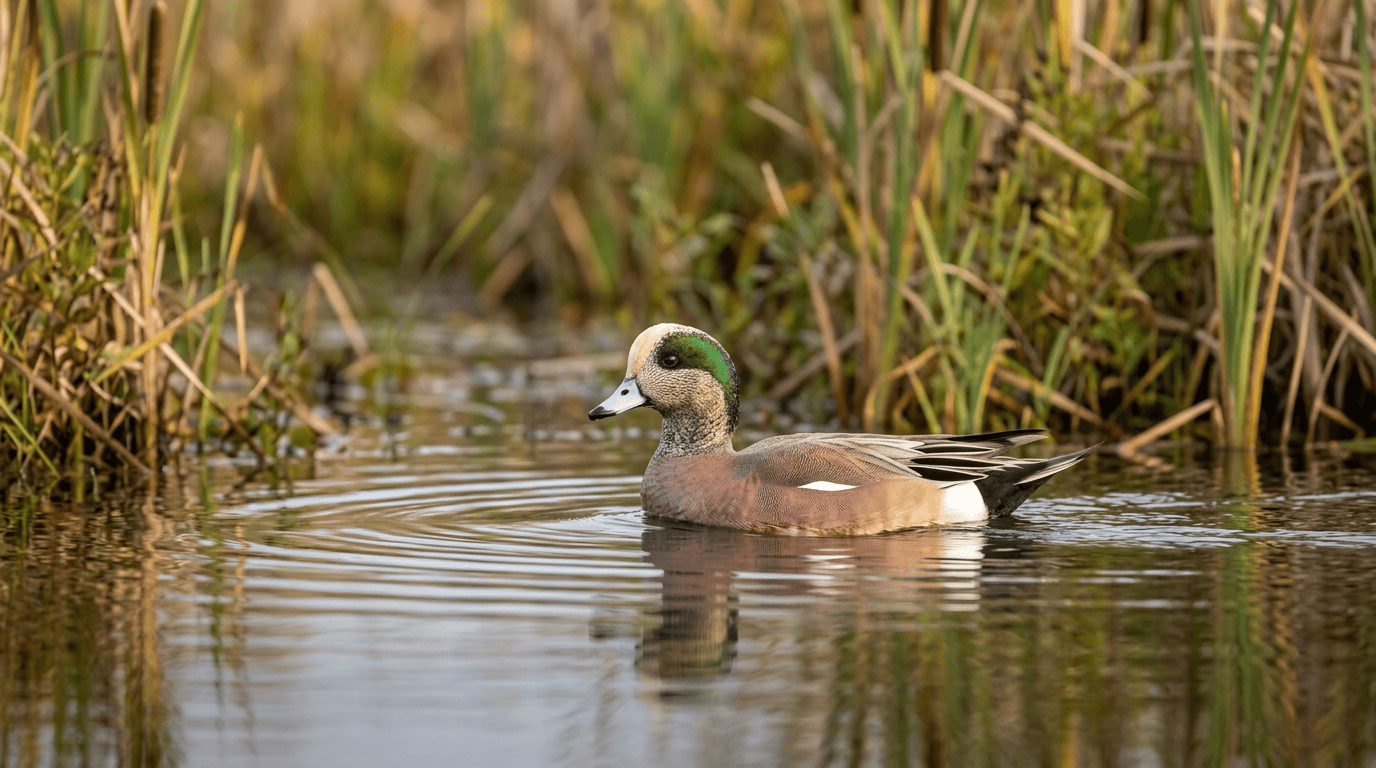
The American Wigeon is a handsome dabbling duck known for its rounded head, pale bill, grazing habits, and distinctive whistling calls. Birdwatchers often notice wigeons in mixed flocks on marshes, ponds, reservoirs, flooded fields, and grassy shorelines. Males are especially striking in breeding plumage, with a creamy white crown and green patch behind the eye, while females show warm brown tones and the same compact, rounded profile.
This guide is written for the general public, birdwatchers, photographers, and anyone who enjoys watching ducks and wetland wildlife. It uses a consistent duck profile format so waterfowl species can be compared easily across the site.
Quick Facts
- Common name: American Wigeon
- Scientific name: Mareca americana
- Bird family: Anatidae, the duck, goose, and swan family
- Size: Medium-sized dabbling duck, smaller and more compact than a Mallard
- Diet: Aquatic plants, grasses, sedges, seeds, algae, and some aquatic invertebrates
- Best places to look: Marshes, ponds, lakes, reservoirs, estuaries, flooded fields, and grassy wetland edges
- Best field clue: Rounded head, short pale blue-gray bill with dark tip, grazing behavior, and whistling calls
Identification
American Wigeons are medium-sized dabbling ducks with compact bodies, rounded heads, and relatively short bills. Their bill shape is one of the best clues: pale blue-gray with a black tip, and shorter and smaller than the bill of a Mallard or Northern Shoveler. On the water, wigeons often sit with a rounded, slightly high-headed profile.
In flight, watch for a white patch on the upper wing, especially on males. Wigeons often fly in tight, fast-moving groups and may mix with other dabbling ducks. Their whistling calls can also draw attention to flocks before they are seen clearly.
Male vs. Female
Male American Wigeons in breeding plumage are distinctive. They have a creamy white crown, a green patch running behind the eye, a pinkish-brown chest and sides, a grayish body, a black rear, and a pale blue-gray bill with a black tip. The bright crown is why the species is sometimes nicknamed “baldpate.”
Females are warmer brown and more subtly patterned. They usually show a grayish or brownish head, mottled brown body, and the same short pale bill with a dark tip. Female wigeons can be confused with other female dabbling ducks, but the compact shape, rounded head, small bill, and grazing behavior are helpful field clues.

Juveniles and Eclipse Plumage
Juvenile American Wigeons resemble females, with brownish, mottled plumage and less contrast than adult males. Young birds may appear duller overall, and their patterns can be subtle when seen at a distance among other ducks. Shape and bill structure are often more useful than color when identifying juveniles.
After breeding, adult males molt into eclipse plumage, becoming much duller and more female-like for a time. Even then, males may retain hints of their wing pattern or head shape. As fresh breeding plumage returns, the pale crown and green face patch become more obvious again.
Range and Distribution
American Wigeons breed mainly in northwestern North America, including Alaska, western Canada, and parts of the northern United States. During migration and winter, they spread widely across the United States, Mexico, Central America, the Caribbean, and coastal or wetland regions with suitable feeding habitat.
They are common migrants and wintering ducks in many regions. In the right season, birdwatchers may find them on freshwater marshes, shallow lakes, sewage ponds, reservoirs, salt marshes, estuaries, golf course ponds, and grassy wetland edges.
Habitat
American Wigeons use shallow wetlands with abundant aquatic vegetation. During breeding season, they favor marshes, ponds, lakes, prairie wetlands, and grassy areas near water. During migration and winter, they can be found in freshwater and brackish wetlands, estuaries, coastal lagoons, reservoirs, flooded fields, and managed wildlife refuges.
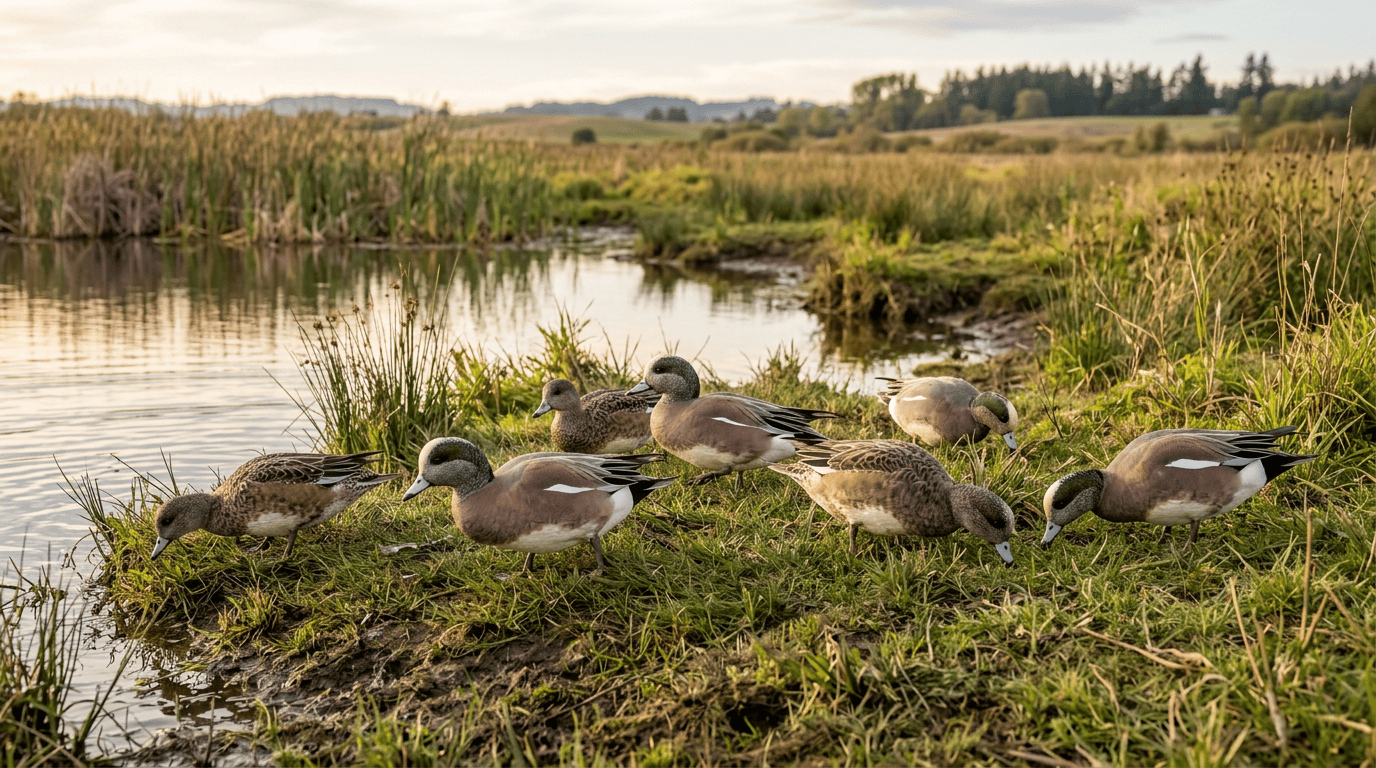
Unlike many dabbling ducks, wigeons also spend a lot of time grazing on land. Look for them on short grass near ponds, marsh edges, parks, pastures, and wet meadows. This land-feeding habit is one of the species’ most useful behavioral clues.
Diet
American Wigeons eat mostly plant material. Their diet includes aquatic vegetation, algae, pondweeds, grasses, sedges, seeds, and young shoots. They graze more than many other dabbling ducks and may feed on lawns, pastures, and wet meadows near water.
They also take some aquatic invertebrates, especially during the breeding season when protein is important. Wigeons are known for feeding near diving ducks and coots, sometimes taking vegetation that other birds bring to the surface. This opportunistic feeding behavior can be fun to watch in mixed waterfowl flocks.
Behavior
American Wigeons are social ducks that often occur in flocks, especially during migration and winter. They mix readily with Mallards, Gadwalls, Northern Pintails, teal, coots, and other wetland birds. On the water, they dabble, tip up, and feed along shallow edges. On land, they graze with a goose-like style.
They can be alert and quick to flush if approached too closely. Photographers usually get better results by staying still near known feeding areas and letting the birds approach naturally. Watch for head-bobbing, preening, grazing, whistling, and short flights between feeding spots.
Calls and Sounds
Male American Wigeons give a clear, high whistling call that is often written as a three-part whistle. It can sound bright and squeaky and carry across marshes and ponds. These calls are especially noticeable in flocks and during courtship interactions.
Females give lower, harsher quacks or growling notes. Learning the male’s whistle is useful because wigeons may be hidden among other ducks, reeds, or shoreline vegetation. A sharp whistle from a mixed flock is often a good reason to scan for American Wigeons.
Nesting and Breeding
American Wigeons nest on the ground, usually in dry grasses or vegetation near wetlands. The female chooses a concealed site and builds a shallow nest lined with plant material and down. Nest sites are often close enough to water for the ducklings to reach wetland habitat after hatching.
A typical clutch contains several pale eggs. The female incubates the eggs, and the ducklings leave the nest soon after hatching. Like other dabbling ducks, young wigeons are precocial, meaning they can walk, swim, and feed soon after they emerge, though they still depend on the female for protection and guidance.

Migration
American Wigeons are migratory. Birds that breed in northern and western areas move south for winter, using wetlands, reservoirs, coastal marshes, and flooded agricultural areas along the way. Migration periods can be excellent times to find wigeons outside their breeding range.
In many parts of the United States, American Wigeons are most common from fall through spring. Winter flocks may remain in areas with open water and reliable food, while spring migration brings birds back north toward breeding wetlands.
Similar Species
Female American Wigeons can be confused with female Gadwalls, Mallards, and Eurasian Wigeons. Gadwalls are more finely patterned and usually lack the wigeon’s short pale bill. Female Mallards are larger, have heavier bills, and are more orange-billed. Eurasian Wigeons are rare to uncommon visitors in North America, and males have a rich reddish head and buff crown instead of the American Wigeon’s green face patch.
For American Wigeon, focus on the compact shape, rounded head, short blue-gray bill with black tip, grazing behavior, and whistling calls. In males, the creamy crown and green eye patch make identification much easier.
Interesting Facts
- American Wigeons are sometimes nicknamed “baldpates” because of the male’s pale crown.
- They graze on land more often than many other dabbling ducks.
- Wigeons sometimes take aquatic plants that diving ducks or coots have brought up.
- The male’s whistling call is one of the best ways to detect the species in a mixed flock.
- The short pale bill is a useful field mark for both males and females.
Conservation Status
American Wigeons are widespread and remain common in many areas, but like all wetland birds, they depend on healthy marshes, ponds, grasslands, and migration stopover sites. Wetland drainage, drought, pollution, habitat loss, and changing water conditions can affect local abundance and breeding success.
Protecting prairie wetlands, marshes, coastal estuaries, and managed wildlife refuges benefits American Wigeons and many other waterfowl. Birdwatchers can support conservation by respecting wetland closures, avoiding disturbance, and supporting habitat protection projects.
Where and When to See Them
The best time to see American Wigeons depends on region. In many areas, fall, winter, and spring migrations are most productive. Look in shallow wetlands, ponds, reservoirs, estuaries, flooded fields, wildlife refuges, and grassy areas beside water.
Scan mixed duck flocks for compact birds with pale bills and rounded heads. Also check lawns, wet meadows, and pond edges where wigeons may be grazing. Early morning and late afternoon often provide good light and active feeding behavior.
Birdwatching and Photography Tips
For birdwatchers, a spotting scope is helpful when wigeons are far out on wetlands. Start by identifying the short pale bill, then look for the male’s white crown and green face patch or the female’s warm brown body and compact shape. Listen for whistling calls from flocks.
For photographers, stay low, move slowly, and avoid pushing ducks into flight. Wigeons often look best in warm light on calm water or while grazing near a reflective pond edge. Ethical photography means keeping enough distance that birds continue feeding, resting, and preening naturally.
Frequently Asked Questions
Are American Wigeons dabbling ducks?
Yes. American Wigeons are dabbling ducks. They feed in shallow water by dabbling and tipping up, but they also graze on land more often than many other dabblers.
What do American Wigeons eat?
They eat mostly aquatic plants, grasses, sedges, algae, seeds, and young shoots. They also eat some aquatic invertebrates, especially during breeding season.
How can I identify a female American Wigeon?
Look for a compact brown dabbling duck with a rounded head and short pale blue-gray bill with a dark tip. Behavior also helps: females often graze near water with other wigeons.
Where is the best place to see American Wigeons?
Check shallow marshes, ponds, reservoirs, estuaries, flooded fields, wildlife refuges, and grassy wetland edges during migration and winter. Scan mixed duck flocks and listen for whistling calls.


