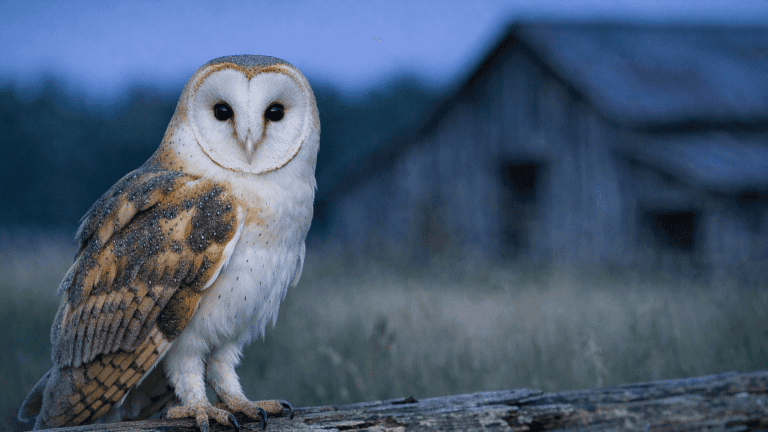
Short-eared Owl Guide
- Scientific Name
- Asio flammeus
- Family
- Strigidae
- Order
- Strigiformes
- Length
- 13.4–16.9 in (34–43 cm)
- Wingspan
- 33.5–40.5 in (85–103 cm)
- Weight
- 7.3–16.8 oz (206–475 g)
- Conservation Status
- Least Concern globally; declining or of conservation concern in parts of North America
- Habitat
- Open grasslands, marshes, wet meadows, tundra, shrub-steppe, fallow fields, and other low-vegetation landscapes
Keep Track of What You See
Create a free Wild Things Guide membership to record this Short-eared Owl in My Sightings and build your personal wildlife list.
Join to Add This SightingIntroduction
The Short-eared Owl (Asio flammeus) is an open-country owl with long wings, a buoyant flight, and a greater tendency to hunt by daylight than many other North American owls. It occurs across much of the continent, but its local presence can be unpredictable because it follows fluctuating populations of voles and other small mammals.
This medium-sized owl is most often encountered flying low over marshes, grasslands, tundra, or agricultural fields around dawn and dusk. Although its name refers to small feather tufts on the head, those “ears” are usually difficult to see. Shape, flight style, and dark wrist patches are generally more useful identification features.
Quick Identification
- Medium-sized, brown owl with long, relatively narrow wings.
- Rounded head; ear tufts are tiny and usually flattened.
- Pale facial disk surrounding yellow eyes and dark eye patches.
- Buff-colored underparts marked with strong vertical streaks.
- Dark patches at the bend of each wing are conspicuous in flight.
- Low, wavering, mothlike flight over open ground.
- Frequently active in late afternoon, at dusk, and sometimes in full daylight.
Appearance and Field Marks
Short-eared Owls are mottled in brown, buff, cream, and black, creating effective camouflage among dry grasses. The facial disk is pale and rather broad, with dark patches around the bright yellow eyes. The dark eye markings can give the bird an alert or intense expression. Its bill is short, dark, and partly concealed by facial feathers.
The breast and belly are pale buff to whitish with mostly vertical brown streaks. The upperparts are heavily mottled, and the tail is crossed by several dark bars. In flight, look for pale underwings, dark wingtips, and bold blackish marks near the wrists. The wings appear longer and narrower than those of many woodland owls.
Females average larger and are often somewhat darker and more heavily marked than males, but plumage overlap is substantial. Sex usually cannot be determined confidently from a brief field view.

Size and Measurements
Adults are typically 13.4–16.9 inches (34–43 cm) long, with a wingspan of about 33.5–40.5 inches (85–103 cm). Reported adult weights generally range from 7.3 to 16.8 ounces (206–475 g). Females tend to be heavier than males.
A Short-eared Owl is roughly comparable to a crow in body length, although its broad plumage, large head, and long wings create a different silhouette. It is smaller-bodied and slimmer-winged than a Great Horned Owl, but larger and more robust than a Northern Saw-whet Owl.
Range and Distribution
The species has an exceptionally broad distribution across North America, South America, Eurasia, and numerous oceanic islands. In North America, it breeds primarily in Alaska, Canada, and parts of the northern and western United States. During winter, birds may occur across much of the continental United States and south into Mexico.
Distribution varies from year to year. Short-eared Owls may gather where prey is abundant and then be scarce or absent from the same location in a later season. Some populations migrate regularly, while others are resident or move nomadically in response to food and weather. The Cornell Lab of Ornithology species account provides additional identification and distribution information.

Habitat
Short-eared Owls favor broad, open landscapes with low vegetation. Typical habitats include native prairie, wet meadow, coastal marsh, freshwater marsh, tundra, shrub-steppe, fallow farmland, hayfields, reclaimed grassland, and occasionally airports or large vacant tracts.
Good habitat usually combines plentiful small mammals with enough grass or low cover for daytime roosting and ground nesting. Trees are not essential. Birds may perch on fence posts, low shrubs, signs, hay bales, or the ground, but they often remain concealed in vegetation until hunting conditions improve.

Behavior
Unlike strongly nocturnal woodland owls, Short-eared Owls are often crepuscular and may be active during daylight, particularly in winter or when feeding young. They commonly begin hunting in the late afternoon, sometimes sharing productive fields with Northern Harriers.
Flight is distinctive: deep, flexible wingbeats alternate with glides and abrupt banking turns. The bird may hover briefly, hang into the wind, or drop suddenly into vegetation. During the nonbreeding season, several owls may use the same general feeding area or communal roost. Aggressive encounters can involve chasing, calling, and aerial maneuvering.

Diet and Hunting
Small mammals dominate the diet. Voles are especially important in many regions, but Short-eared Owls also take mice, shrews, lemmings, young rats, and other appropriately sized mammals. Birds and large insects are captured less regularly, depending on local availability.
The owl hunts by flying low over the ground while listening and watching for movement. Its facial disk helps direct sound toward asymmetrically positioned ear openings, allowing it to locate prey hidden beneath grass or light snow. After detecting an animal, the owl stalls or turns sharply and drops feet-first. Prey is swallowed whole when small enough; indigestible fur, bones, teeth, and feathers are later regurgitated as pellets.
Vocalizations
Short-eared Owls are often quiet away from breeding areas. During courtship, males may give a repeated series of low, hollow hoots or boops, commonly delivered during aerial displays. Females and alarmed adults can produce sharp barking, yapping, squealing, or raspy calls.
Agitated birds may also snap their bills or clap their wings. Calls can be difficult to locate because they carry across open country and may be delivered by a bird circling high above the ground.
Breeding and Nesting
Courtship can include high circling, exaggerated wingbeats, steep dives, and rapid wing-clapping beneath the body. Pair formation and nesting dates vary with latitude, weather, and prey abundance.
The Short-eared Owl is one of the few North American owls that routinely nests on the ground. The female selects a shallow depression in grass, sedges, reeds, or low tundra vegetation and may line it with grasses and feathers. A typical clutch contains about 4–7 white eggs, although smaller and substantially larger clutches have been reported, especially when prey is unusually abundant.
The female performs most incubation, which lasts roughly four to five weeks, while the male commonly supplies food. Adults may defend the nest with alarm calls, distraction displays, or low passes, but observers should retreat promptly rather than provoke these responses.

Young and Development
Eggs are laid at intervals, so hatching is asynchronous and siblings may differ noticeably in size. Newly hatched owlets are covered with pale down and depend on adults for warmth and food. The female initially broods and distributes prey brought by the male.
Young may leave the immediate nest site on foot at roughly two to three weeks of age, before they can fly. They hide separately in the surrounding vegetation, reducing the chance that a single predator will find the entire brood. Flight develops gradually around four to five weeks, although the young continue to receive food while improving their hunting skills.

Where to See
Search large marshes, grasslands, wildlife refuges, prairie preserves, coastal fields, and lightly grazed agricultural areas. Winter is often the easiest season in the contiguous United States. Arrive one or two hours before sunset and scan low over the vegetation, especially where vole activity is evident.
A roadside pullout or public trail with a broad view can be productive, but avoid stopping unsafely or entering closed fields. Check fence posts and low mounds, then watch for a long-winged owl quartering back and forth. Local bird reports can help identify temporary concentrations, which may shift quickly as prey conditions change.
Similar Species
Northern Harrier: This slim raptor often shares the same habitat and hunting style. A harrier has a longer tail, a smaller projecting head, and a prominent white rump patch. Its wingbeats are generally firmer, and it often glides with the wings held in a shallow V.
Long-eared Owl: Long-eared Owls have taller ear tufts, orange eyes, a more elongated facial pattern, and darker, more intricate underpart markings. They usually inhabit wooded edges and dense roost cover. In flight, identification can be difficult, but Long-eared Owls lack the Short-eared Owl’s strongly contrasting black wrist patches.
Burrowing Owl: This smaller, long-legged owl favors short grass and spends much time near burrows. It has spotted upperparts and a compact, direct flight rather than the sustained quartering flight of a Short-eared Owl.
Conservation
The Short-eared Owl is commonly assessed as Least Concern globally because of its immense range, but this broad status can conceal serious regional declines. Loss and fragmentation of native grasslands, wetlands, and other open habitats are major concerns. Changes in farming, early mowing, development, collisions, pesticides, and disturbance at nests or communal roosts can also affect local populations.
Conservation measures include protecting large open landscapes, maintaining dense nesting cover through the breeding season, conserving wetlands, and timing mowing or haying to reduce nest destruction. Because abundance naturally fluctuates with prey cycles, long-term monitoring is more informative than a single-year count.
Field Identification Tips
- Start with habitat: an owl coursing low over a broad field or marsh is a strong candidate.
- Study the flight: look for slow, elastic wingbeats, frequent glides, hovering, and abrupt drops.
- Check the wrists: dark carpal patches contrast with otherwise pale underwings.
- Assess the shape: the wings are long, and the head appears rounded without obvious tufts.
- Use multiple marks: lighting can hide wing patterns, so combine structure, behavior, plumage, and habitat.
- Compare nearby harriers: watch for the owl’s broader head, shorter tail, and lack of a white rump.
Interesting Facts
- The scientific name flammeus refers to the owl’s flame-colored or fiery-toned plumage.
- Its ear tufts are feathers used in signaling and camouflage, not external ears.
- Short-eared Owls occur on every continent except Antarctica and Australia.
- They can nest in loose concentrations when prey is exceptionally plentiful.
- Their low hunting flight often resembles that of the unrelated Northern Harrier.
- Daytime activity makes this one of the more observable North American owls, though it should still be watched from a respectful distance.
Frequently Asked Questions
Are Short-eared Owls active during the day?
Yes. They commonly hunt around dawn and dusk and may be active in full daylight, especially in winter, at northern latitudes, or while feeding young.
Why are they called Short-eared Owls?
The name refers to their very small feather tufts. These tufts are usually held flat and have no direct role in hearing.
Do Short-eared Owls migrate?
Many northern birds migrate south for winter, but movements are variable. Some populations are resident, while others wander widely in response to prey availability.
Where do Short-eared Owls nest?
They nest on the ground in grasslands, marshes, tundra, and similar open habitats. The nest is typically a shallow, sparsely lined depression hidden by vegetation.
How can I distinguish one from a Northern Harrier?
Look for a rounded owl head, a shorter tail, pale underwings with dark wrist patches, and no white rump. Short-eared Owl flight is often more buoyant and mothlike.
Are Short-eared Owls rare?
They are widespread globally but uncommon or declining in many parts of North America. Local abundance is highly variable, and productive sites may host several birds in one year and few in the next.