River Birch Guide
Keep Track of What You See
Create a free Wild Things Guide membership to record this River Birch in My Sightings and build your personal wildlife list.
Join to Add This SightingTree Name
River birch (Betula nigra) is a deciduous tree in the birch family, Betulaceae. Native to the eastern and central United States, it is especially associated with streambanks, floodplains, and moist bottomlands. Its curling, salmon-tinted bark makes it a familiar landscape tree well beyond its natural range.
Locally called red birch or water birch, it should not be identified by those names alone: “water birch” also refers to a different western species. Look for a combination of peeling bark, alternate toothed leaves, and a suitable habitat.
Quick Identification
- Habit: A medium to large tree, commonly 40–70 feet (12–21 m) tall, with an irregular, rounded crown.
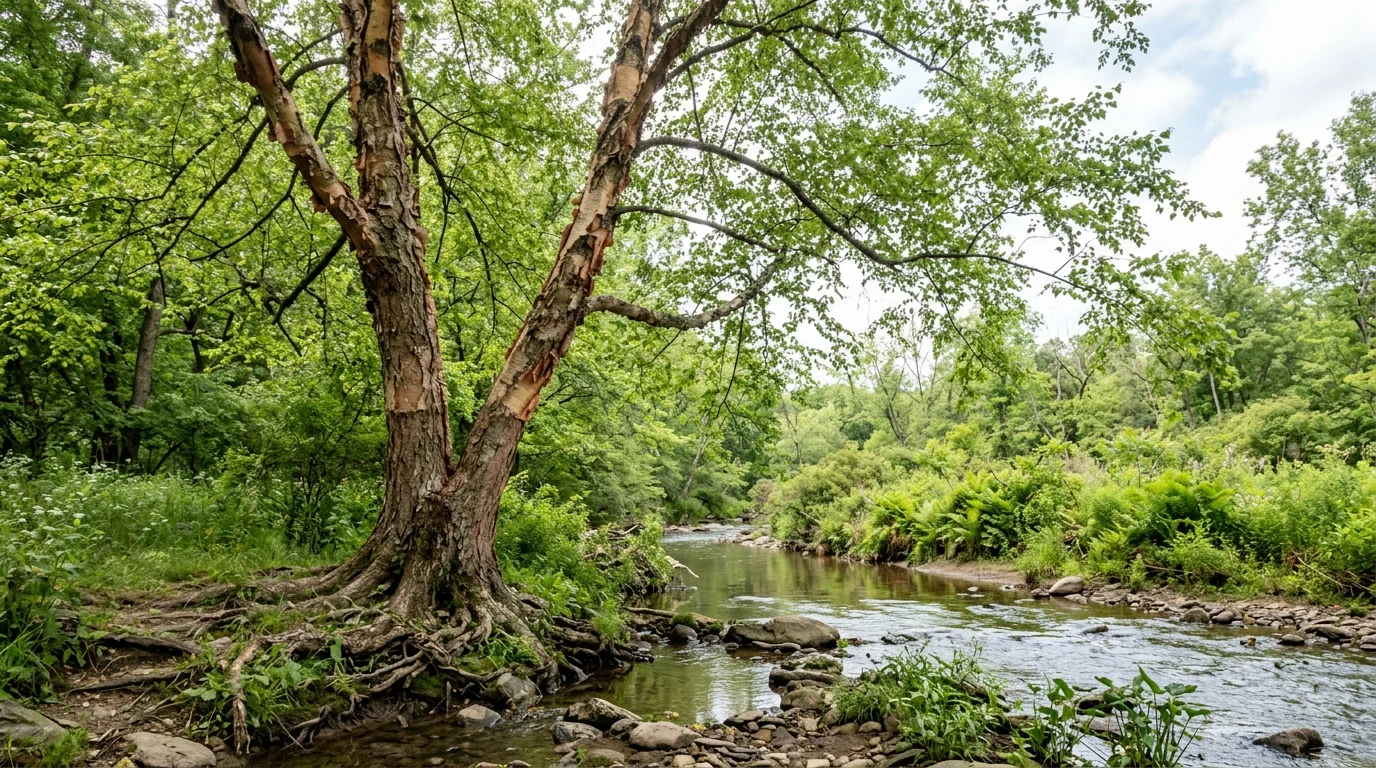
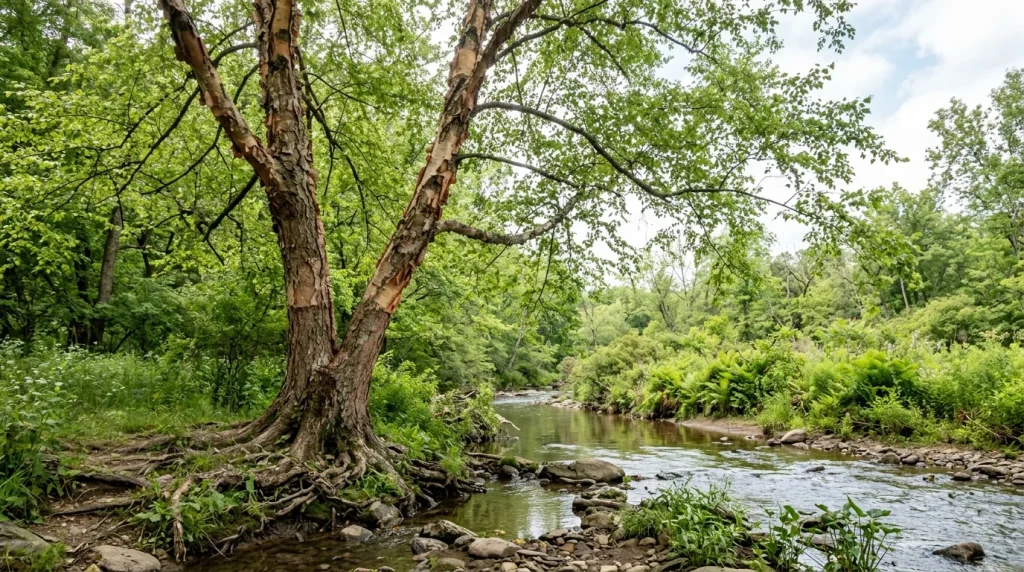
- Bark: Thin, curling sheets in cream, peach, salmon, and reddish brown on young and middle-aged trunks; older trunks become darker and rougher.
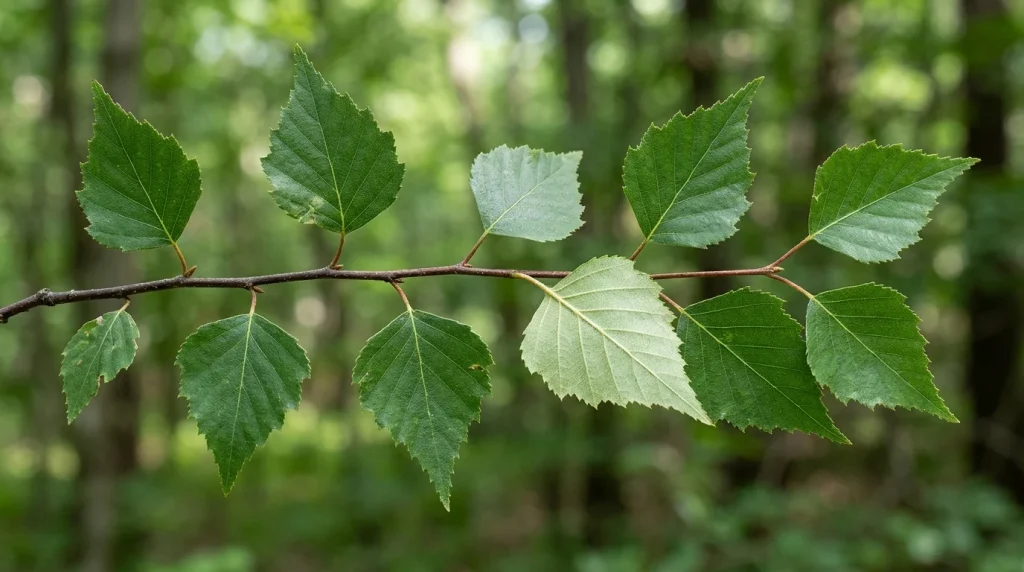
- Leaves: Alternate, simple, roughly diamond-shaped to triangular-ovate, with pointed tips and doubly toothed margins.
- Leaf underside: Noticeably paler than the upper surface, often with fine hairs along the veins.
- Reproduction: Slender hanging male catkins and shorter female catkins; tiny winged seeds mature in late spring or early summer.
- Setting: Naturally found near water, but frequently planted in lawns, parks, and drainage landscapes.
Appearance
Mature river birches commonly spread 40–60 feet (12–18 m), although crowding, soil conditions, and pruning strongly affect their shape. Young trees tend to be upright or loosely pyramidal. Older specimens develop spreading branches, arching limbs, and a somewhat open crown. Forest-grown trees may have a single tall trunk; open-grown trees can branch low.
The familiar three-stemmed nursery specimen is not a requirement for identification. River birch can naturally have one trunk or several, and some landscape clumps consist of multiple plants grown together.
Leaves are usually about 1.5–3.5 inches (4–9 cm) long. Their broadest point is often near or below the middle, and the base commonly narrows into a short stalk. Strong side veins run toward the larger marginal teeth, with smaller teeth between them. Upper surfaces are medium to dark green; the paler undersides can flash conspicuously in the wind.
Growth is often rapid when young—roughly 1.5–3 feet (0.5–0.9 m) of annual height gain under favorable conditions—but slows with age or stress.
Bark, Twigs, and Buds
Bark is the most memorable feature, but its appearance changes substantially with age. Young branches may be fairly smooth. On expanding trunks and larger limbs, the outer bark loosens into thin curls and ragged sheets, exposing pale cream to warm salmon surfaces underneath. Selected landscape cultivars can be especially pale.
At the base of an old tree, expect gray-brown to nearly black bark broken into thick scales, plates, or irregular furrows. A mature river birch therefore may not look particularly “papery” at eye level. Check younger limbs before ruling it out.
Slender twigs are reddish brown to brown and may be finely hairy when young. Small, pointed, overlapping-scaled buds occur alternately. Preformed male catkins often hang near twig tips through winter. River birch twigs lack the strong wintergreen scent associated with sweet birch, though scent alone is an unreliable field test. Avoid stripping bark or breaking branches merely to confirm identification.

Range and Habitat
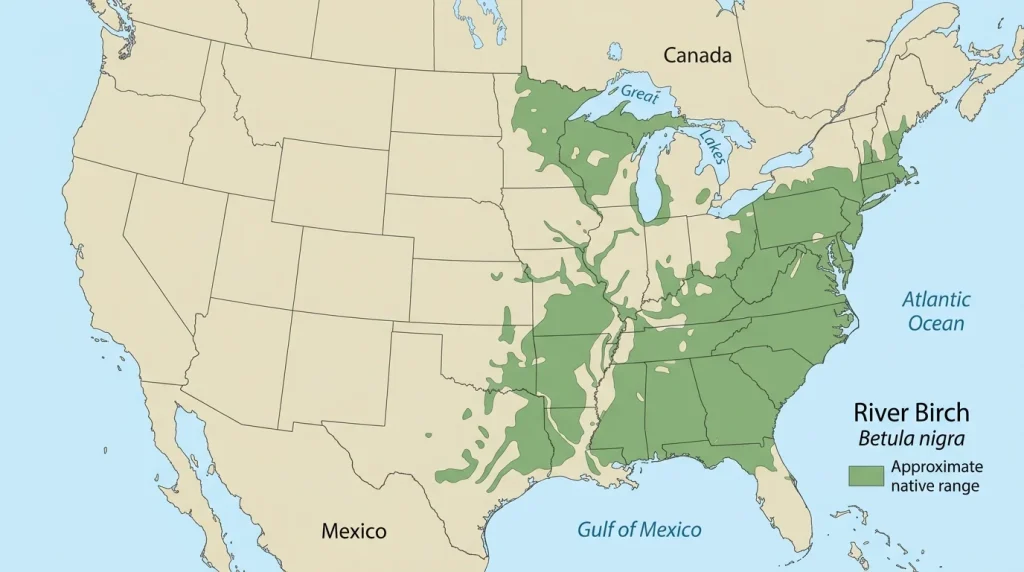
The native range extends broadly from southern New England and the upper Mississippi Valley south to northern Florida and eastern Texas. Distribution is uneven: river corridors can support stands where nearby uplands have few or none. Planted trees occur outside this range, including parts of southern Canada.
Typical sites include stream margins, riverbanks, floodplain woods, wet depressions, and moist alluvial soils. River birch is adapted to periodic flooding and sediment disturbance, not necessarily to permanent deep standing water. It often establishes on exposed, damp mineral soil with available sunlight.
Full sun generally produces the strongest growth, although trees tolerate some shade. Acidic, consistently moist soil is favorable. Established trees can manage some drier conditions, but heat combined with drought may cause premature leaf yellowing and shedding. The NC State Extension river birch profile provides useful additional identification and planting information.
Flowers, Fruit, Nuts, or Cones
River birch bears separate male and female flowers on the same tree. Both occur in catkins rather than showy blossoms. Male catkins form before winter and lengthen into flexible, dangling structures in spring, commonly reaching about 2–3 inches (5–8 cm). Female catkins are shorter and initially upright, appearing with the new foliage.
Wind carries the pollen. After pollination, the female structures develop into compact, cylindrical fruiting clusters. These break apart in late spring or early summer, releasing tiny winged nutlets along with small scales. Wind and moving water can both transport the seeds.
This early seed release is a valuable distinction: many other familiar North American birches mature their seeds later in the year. The clusters may look cone-like, but river birch is a flowering broadleaf tree, not a conifer. Its seeds are not large edible nuts.

Wildlife Connections
River birch contributes to streamside food webs in several ways. Small birds, including finches, and some small mammals eat its seeds. Leaves support caterpillars and other insects, which in turn provide food for insect-eating birds. A particular tree’s value varies with its surroundings and the local wildlife community.
Branches provide perches and nesting cover. Older trees, damaged limbs, and decaying wood may eventually supply cavities and feeding sites. Beavers can cut birches, and browsing mammals may feed on accessible shoots.
Along waterways, roots help bind soil, while shade and fallen organic material contribute to the streamside environment. River birch works best as part of a diverse riparian plant community rather than as a stand-alone erosion solution.
Seasonal Identification
- Winter: Look for curling salmon-and-cream bark on younger trunks and limbs, alternate buds, and hanging male catkins. Older trunk bases may be dark and plated.
- Spring: Expanding toothed leaves accompany pollen-shedding male catkins and short female catkins. Fresh foliage often makes the diamond-like leaf outline easier to see.
- Summer: Check the green upper leaf surface against the paler underside. Fruiting clusters release seeds relatively early and may already be gone by midsummer.
- Fall: Leaves typically turn yellow, sometimes unevenly. Strong red or purple autumn foliage would suggest another tree. Drought-related yellowing can occur well before normal fall color.

Human Uses and History
River birch has become a widely planted ornamental because of its textured bark, graceful branching, and tolerance of wetter soils. It also tolerates summer heat better than several northern birches, making it useful where paper birch struggles. Cultivars differ in bark color, mature size, and crown form.
The wood has been used for furniture components, turned items, and other utility products, though river birch is not generally a major commercial timber species. Unlike the broad sheets of paper birch bark, its irregular, curling bark is not the classic canoe-building material.
For planting, allow room for the mature crown and keep mulch away from the trunk. Moisture conservation and appropriate soil chemistry matter more than routine fertilizer. Surface roots, falling twigs, catkins, and seeds can be inconvenient beside paving or heavily used patios.
Conservation and Threats
River birch is widespread and not generally considered a species of broad conservation concern. Local populations still depend on functioning waterways and suitable regeneration sites. Channelization, development, and altered flooding patterns can remove habitat or change the conditions that allow seedlings to establish.
In landscapes, unsuitable soil is a frequent problem. Alkaline conditions may cause iron chlorosis: young leaves turn yellow while veins remain greener. Drought, root injury, and restricted rooting space can also weaken trees.
River birch is relatively resistant to bronze birch borer compared with several white-barked birches, but “resistant” does not mean immune to all pests. Aphids, leaf spots, and other problems may occur. Many trees live roughly 50–75 years, with longer lives possible on favorable sites; stressed landscape specimens may decline sooner.
Similar Species
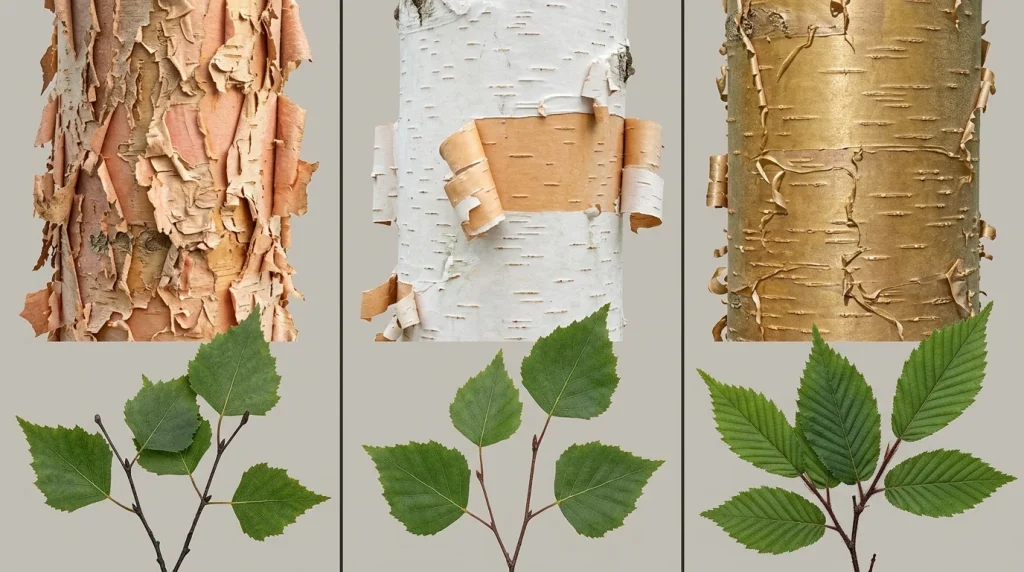
- Paper birch (Betula papyrifera): Typically develops chalky white bark peeling in broader sheets. It is principally a northern tree, and its leaves are generally more oval than diamond-shaped. Young bark can be brown, so use several features.
- Yellow birch (Betula alleghaniensis): Often has bronze or yellowish bark peeling in fine curls. Leaves tend to be more elongated, and scraped young twigs commonly smell of wintergreen. It favors cooler forest settings.
- Water birch (Betula occidentalis): A western streamside shrub or small tree with shiny reddish-brown bark that usually does not peel in the conspicuous ragged sheets typical of river birch.
- American sycamore (Platanus occidentalis): Shares floodplain habitat and exfoliating bark, but has large, palmately lobed leaves and hanging round fruit balls. Its bark flakes in patches rather than thin papery curls.
Interesting Facts
- The species name nigra means “black,” fitting the dark bark that can develop on old trunks better than the pale curls seen on younger trees.
- Spring seed release can place seeds on freshly exposed, moist streamside sediments. Successful establishment still depends on suitable moisture and light.
- A single tree may display smooth twig bark, papery branch bark, and deeply roughened basal bark at the same time.
Frequently Asked Questions
Does river birch need to grow beside a river?
No. It grows well away from waterways when soil moisture, drainage, sunlight, and soil chemistry are suitable. Its name reflects a common natural habitat, not an absolute requirement.
Is peeling bark a sign that the tree is dying?
Thin, curling outer bark is normal. Large wounds, exposed damaged wood, extensive branch dieback, or sudden canopy thinning are different symptoms and deserve closer inspection.
What is the quickest reliable identification?
Combine salmon-toned peeling bark with alternate, doubly toothed, diamond-like leaves that are pale underneath. On old trees, examine younger branches, where the characteristic bark is usually easier to recognize.