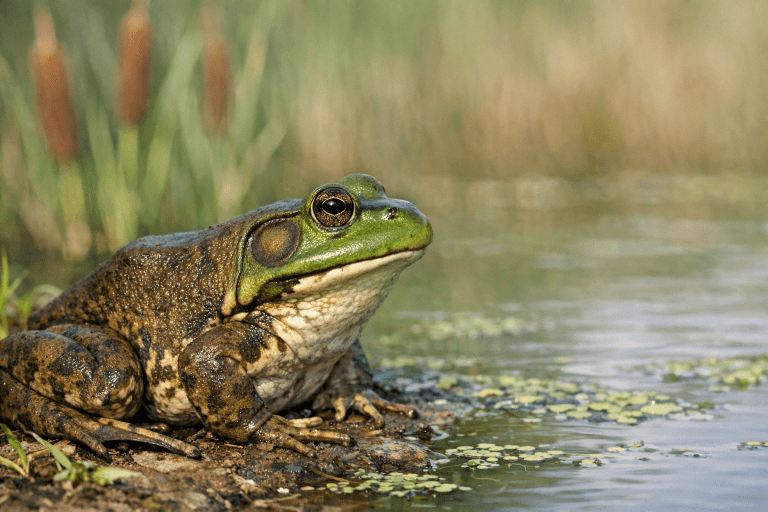
Northern Leopard Frog Guide
Keep Track of What You See
Create a free Wild Things Guide membership to record this Northern Leopard Frog in My Sightings and build your personal wildlife list.
Join to Add This SightingIdentification, Habitat, Diet, Breeding, Tadpoles, and FAQ
The Northern Leopard Frog is one of North America’s most attractive and recognizable amphibians. Named for the dark rounded spots scattered across its body, this frog is a classic species of marshes, wet meadows, pond edges, and grassy wetlands. It is known for its long jumps, slender body, and ability to move between water and nearby upland habitats during the active season.
This guide is written for the general public, wildlife watchers, photographers, families, and anyone learning to identify amphibians. It follows a consistent amphibian profile format so Green Frogs, bullfrogs, leopard frogs, and other species can be compared easily across the site.

Quick Facts
- Common name: Northern Leopard Frog
- Scientific name: Lithobates pipiens
- Family: Ranidae, the true frog family
- Size: Usually about 2 to 4.5 inches long from snout to vent
- Diet: Insects, spiders, worms, small snails, and other small invertebrates
- Habitat: Marshes, wet meadows, ponds, lakeshores, streams, grasslands, and damp fields
- Conservation status: Widespread, but declining or locally reduced in parts of its range
Identification
Northern Leopard Frogs are medium-sized frogs with slender bodies, long legs, pointed snouts, and smooth skin. Their background color may be green, brown, bronze, or a mix of tones. The most obvious field marks are the dark, rounded spots on the back, sides, and legs. These spots usually have pale borders, giving the frog a leopard-like pattern.
Another important feature is the pair of pale dorsolateral folds, which are raised ridges of skin running from behind the eyes down the back. The belly is usually pale, and the underside may be white or cream. Compared with Green Frogs, Northern Leopard Frogs look slimmer, longer-legged, and more strongly spotted.

Size
Adult Northern Leopard Frogs usually measure about 2 to 4.5 inches from snout to vent. Females are often larger than males. Their long hind legs make them appear larger when stretched out, and they are capable of quick, powerful jumps when disturbed.
Young frogs are much smaller but already show the spotted pattern that helps identify the species. Very small young may be difficult to separate from other young leopard frogs or pickerel frogs unless range, habitat, and markings are considered together.
Range Map
As a text-based range guide, picture the Northern Leopard Frog across much of northern and central North America. It occurs through parts of Canada, the northern and central United States, and portions of the western and plains regions. Its range is broad, but local abundance varies greatly depending on wetland quality, climate, disease, and land use.
In some areas, Northern Leopard Frogs remain common around suitable wetlands and grassy edges. In other regions, populations have declined or disappeared from places where they were once familiar. Because of this uneven status, local field guides and wildlife agencies are useful for understanding the species in your area.
Habitat
Northern Leopard Frogs use a mix of aquatic and upland habitats. They breed in ponds, marshes, flooded wetlands, lake edges, slow streams, and shallow water with vegetation. After breeding, they may move into wet meadows, grasslands, damp fields, prairie edges, and open areas near water.
This species often needs connected habitat. Breeding wetlands, summer foraging areas, and overwintering sites may all be different places. Roads, development, drainage, and habitat fragmentation can make it harder for frogs to move safely between these seasonal habitats.
Behavior
Northern Leopard Frogs are active, alert frogs that often sit in grass or low vegetation near water. When approached, they may make a sudden long leap into cover or shallow water. Their spotted pattern helps them blend into grasses, mud, leaves, and broken sunlight.
They are active during the warmer months and may be seen by day or night. In hot or dry conditions, they seek moist cover. In colder climates, they overwinter underwater in well-oxygenated ponds, streams, or wetlands where they can survive until spring.
Diet
Adult Northern Leopard Frogs are carnivores. They eat insects, spiders, worms, small snails, small crustaceans, and other invertebrates. Larger individuals may occasionally take very small frogs or other small animals if they can capture them.
They hunt by waiting for prey to come within range, then lunging quickly. Their diet helps control insect populations in wetlands and grasslands. At the same time, leopard frogs are important prey for snakes, herons, raccoons, fish, turtles, birds of prey, and many other predators.
Breeding
Breeding usually takes place in spring, often soon after ice melts and water temperatures rise. Males gather in shallow water and call to attract females. The call is often described as a low, snore-like rumble mixed with chuckling or clucking notes.
Females lay egg masses in shallow water, usually attached to vegetation below the surface. Each mass may contain many eggs. After hatching, tadpoles develop in the water through spring and summer. Timing varies with temperature, region, and wetland conditions.

Tadpoles or Larvae
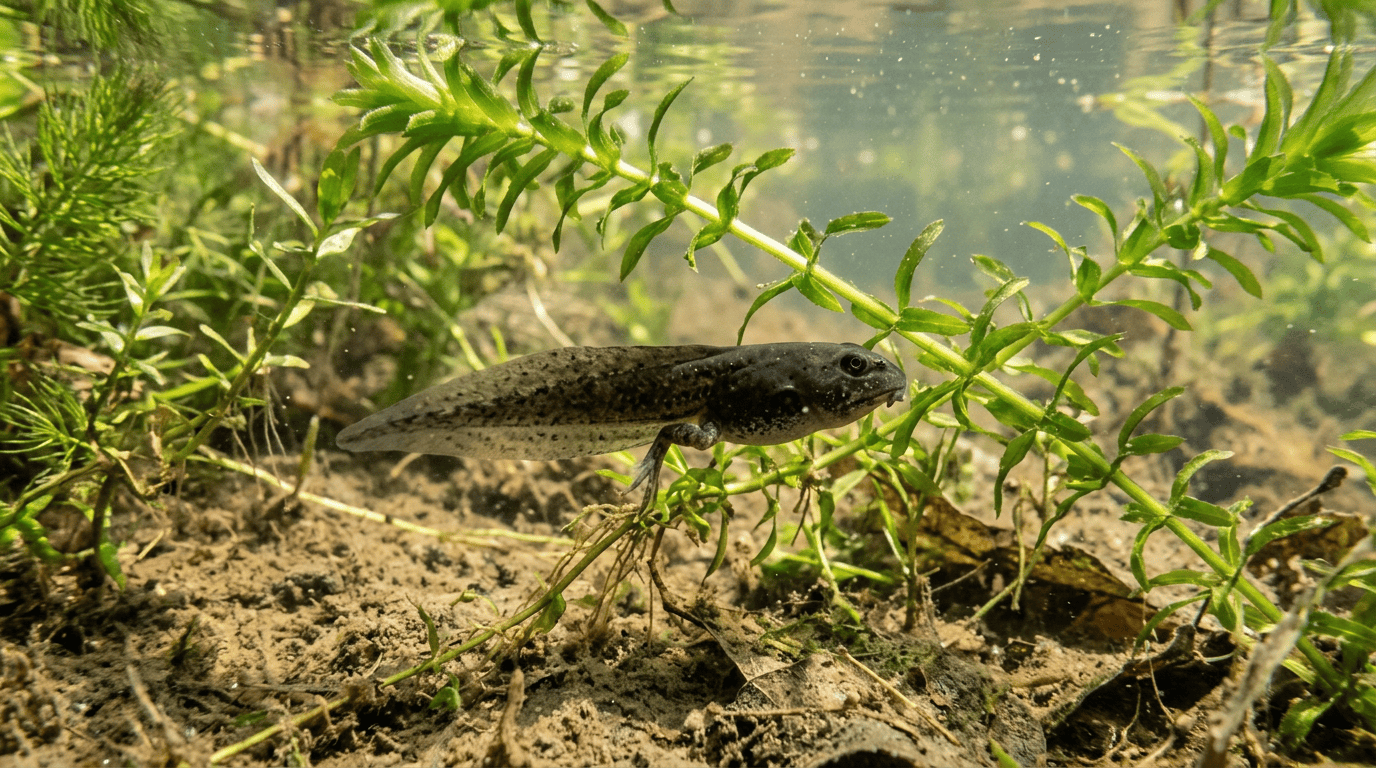
Northern Leopard Frog tadpoles are aquatic larvae with rounded bodies and long tails. They feed on algae, detritus, plant material, and tiny organic particles in the water. Their growth rate depends on water temperature, food, pond conditions, and the length of the growing season.
As tadpoles develop, hind legs appear first, followed by front legs. The tail is gradually absorbed as the froglet prepares for life on land. Newly transformed froglets are tiny but already show the spotted markings that make leopard frogs so distinctive.
Similar Species
Northern Leopard Frogs can be confused with Southern Leopard Frogs, Plains Leopard Frogs, Pickerel Frogs, and Green Frogs. Pickerel Frogs usually have more rectangular spots arranged in two rows, often with yellow or orange on the inner thighs. Leopard frogs tend to have rounder spots and a more open, grassy wetland association.
Green Frogs are usually less spotted, more robust, and more strongly tied to pond edges. Their dorsolateral folds are obvious, but their body pattern is different. In areas where multiple leopard frog species overlap, range, call, spot shape, and habitat are all important identification clues.
Conservation Status
Northern Leopard Frogs are still widespread, but they have declined in parts of their range. Local losses have been linked to wetland drainage, habitat fragmentation, pollution, pesticides, disease, climate stress, invasive species, and road mortality. Because they use both wetlands and uplands, they are vulnerable when those habitats are separated or degraded.
Conservation actions include protecting wetlands, maintaining grassy buffers, reducing pesticide runoff, improving habitat connectivity, and preserving clean overwintering sites. Healthy Northern Leopard Frog populations are a good sign of connected, functioning wetland landscapes.
Interesting Facts
- Northern Leopard Frogs are named for their rounded, leopard-like spots.
- They can make long, fast jumps when startled.
- Their breeding call is often described as a low snore mixed with chuckles.
- They may use different habitats for breeding, summer foraging, and winter survival.
- They are important prey for many wetland predators and important predators of insects and other invertebrates.
Photo Gallery
Use these images as a quick visual guide to common views of the Northern Leopard Frog: an adult in wet grass, key identification markings, a calling male, and an aquatic tadpole.
FAQ
Are Northern Leopard Frogs poisonous?
Northern Leopard Frogs are not dangerous to people. Like all wild amphibians, they should be handled as little as possible because their skin is sensitive and can absorb oils, lotions, or chemicals from human hands.
What does a Northern Leopard Frog sound like?
The call is often described as a low snoring or rumbling sound mixed with chuckles. It is usually heard in spring from shallow wetlands and pond edges.
How can I identify a Northern Leopard Frog?
Look for a slender frog with rounded dark spots bordered in pale color, pale dorsolateral folds down the back, long legs, and a green, brown, or bronze background color.
Where is the best place to see Northern Leopard Frogs?
Search wet meadows, marsh edges, grassy pond margins, shallow wetlands, and damp fields from spring through early fall. Move slowly and watch the grass near water for sudden jumps.