
American Beech Guide
Keep Track of What You See
Create a free Wild Things Guide membership to record this American Beech in My Sightings and build your personal wildlife list.
Join to Add This SightingTree Name
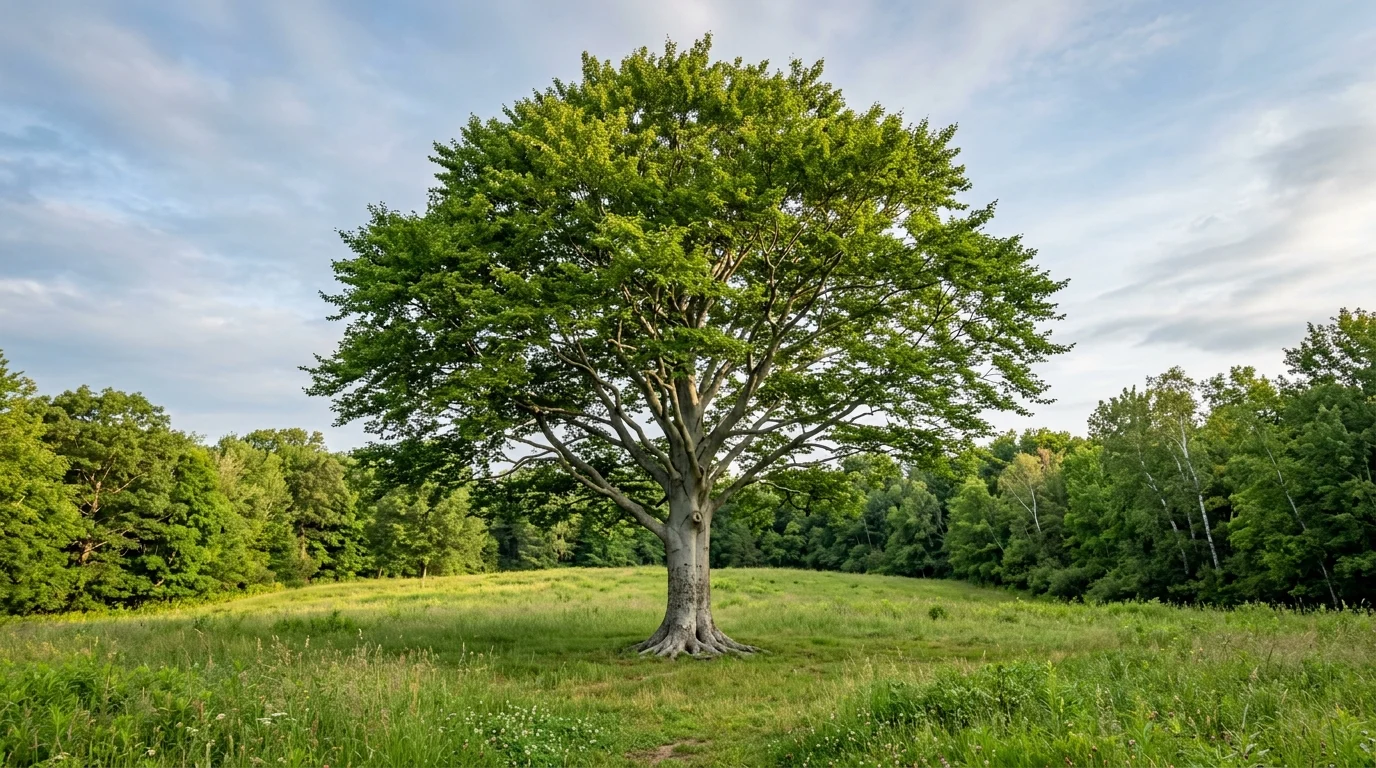
American beech (Fagus grandifolia) is a large deciduous tree in the beech family (Fagaceae), which also includes oaks and chestnuts. Native to eastern North America, it is a characteristic tree of mature hardwood forests. Its smooth gray trunk, neatly pleated-looking leaves, and exceptionally slender winter buds make it recognizable in every season.
Look for several features together. Smooth bark alone is not enough, especially where planted European beeches or smaller, smooth-barked woodland trees occur.

Quick Identification
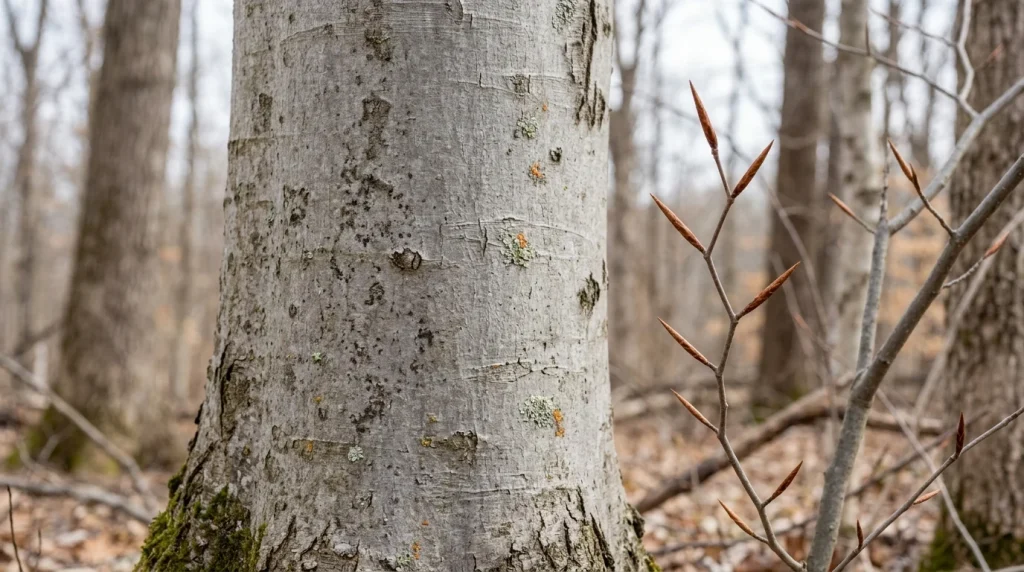
- Bark: Usually smooth, thin, and pale to medium gray, even on large trunks.
- Leaves: Alternate, simple, oval to oblong, with pointed tips and sharp, regularly spaced teeth.
- Veins: Straight side veins run from the midrib to individual marginal teeth.
- Buds: Narrow, sharply pointed, reddish-brown buds, commonly about ¾–1 inch (2–2.5 cm) long, projecting away from the twig.
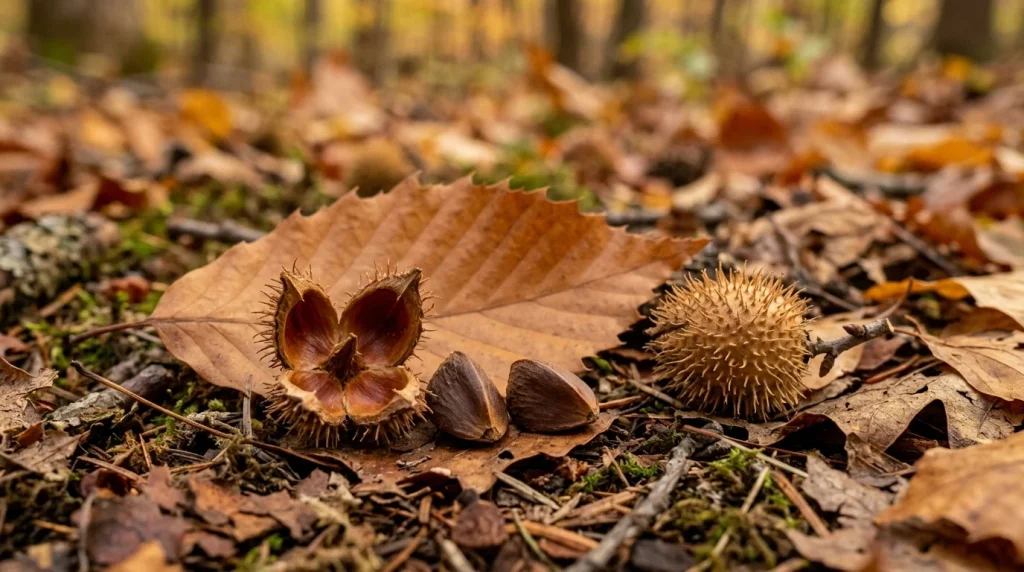
- Fruit: Small prickly husks that split open to release triangular beechnuts.
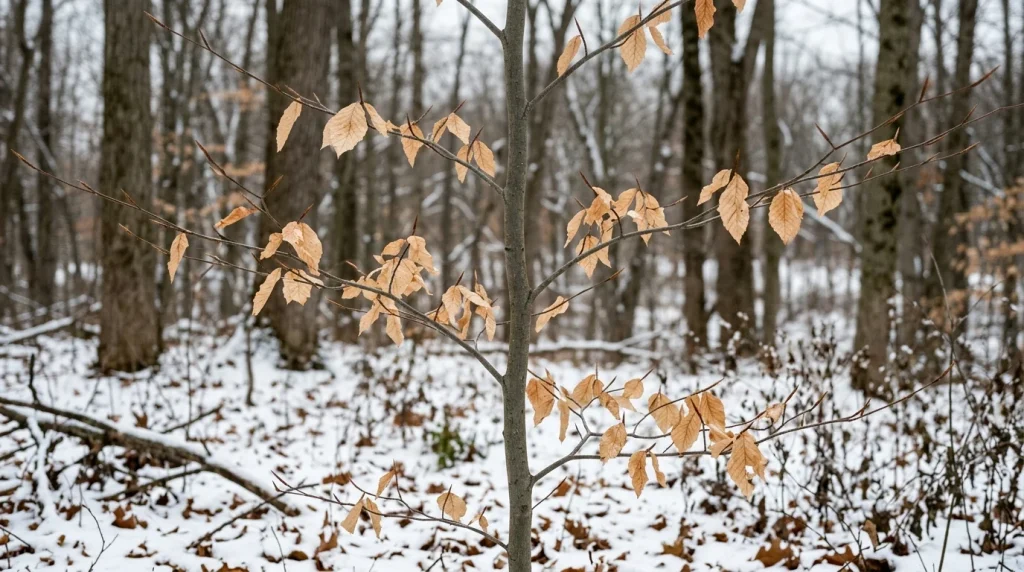
- Winter clue: Young trees and low branches often retain dry, pale tan leaves.
Appearance
Mature American beeches commonly reach 50–80 feet (15–24 m), with taller trees on favorable forest sites. An open-grown specimen may develop a broad, rounded crown 40–70 feet (12–21 m) across. Forest-grown trees usually have straighter trunks, fewer low branches, and narrower crowns shaped by competition for light.
Leaves are generally 2½–6 inches (6–15 cm) long. Their upper surfaces are green and relatively smooth; the undersides are paler and may retain hairs along the veins. Young leaves can feel silky. Each leaf has numerous conspicuous, nearly parallel side veins, giving it an orderly, ribbed appearance.
Beech grows slowly to moderately, often adding roughly 6–12 inches (15–30 cm) of height annually once established, though young trees on favorable sites may grow faster. Deep shade, drought, browsing, and disease can greatly reduce growth. Healthy trees can live 200–300 years, sometimes longer.

Bark, Twigs, and Buds
The familiar elephant-gray” bark is one of the best starting clues. Unlike most large hardwoods, American beech usually does not develop deeply furrowed bark with age. Mosses, lichens, old injuries, and disease may interrupt its smooth surface. Rough or scarred bark therefore does not automatically rule it out.
Twigs are slender and often slightly zigzagged. Their alternate buds look like tiny pointed cigars or narrow spears, with overlapping brown scales. This combination of long buds and smooth gray bark is particularly useful after leaf fall.
Avoid cutting bark or carving initials to confirm identification. Beech bark is thin, and wounds can persist for decades, creating opportunities for decay. Examine naturally fallen twigs instead. Around some trees, clusters of young beeches arise from root sprouts rather than separate seedlings.
Range and Habitat
American beech occurs across much of eastern North America, from southeastern Canada through the northeastern United States and Great Lakes region, south into northern Florida and west to portions of Missouri, Arkansas, Oklahoma, and eastern Texas. Its distribution is uneven near the western and southern edges, where suitable moisture and soils matter most.
Typical habitats include rich mesic woods, sheltered slopes, ravines, and well-drained terraces. It often grows with sugar maple, yellow birch, eastern hemlock, and other hardwoods, depending on region. It generally performs poorly in persistently waterlogged ground or severely droughty, exposed sites.
Beech is highly shade-tolerant: small trees can survive beneath a closed canopy and respond when an opening develops. For a fuller account of its regional ecology, the U.S. Forest Service’s American beech silvics profile describes its range, habitat, and regeneration.

Flowers, Fruit, Nuts, or Cones
American beech bears separate male and female flowers on the same tree. They appear in spring as the leaves unfold. Male flowers form small, rounded clusters suspended on slender stalks; female flowers occur in small groups near the ends of new shoots. Wind carries the pollen.
By late summer and autumn, fertilized flowers develop into small husks covered in soft-looking prickles. These husks typically split into four sections and usually contain two sharply three-sided brown nuts. Empty husks can remain visible beneath a tree after animals have removed the nuts.
Nut production varies substantially between years and locations. Heavy crops, called mast crops, are not guaranteed annually. Trees generally begin producing substantial seed only after several decades, with timing influenced by crown exposure and growing conditions. Do not confuse the small beechnuts with the much larger nuts and burs of chestnuts.
Wildlife Connections
Beechnuts are an energy-rich autumn food for squirrels, chipmunks, mice, wild turkeys, blue jays, and other wildlife. Black bears also feed on them where ranges overlap. Animals consume many nuts immediately but cache others; unrecovered caches can help establish new trees.
Older beeches may develop cavities used by nesting birds and mammals. Foliage supports leaf-feeding insects, which in turn feed insectivorous birds. Root-sprout thickets provide low cover, while fallen leaves contribute to the forest-floor habitat of invertebrates and decomposers.
Wildlife value changes with tree age, health, and seed production. A living, hollow beech can be valuable habitat, but one beside a building or frequently used trail may require professional risk assessment.
Seasonal Identification
Spring: Watch long buds open into soft, pleated leaves with silky hairs. Small hanging male flower clusters may be visible beneath emerging foliage. The sharp leaf teeth become clearer as leaves expand.
Summer: Check the combination of alternate leaves, straight side veins ending in teeth, and smooth gray bark. The crown casts dense shade, but shade alone is not diagnostic.
Autumn: Leaves commonly turn yellow, bronze, or coppery brown. Look beneath the crown for prickly husks and triangular nuts, remembering that some years produce little fruit.
Winter: Slender pointed buds are especially dependable. Retained papery leaves can reveal understory beeches from a distance, but some oaks and other trees also retain dead foliage. Confirm with buds and bark.
Human Uses and History
American beech wood is hard, heavy, and useful where toughness and wear resistance matter. People have used it for furniture, flooring, tool handles, turned objects, and food-contact items such as cutting boards. Without protection, it is not especially durable in prolonged outdoor contact with moisture.
Beechnuts have a history of use as food and livestock feed, although their small size and irregular abundance limit convenience. Wildlife depends on these crops, so leave most nuts where they fall.
As a landscape tree, beech needs generous space and protection from disturbance. Its shallow, spreading roots are vulnerable to soil compaction, trenching, and grade changes. Preserve an existing tree’s root zone rather than trying to fit paving or intensive gardening beneath its crown.
Conservation and Threats
American beech remains widespread, but serious diseases are changing many forests. Beech bark disease involves bark injury from an introduced scale insect, followed by infection by certain Neonectria fungi. Affected trunks may show white, woolly scale colonies, cankers, dead patches, and extensive roughening. Severely damaged trees can break or die.
Beech leaf disease is associated with the foliar nematode Litylenchus crenatae mccannii. Early symptoms often include dark bands between leaf veins, most noticeable when looking upward through backlit foliage. Leaves may later become thickened, curled, or reduced, and crowns can thin. Young trees may decline rapidly.
Other problems include drought stress, root damage, and browsing that limits regeneration. Disease symptoms can overlap with other injuries, so confirm with a local extension service or qualified arborist. Avoid moving potentially infested plants or wood, and follow regional guidance. Management recommendations continue to evolve; no single universal treatment fits every forest or yard.
Similar Species
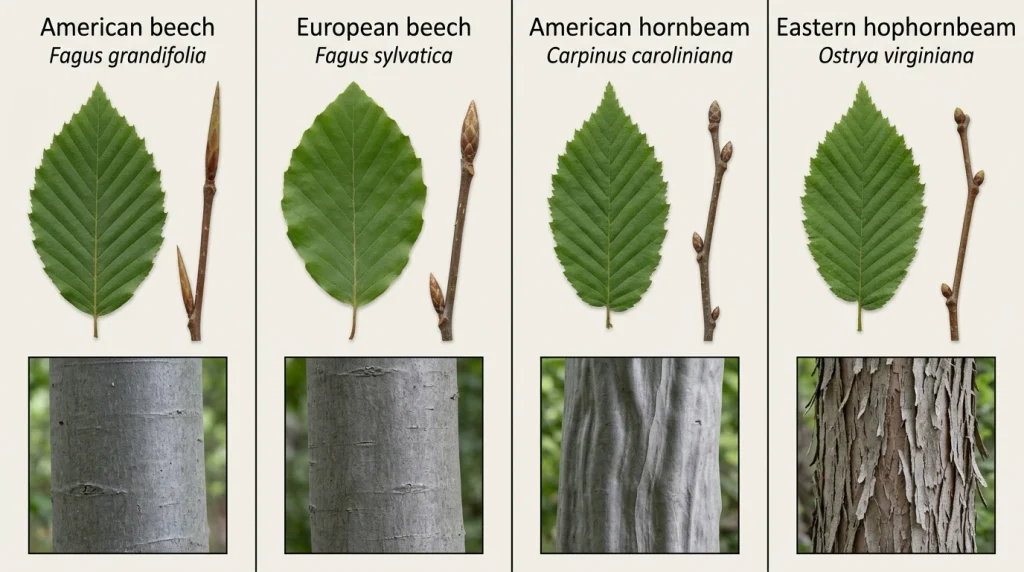
- European beech (Fagus sylvatica): Frequently planted, with similarly smooth bark and pointed buds. Typical leaves have wavy or weakly toothed margins and fewer pairs of side veins than American beech. Purple and weeping cultivars are common, but green forms require closer examination.
- American hornbeam (Carpinus caroliniana): Also called musclewood or blue-beech. Usually smaller, with conspicuously fluted, muscular-looking trunks, doubly toothed leaves, and much shorter buds. Its fruits hang with leafy bracts rather than prickly husks.
- Eastern hophornbeam (Ostrya virginiana): Has toothed leaves, but mature bark breaks into narrow, loose strips. Its inflated, hop-like fruit clusters differ greatly from beechnuts.
- Chestnuts (Castanea species): Often have longer, narrower leaves with prominent teeth. Their fruits develop in densely spiny burs, and their buds lack beech’s elongated spear shape.
Interesting Facts
- Retention of dead leaves is called marcescence. It is especially noticeable on young trees and lower branches.
- A patch of beech saplings may include genetically connected root sprouts, not just seedlings from nuts.
- Smooth bark can preserve old markings for many years, but carving is an injury, not a harmless tradition.
- Heavy nut crops create a seasonal food pulse that influences the feeding and movements of many forest animals.
Frequently Asked Questions
What is the easiest way to identify American beech?
Look for smooth gray bark and long, narrow, sharply pointed buds. In the growing season, add alternate leaves with straight side veins that end in sharp teeth.
Does American beech keep its leaves all winter?
Some do, especially saplings and lower branches. Retention varies with exposure, weather, and tree age; a mature crown may be mostly bare.
Is American beech a good yard tree?
It can be magnificent on a spacious, suitable site, but its eventual size, sensitive roots, and regional disease pressure deserve consideration. Consult local planting guidance before choosing one.
Are dark bands on beech leaves normal?
Persistent dark interveinal bands can indicate beech leaf disease, particularly when accompanied by thickening or distortion. Photograph both leaf surfaces and the whole crown, then seek a local diagnosis.


