
What Makes It a Reptile?
Explore the defining features of reptiles, how scientists classify them, and why familiar rules about scales, eggs, and cold blood have surprising exceptions.
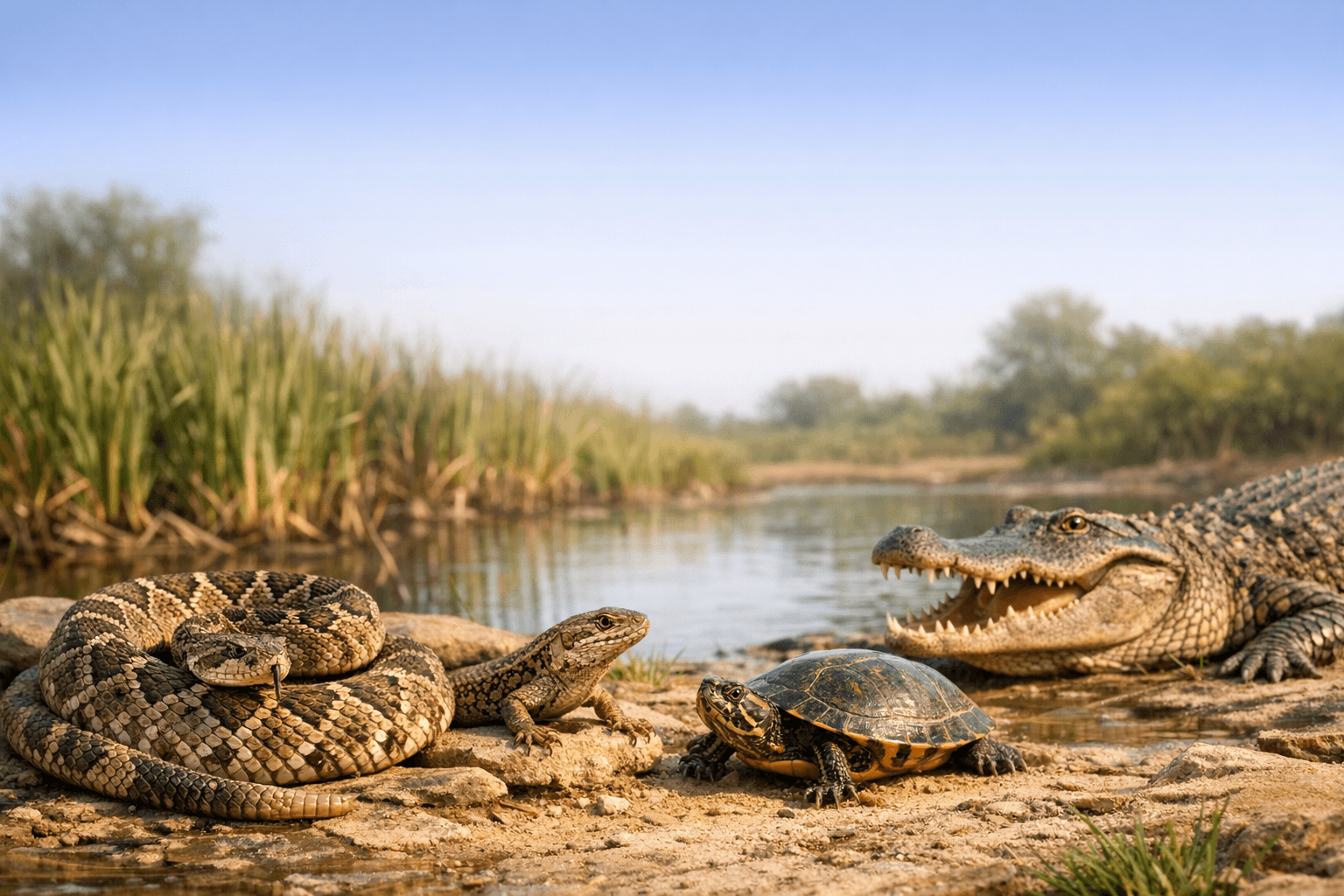
A snake slipping through grass, a tortoise crossing a dry trail, and an alligator floating nearly motionless may seem like very different animals. Yet each is recognized as a reptile. They share important features inherited from common ancestors, including a backbone, lungs, keratinized skin, and a style of temperature regulation strongly influenced by the environment.
Those traits provide a useful starting point, but nature rarely fits perfectly into a short checklist. Some reptiles give birth to live young. Not all reptile scales look alike, and shells are more complicated than external armor. Birds are also nested within the reptile family tree under modern evolutionary classification. To understand what makes an animal a reptile, we therefore need to consider both anatomy and ancestry.
The short answer
A living non-bird reptile is a vertebrate in one of the surviving reptile lineages—squamates, turtles, crocodilians, or tuatara. It breathes with lungs, usually has dry keratinized skin, and is generally ectothermic. No single visible feature identifies every reptile, so scientists also use evolutionary relationships.
The Basic Definition of a Reptile
Reptiles are vertebrates, meaning they have a spinal column and an internal skeleton. The skeleton supports the body, anchors muscles, and protects organs such as the brain, spinal cord, heart, and lungs. This fundamental trait places reptiles within the same broad vertebrate group as fishes, amphibians, birds, and mammals.
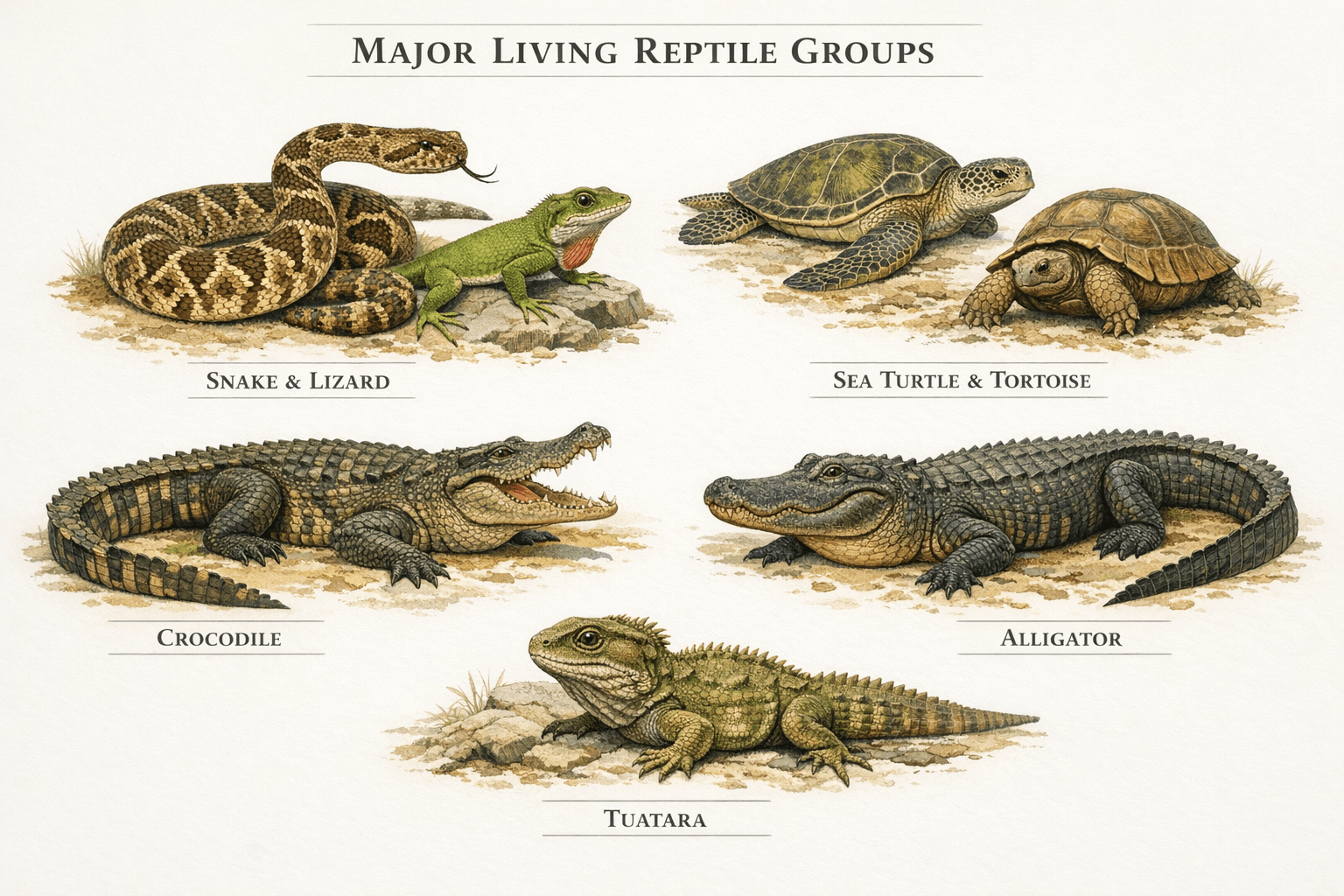
Living reptiles traditionally fall into four major branches:
- Squamates: lizards, snakes, and worm lizards.
- Testudines: turtles, tortoises, and terrapins.
- Crocodilians: crocodiles, alligators, caimans, and gharials.
- Rhynchocephalians: represented today only by New Zealand’s tuatara.
Most members of these groups have dry skin reinforced with keratin, breathe air through lungs throughout life, and rely heavily on environmental heat. Their young do not pass through an aquatic, gill-breathing larval stage like the tadpoles of many frogs. To see that contrast clearly, follow the transformation described in the frog life cycle from egg to tadpole to adult.
Why a checklist is not enough
Older classification systems often grouped animals according to obvious similarities. Modern biologists still study physical traits, but they also examine fossils, embryonic development, behavior, and DNA. The aim is to reconstruct shared ancestry rather than merely collect animals that look alike.
A reptile is not defined by one “magic” feature. It is recognized by a combination of inherited characteristics and its position on the evolutionary family tree.
This distinction matters because individual traits occur outside reptiles. Fish can have scales, mammals such as pangolins have keratinized scales, and many birds lay shelled eggs. Conversely, a reptile may lack a feature people expect: several snakes and lizards bear live young rather than laying eggs.
Scales, Scutes, and Protective Skin

One of the most recognizable reptile characteristics is dry skin covered by scales or scutes. These outer structures contain keratin, the durable protein also found in human fingernails, mammalian hair, and bird feathers. Keratinized skin forms a protective barrier against abrasion and helps slow water loss.
This adaptation was important in vertebrate life on land. Amphibian skin is generally thin, moist, and permeable, allowing water and gases to pass through it. Reptile skin is less permeable and is not used as a primary breathing surface. That does not mean reptiles can live without water, but it does allow many species to occupy comparatively dry environments.
Scales are not all constructed the same way.
Reptile body coverings vary considerably. A snake’s overlapping belly scales provide traction as it moves. Many lizards have small granular scales, larger plates, spines, or a mixture of textures. Crocodilians carry thick scutes reinforced by bony deposits called osteoderms. Their ridged backs are therefore more than a superficial layer of scales.
Turtle shells are even more specialized. The shell is not a removable suit of armor. Its bony framework is integrated with the ribs and vertebral column, while many turtle species have keratinized scutes covering the bone. A turtle cannot simply crawl out of its shell because the shell is part of its skeleton.
Why reptiles shed
The outermost skin does not expand indefinitely. Snakes periodically loosen and shed it, often in one nearly continuous piece. Many lizards shed in patches and may eat the discarded skin, recovering nutrients while removing evidence that could attract predators. Before shedding, a snake’s appearance may become dull, and its eyes cloudy as fluid separates old skin from the new layer below.
Key skin clue
Dry scales or scutes strongly suggest a reptile, but they are evidence rather than absolute proof. Look at the whole animal, including its skeleton, breathing, development, and ancestry.
How Reptiles Breathe and Control Body Temperature
All living reptiles breathe air with lungs throughout their lives. Even sea turtles, sea snakes, and crocodilians must surface to breathe. Aquatic reptiles can remain submerged for substantial periods by slowing their metabolism, storing oxygen, and directing blood toward vital organs. Still, they do not extract oxygen from water with functional gills.
Lung ventilation differs among groups. Lizards and snakes mainly use rib muscles to expand the body cavity. Crocodilians employ a specialized muscle that pulls the liver backward, helping inflate the lungs. Turtles face a unique challenge because their rigid shells prevent the ribs from expanding normally; instead, specialized muscles move internal organs and alter pressure around the lungs.
Ectothermic does not mean “always cold”
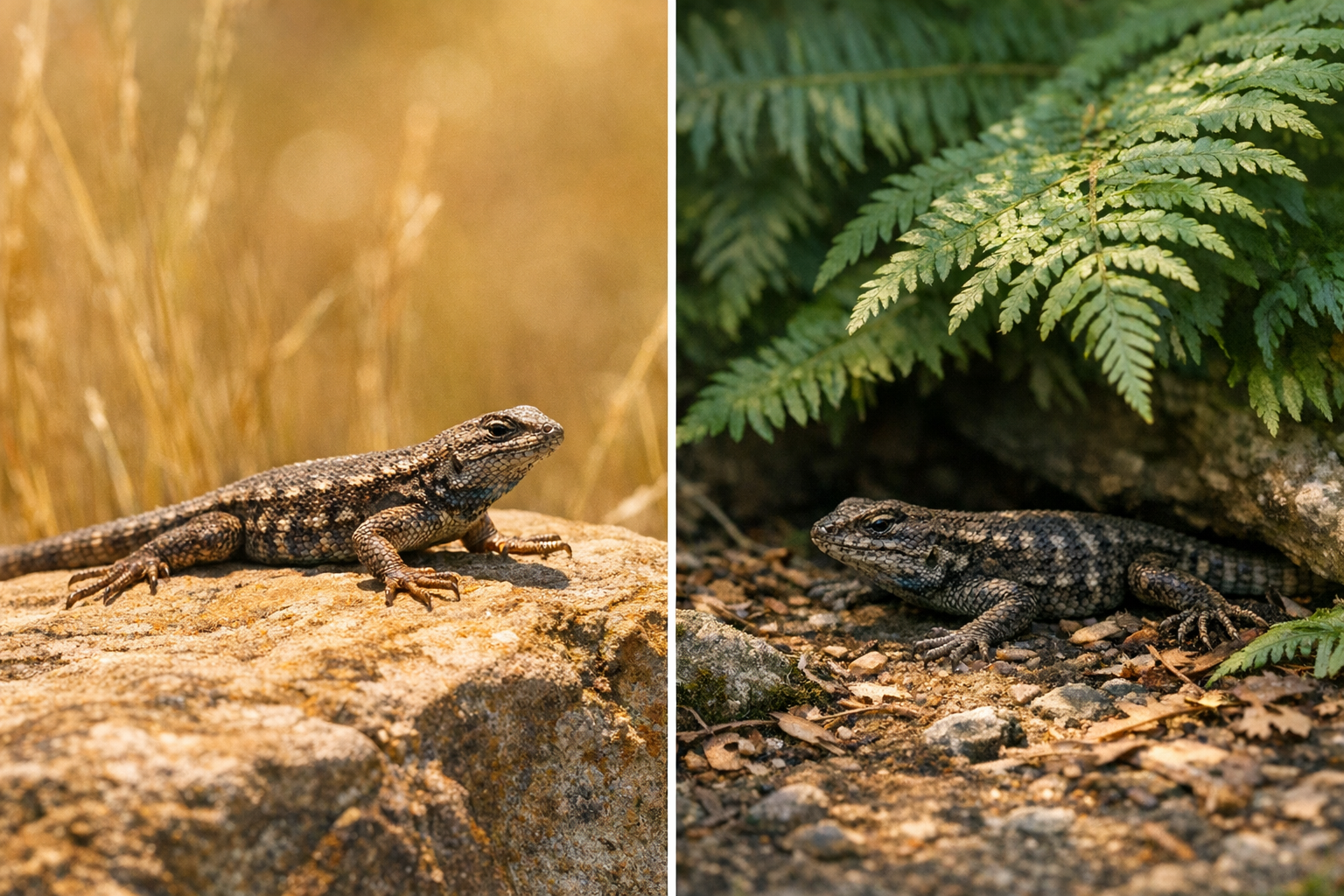
Reptiles are commonly called cold-blooded, but ectothermic is more precise. Their body temperature is governed mainly by heat exchanged with their surroundings rather than maintained at a high, stable level by internal metabolism. A basking lizard can become quite warm—sometimes as warm as, or warmer than, a nearby mammal.
Reptiles regulate temperature behaviorally by:
- Basking in direct sunlight or resting on warm surfaces.
- Turning the body to increase or reduce exposure to the sun.
- Moving between sun, shade, burrows, vegetation, and water.
- Changing activity times according to season and daily conditions.
- Flattening or elevating the body to alter heat exchange.
Temperature affects nearly everything a reptile does. Warming the body can improve muscle performance, sensory processing, digestion, and the ability to escape predators. If conditions become too hot, however, the animal risks dehydration and physiological damage. Thermoregulation is therefore an active balancing process, not passive dependence on the weather.
Ectothermy also offers an energetic advantage. Reptiles generally require far less food for body maintenance than similarly sized endothermic animals. A snake may survive on occasional large meals because it does not continually burn energy to keep its body at a mammal-like temperature. The trade-off is that cold weather can sharply limit movement, feeding, and digestion.
Reproduction: Eggs, Young, and Important Exceptions

Most reptiles reproduce through internal fertilization. This allows sperm and egg to unite inside the female’s reproductive tract, an arrangement well suited to life away from open water. Many species then lay amniotic eggs on land, although nests may be placed in humid soil, vegetation, sand, or protected cavities.
The amniotic egg was a major evolutionary innovation. Its membranes create a self-contained environment around the embryo. The amnion cushions it in fluid, the yolk supplies nutrients, other membranes assist with gas exchange and waste storage, and the shell provides physical protection while remaining porous enough for oxygen and carbon dioxide to pass.
Many reptile eggs feel leathery or parchment-like rather than brittle. Others, including crocodilian and some turtle eggs, are more heavily calcified. Shell texture varies with lineage and nesting environment, so “leathery egg” is another common pattern rather than a universal rule.
The exception: live-bearing reptiles
Not every reptile lays eggs. Live birth has evolved many times among snakes and lizards, particularly in cool climates where a pregnant female can improve embryonic development by moving between warm and sheltered locations. In some species, eggs remain inside the parent until they hatch; in others, embryos receive more direct maternal support.
Parental behavior also varies. Many reptiles leave eggs after laying them, but crocodilians guard nests, respond to hatchlings’ calls, help uncover them, and may carry young gently in their jaws. Some skinks protect eggs or young, and pythons may coil around a clutch. Reptiles are not uniformly inattentive parents.
An important exception to remember
Egg-laying cannot define reptiles by itself. Some reptiles bear live young, while birds and egg-laying mammals also produce eggs. Reproductive anatomy, development, and ancestry provide the fuller picture.
Reptiles Versus Amphibians, Birds, and Mammals
When identifying an unfamiliar vertebrate, comparisons are often more useful than memorizing an isolated definition. Skin, breathing, development, and temperature regulation together can separate reptiles from superficially similar animals.
- Reptiles: Usually have dry, keratinized scales or scutes; breathe with lungs throughout life; are predominantly ectothermic; and reproduce through internal fertilization.
- Amphibians: Usually have moist, permeable skin; are ectothermic; and often begin as aquatic larvae before undergoing metamorphosis.
- Mammals: Have hair and mammary glands and regulate body temperature mainly through internally generated metabolic heat.
- Birds: Have feathers and are endothermic, yet descend from theropod dinosaurs and sit within the reptile evolutionary lineage.
Reptiles and amphibians
The reptile-amphibian distinction causes the most confusion. Salamanders can resemble smooth-skinned lizards, but salamanders are amphibians. Their skin lacks the dry, keratinized scales typical of lizards, and their reproductive development is tied more closely to moisture. For practical identification details, compare the clues used to determine whether an animal is a salamander or a newt.
There are exceptions within amphibians too. Some lack a free-swimming larval stage, and a few have relatively dry-looking skin. The safest approach is to use several observations rather than one: inspect skin texture, body structure, habitat, eggs, and development if those clues are available.
Why birds complicate the picture
In traditional everyday language, “reptile” usually refers to turtles, crocodilians, lizards, snakes, and tuatara—not birds. Evolutionary classification creates a broader result. Crocodilians share a more recent common ancestor with birds than with lizards. If a scientific group includes that common ancestor and all its descendants, birds must be included within Reptilia.
That does not make “bird” an incorrect label. An animal can belong to nested groups at once, just as humans are mammals, primates, and vertebrates simultaneously. In common identification guides, birds and non-bird reptiles remain separate for convenience. In cladistics, birds are living dinosaurs and highly specialized reptiles.
Reptiles and mammals
Mammals are primarily endothermic, possess hair at some stage of life, and nourish young with milk. A mammal’s skin may occasionally confuse the issue—pangolin scales, for example, are made of keratin—but ancestry and the complete suite of mammalian traits settle the classification.
This multi-clue method resembles good wildlife tracking. A single mark can mislead, while shape, dimensions, gait, substrate, and context strengthen an identification. The same evidence-based approach used when recognizing white-tailed deer tracks is valuable when classifying an unfamiliar animal: do not rely on one feature when several are available.
Meet the Major Reptile Groups
Squamates: lizards, snakes, and worm lizards
Squamata is the largest living reptile order, with species occupying deserts, forests, grasslands, oceans, rivers, and cities. The group is characterized partly by flexible skull features and skin that is periodically shed. Lizards display the widest range of body forms, from tiny geckos to powerful monitor lizards.
Snakes evolved from lizard-like ancestors and lost their limbs during that history, although pythons and boas retain small internal or external remnants of the hind limbs. Worm lizards, or amphisbaenians, are specialized burrowers with reinforced skulls and ringed bodies. Their resemblance to earthworms results from lifestyle, not a close relationship.
Turtles and tortoises
Turtles are defined by a shell consisting of an upper carapace and lower plastron. The shoulder girdle sits inside the rib cage—an unusual arrangement linked to shell evolution. Species range from ocean-crossing leatherbacks to freshwater turtles and land-dwelling tortoises.
In everyday usage, “tortoise” usually means a terrestrial, heavily built member of the turtle lineage. All tortoises are turtles, but not all turtles are tortoises. “Terrapin” is a regional common name often applied to particular freshwater or brackish-water turtles rather than a separate major scientific group.
Crocodilians
Crocodiles, alligators, caimans, and gharials are semiaquatic archosaurs with powerful tails, armored bodies, sophisticated sensory systems, and four-chambered hearts. Their eyes and nostrils sit high on the head, allowing much of the body to remain concealed underwater.
Crocodilians communicate with calls and body signals, build or excavate nests, and provide substantial care to offspring. These behaviors, along with anatomical evidence, help illuminate their evolutionary connection to birds.
The tuatara
Tuatara resemble lizards at a glance, but they belong to Rhynchocephalia, an ancient reptile lineage once much more widespread and diverse. Today they survive naturally only in New Zealand. Distinctive skull anatomy, tooth arrangement, and other features separate them from true lizards.
The tuatara reminds us that outward resemblance does not always indicate the closest relationship. Evolution can produce similar body forms in separate lineages, while closely related animals may become dramatically different as they adapt to new ways of life.
A Practical Reptile Identification Checklist
If you encounter an unfamiliar animal, work through the evidence in order. Avoid handling wildlife, especially snakes and crocodilians, and observe from a safe distance.
- Confirm that it is a vertebrate. Look for a recognizable head, internal skeletal support, and movement consistent with a backboned animal.
- Examine the skin. Dry scales, plates, or scutes support a reptile identification; smooth, moist skin points more strongly toward an amphibian.
- Consider breathing and development. Living reptiles use lungs throughout life and do not develop from a gilled tadpole stage.
- Observe temperature-related behavior. Basking and retreating between warm and cool microhabitats are common reptile behaviors.
- Do not demand an egg. Live-bearing snakes and lizards are still reptiles.
- Identify the lineage. Determine whether the animal fits among squamates, turtles, crocodilians, or tuatara—or among birds under the broader evolutionary definition.
The best identification comes from converging evidence: several independent clues that all point toward the same conclusion.
Conclusion: Reptiles Are Defined by Traits and Ancestry
Reptiles are backboned animals shaped by a long evolutionary history on land and in water. Most have dry keratinized skin, breathe exclusively with lungs, use environmental heat to regulate body temperature, and reproduce through internal fertilization. Many lay amniotic eggs, but live birth is an important and widespread exception.
The major lessons are straightforward:
- No single characteristic identifies every reptile.
- Scales and scutes protect the body and reduce water loss.
- Ectothermic reptiles regulate temperature through behavior.
- Reptile reproduction includes both egg-laying and live birth.
- Modern classification considers evolutionary ancestry as well as appearance.
- Birds belong within the broader reptile lineage, even though everyday guides usually discuss them separately.
Once you combine these clues, the enormous variety of reptiles makes more sense. A sea turtle, desert gecko, python, alligator, and tuatara do not need to look identical. Their shared anatomical features and evolutionary relationships reveal why they belong together.
Put Your Reptile Knowledge to the Test
When you encounter an unfamiliar animal, examine its backbone, skin, breathing, temperature regulation, reproduction, and evolutionary family before deciding whether it is a reptile. Record your observations from a respectful distance and see how many independent clues support your identification.