Western Hemlock Guide
Keep Track of What You See
Create a free Wild Things Guide membership to record this Western Hemlock in My Sightings and build your personal wildlife list.
Join to Add This SightingTree Name
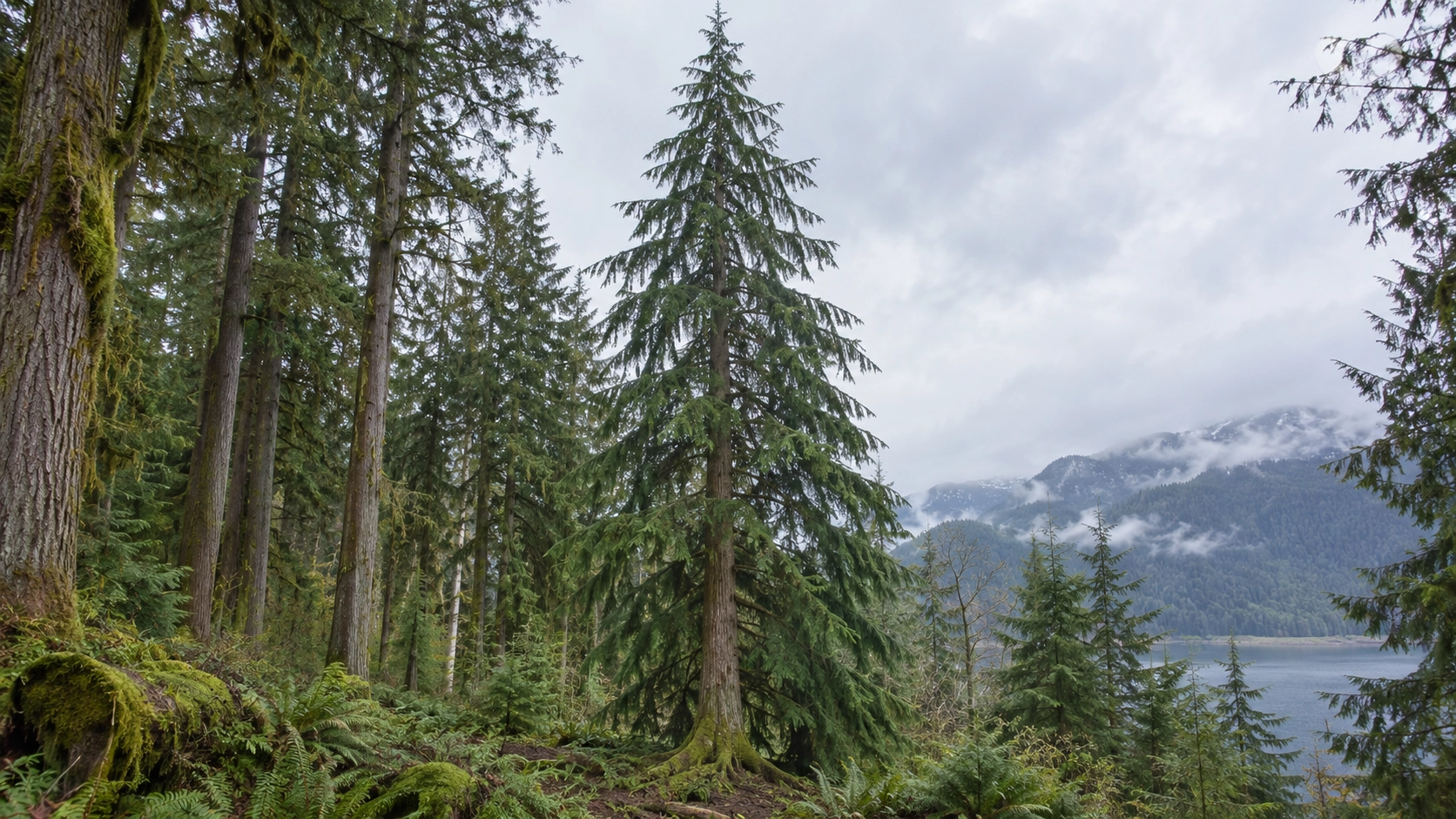
Western hemlock (Tsuga heterophylla) is a large evergreen conifer in the pine family (Pinaceae). Native to western North America, it is a characteristic tree of cool, moist Pacific forests. Its fine-textured foliage, drooping branch tips, and nodding top give it a softer outline than many neighboring conifers.
The name”hemlock” can be confusing: this tree is unrelated to poison hemlock, a toxic flowering herb. To identify it, look for several features together rather than relying on its graceful silhouette alone.

Quick Identification
- Top: The leading shoot usually bends or nods, especially on young and middle-aged trees.
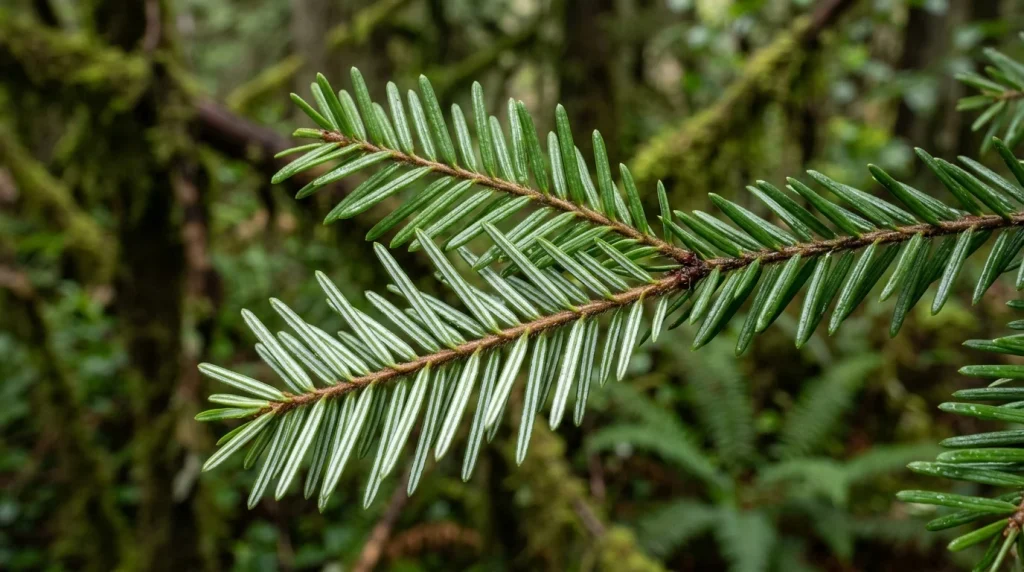
- Needles: Short, flat, soft-looking needles, roughly ¼–¾ inch (5–20 mm) long, vary noticeably in length along a twig.
- Needle undersides: Two pale whitish bands contrast with the greener upper surface.
- Foliage arrangement: Needles spread mostly sideways, with shorter needles often standing above the twig.
- Cones: Small, hanging, woody cones about ½–1 inch (1.5–2.5 cm) long.
- Setting: Moist forest, shaded slopes, stream valleys, or seedlings rooted on decaying logs.
A nodding leader, uneven-length flat needles, and tiny hanging cones make this a useful combination. Examine an attached branch when possible; fallen foliage may have come from another nearby tree.
Appearance
Mature western hemlocks commonly reach 100–200 feet (30–60 m), and exceptional forest trees grow taller. Crown spread often falls around 20–50 feet (6–15 m), depending strongly on crowding and exposure. Trees growing in the open retain broader crowns and more low branches than trees inside dense stands.
Young trees usually have narrow, conical crowns with delicate, layered branches. Older trees may develop irregular tops and long trunks clear of living branches. The outer branchlets hang loosely, producing feathery sprays rather than the stiff, bristling appearance of many spruces.
Needles are green above and paler underneath, with generally blunt or rounded tips. Their unequal lengths are important: the scientific epithet heterophylla means “different-leaved.” Although the foliage looks roughly two-ranked from a distance, the needles actually attach around the twig and twist into position.
Bark, Twigs, and Buds
Young bark is relatively thin, grayish to reddish-brown, and smooth to shallowly scaly. With age, it becomes thicker and develops narrow ridges and furrows, often showing reddish or purplish-brown tones. It generally lacks the massive, deeply corky ridges typical of an old Douglas-fir.
First-year twigs are slender, yellowish to brown, and finely hairy; a hand lens helps reveal the hairs. Needles narrow into short stalks attached to small woody projections. A bare twig therefore feels somewhat rough, unlike the smoother twig surface left by many true firs.
Buds are small, rounded to ovoid, and brown. They are much less conspicuous than the long, sharply pointed buds of Douglas-fir. When cones are absent, twig texture, bud shape, and needle undersides help confirm the identification.

Range and Habitat
Western hemlock occurs along the Pacific side of North America from southeastern Alaska through coastal British Columbia, Washington, and Oregon into northern California. A separate inland distribution reaches southeastern British Columbia, northeastern Washington, northern Idaho, and northwestern Montana.
It favors cool, humid conditions and soils with dependable moisture. Typical habitats include coastal rainforests, sheltered ravines, lower mountain slopes, and moist inland forests. Its elevation range changes with latitude and local climate, so elevation alone is not a dependable identification clue.
Common associates include Douglas-fir, western redcedar, Sitka spruce, and various true firs. Western hemlock is highly shade-tolerant: seedlings can persist beneath an existing canopy and respond when a gap admits more light. Decaying wood often provides a favorable seedbed above competing vegetation and deep litter.
The U.S. Forest Service’s western hemlock species review provides detailed information on its distribution, regeneration, and response to fire.

Flowers, Fruit, Nuts, or Cones
Western hemlock produces cones rather than flowers, fruits, or nuts. Pollen cones and seed cones occur on the same tree. Small pollen cones release wind-carried pollen in spring; timing varies with latitude, elevation, and weather.
Seed cones hang from branchlets and mature during their first growing season. Young cones may be greenish or purplish before turning brown. Mature cones have thin, rounded, overlapping scales and lack the conspicuous three-pointed bracts that protrude from Douglas-fir cones.
Each fertile scale typically bears two small winged seeds. Cones open as they dry, allowing wind to carry the seeds away. Empty cones can remain attached after seed release, making them useful outside the main reproductive season. Search beneath the crown, but compare fallen cones with those still attached to branches.

Wildlife Connections
Small birds and rodents eat western hemlock seeds, while dense foliage offers shelter and nesting cover. Deer and elk may browse young shoots, although browsing intensity depends on season and the availability of other foods.
The tree’s broader value comes from its place in forest structure. Large living trees, damaged trunks, snags, and fallen logs provide different habitats for insects, fungi, birds, and mammals. Mature hemlock-containing forests can support wildlife that needs cool, shaded, structurally complex conditions.
Fallen trunks retain moisture and become nurse logs supporting seedlings and other plants. This slow transition from tree to decaying wood is an important part of many Pacific Northwest forests, not simply wasted timber.
Seasonal Identification
Spring: Fresh growth is lighter green than older foliage, and small reproductive cones may be visible. New shoots emphasize the tree’s delicate, drooping branch pattern.
Summer: Compare needle lengths and turn a spray over to find the pale bands. Developing cones provide another useful clue.
Autumn: Seed cones turn brown and begin opening when conditions permit. Some older interior needles yellow and fall naturally, but the crown remains evergreen rather than developing a broad autumn color display.
Winter: Persistent needles, hanging cones, and the nodding leader remain useful. Snow can exaggerate drooping branches, so don’t rely on snow-loaded shape alone. In tall forests, binoculars help you check the leader and upper-crown cones.

Human Uses and History
Western hemlock is an important commercial timber tree. Its wood is used for framing, joinery, paneling, plywood, and pulp. It is often marketed with certain true firs in the “hem-fir” lumber group. Untreated wood is not notably decay-resistant, so outdoor applications require appropriate design and protection.
Indigenous peoples within its range have used western hemlock bark, wood, and branches in varied technologies and cultural practices. Uses differ among communities; it is more accurate to recognize those distinct traditions than to present one universal account. The tannin-rich bark also supported historical leather tanning.
Western hemlock is Washington’s state tree. In landscapes, it suits spacious, cool, moist sites better than hot, dry yards. Allow for its eventual height, root space, and moisture needs during establishment.
Conservation and Threats
Western hemlock remains widespread, but widespread occurrence does not mean every population or forest type is secure. Loss and fragmentation of older forests can reduce habitat complexity even where younger hemlock stands remain abundant.
Drought and prolonged heat can stress trees, particularly on dry range margins or exposed sites. Relatively shallow rooting on many soils can contribute to windthrow after surrounding trees are removed. Root diseases, decay fungi, and defoliating insects also affect stands.
Hemlock woolly adelgid occurs in western North America, but its ecological context differs from the devastating introduced infestations affecting eastern hemlocks. Its presence does not automatically predict the same outcome in western forests.
Western hemlock is generally fire-sensitive, particularly when young. Practical conservation measures include protecting moist refuges, retaining suitable habitat connections, and matching plantings to local conditions.
Similar Species
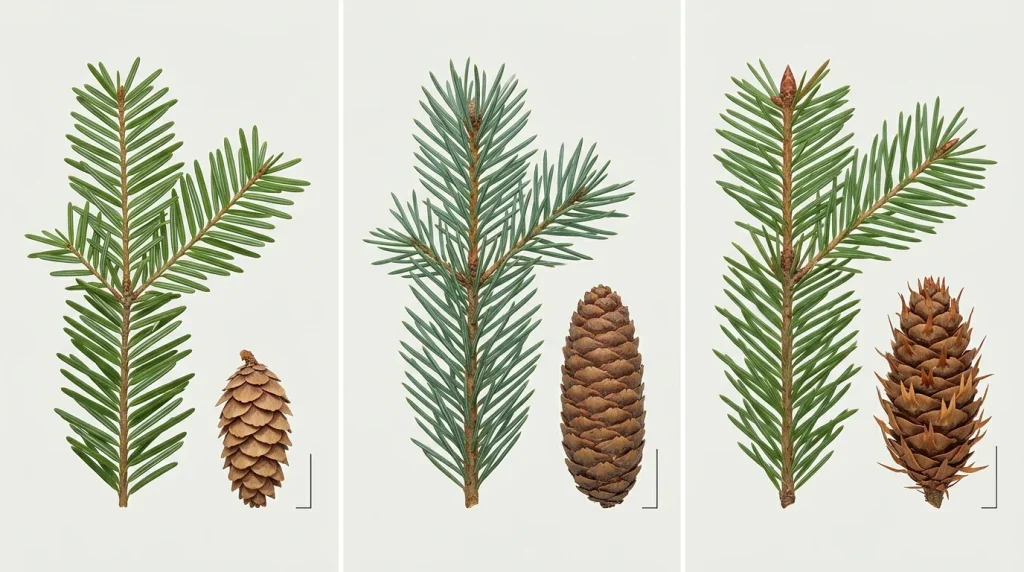
- Mountain hemlock (Tsuga mertensiana): Usually associated with colder, higher-elevation settings. Its needles are less distinctly flattened, more evenly arranged around the twig, and often bluish green. Cones are substantially larger. Its leader can also droop.
- Douglas-fir (Pseudotsuga menziesii): Has conspicuously pointed buds and larger cones with projecting three-pointed bracts. Mature bark is often deeply furrowed.
- Sitka spruce (Picea sitchensis): Needles are stiff and sharply pointed rather than soft and blunt. Cones are larger, and mature bark commonly breaks into scaly plates.
- True firs (Abies species): Needles often leave smoother, circular attachment scars. Seed cones stand upright and usually disintegrate on the tree rather than falling intact.
- Eastern hemlock (Tsuga canadensis): Very similar in general appearance but native to eastern North America. In planted collections, geography is insufficient; use a regional botanical key because needle and cone traits overlap.
Interesting Facts
- A row of hemlocks standing on raised, spreading roots may mark the former position of a nurse log that has rotted away.
- Deep-shade seedlings may remain small for years, so height alone is a poor guide to age.
- Long-lived trees can survive for several centuries; exceptional individuals may exceed 800 years.
Frequently Asked Questions
Is western hemlock poisonous like poison hemlock?
They are unrelated plants. Western hemlock is a conifer, while poison hemlock is an herb in the carrot family. That distinction is not a recommendation to eat tree material or prepare home remedies.
How fast does western hemlock grow?
Established young trees on suitable sites may add roughly 1–2 feet (30–60 cm) in height annually, sometimes more. Deep shade, drought, poor soil, or transplant stress can reduce growth considerably.
Does it lose its needles?
Yes. Like other evergreen conifers, it sheds older needles while retaining younger ones. Extensive outer-crown browning or sudden thinning deserves closer investigation rather than being assumed normal.
What is the quickest reliable identification check?
Find an attached spray with unequal-length flat needles, check for two pale bands underneath, and look for tiny hanging cones. Then confirm the nodding leader and a plausible habitat.