Black Spruce Guide
Keep Track of What You See
Create a free Wild Things Guide membership to record this Black Spruce in My Sightings and build your personal wildlife list.
Join to Add This SightingTree Name
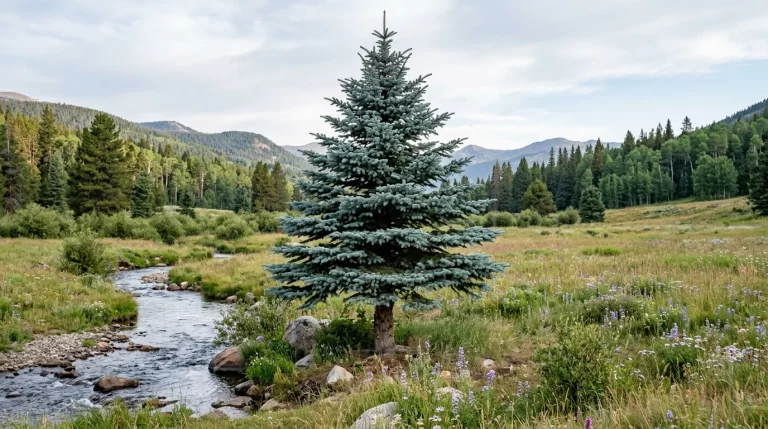
Black spruce (Picea mariana) is a native evergreen conifer in the pine family (Pinaceae). It is a defining tree of North America’s boreal forest, especially on cold, wet ground where taller competitors struggle. Other names include bog spruce and swamp spruce.
Its name does not mean that the needles or bark are literally black. Rather, dense stands often look dark against pale skies, snow, or open peatlands. For field identification, combine its narrow silhouette with short needles, hairy young twigs, and small, persistent cones.

Quick Identification
- Overall shape: A slender, spire-shaped evergreen, often with short, drooping branches and an irregular, crowded tuft near the top.
- Needles: Usually about 6–15 mm long, blue-green to gray-green, four-sided, and attached individually to small woody pegs.
- Twigs: Young growth has fine hairs, best seen with a hand lens.
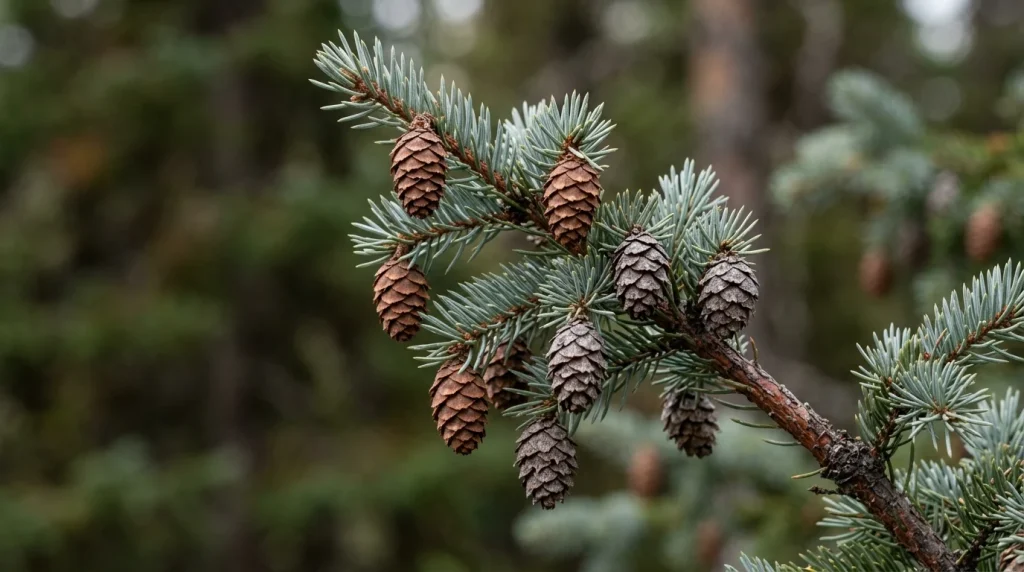
- Cones: Small, egg-shaped to nearly rounded, about 1.5–3 cm long; older cones often remain near the upper crown for years.
- Setting: Common in bogs, muskeg, and other cold boreal habitats, though not restricted to wetlands.
A good practical check is to examine a fallen twig beneath the tree. Short needles and hairy new growth suggest black spruce; a cluster of small, retained cones strengthens the identification.
Appearance
Mature black spruce commonly reach about 30–60 feet (9–18 m), with narrow crowns roughly 6–15 feet (2–5 m) wide. Trees on favorable sites may grow taller, while those in nutrient-poor peatlands or near treeline may remain much smaller. An apparently young, shoulder-high tree can be surprisingly old.
The crown is usually narrow and somewhat open below. Lower branches often droop, while their tips turn upward. Older trees sometimes develop a distinctive compact or club-shaped crown tip, although this feature is not present on every individual.
Needles radiate around the twig rather than forming the clearly flattened sprays of many firs. Each needle is angular enough to roll between the fingers and has pale stomatal lines on its surfaces. The points may feel prickly, but touch alone is not a reliable way to separate spruce species.
Growth is usually slow, often about 4–10 inches (10–25 cm) annually once established, and much less on harsh sites. Individual trees commonly live roughly 150–250 years; some persist longer.

Bark, Twigs, and Buds
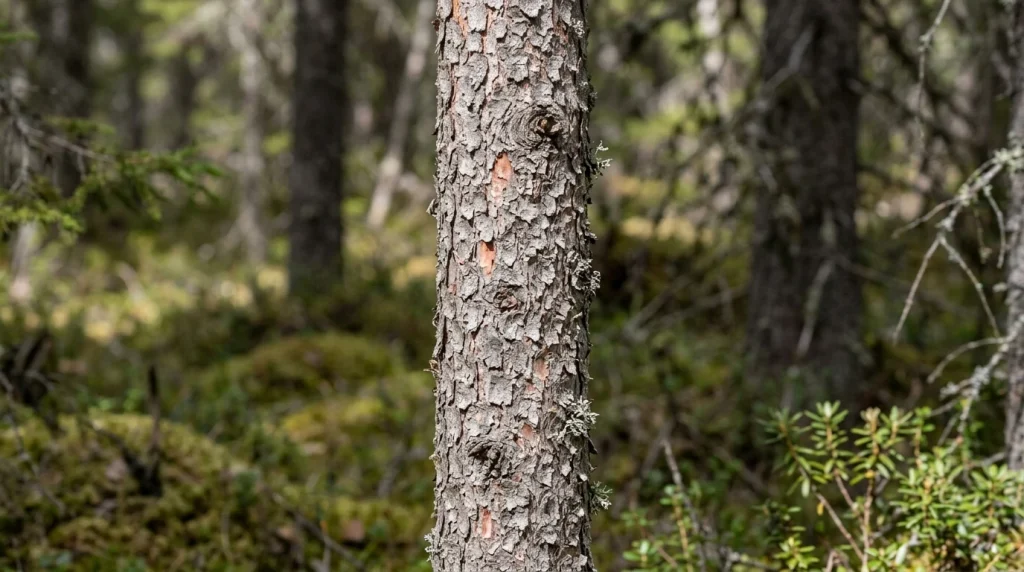
The bark is thin, gray-brown to reddish-brown, and broken into small, irregular scales. It rarely develops the thick, deeply furrowed plates seen on many mature pines. Exposed patches beneath loose scales may look warmer brown than the outer surface.
Young twigs are yellowish-brown to reddish-brown and finely hairy. This hairiness is especially helpful when comparing black spruce with white spruce, whose young twigs are generally hairless. Check fresh growth rather than weathered branches, where hairs can be difficult to see.
Buds are small, broadly egg-shaped, and covered with brown scales. After needles fall, their woody attachment pegs remain, leaving spruce twigs rough to the touch. Fir twigs lack these persistent pegs and feel comparatively smooth. When possible, examine naturally fallen material rather than stripping live branches.
Range and Habitat
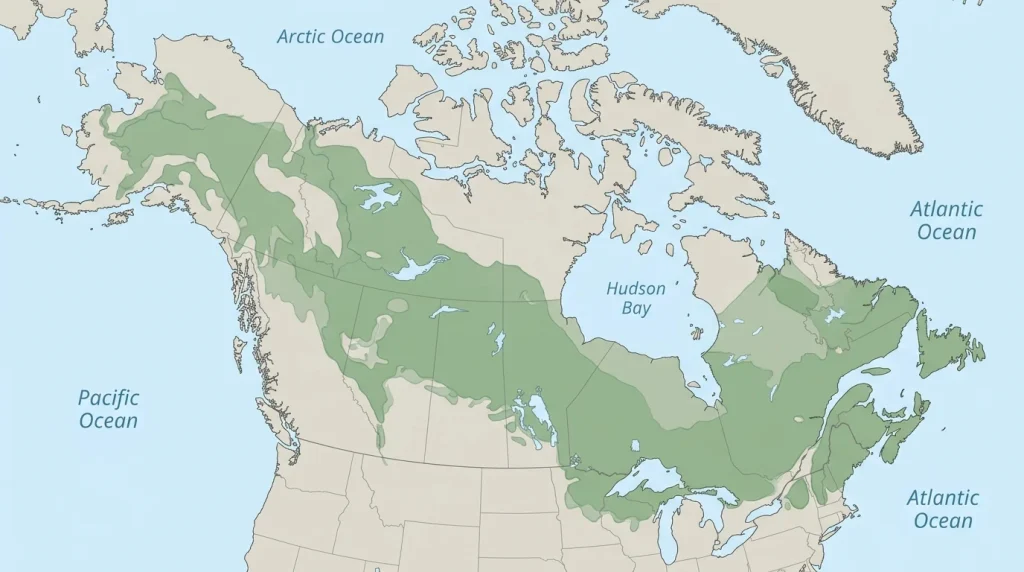
Black spruce extends across much of boreal North America, from Alaska through Canada to Labrador and Newfoundland. Its native range reaches south into the northern Great Lakes region and northeastern United States. Near its southern limits, it often occurs in scattered cool wetlands rather than continuous forest.
Typical habitats include sphagnum bogs, peatlands, poorly drained flats, and cold forest soils. It also grows on uplands, particularly in northern and fire-influenced landscapes. A wet site supports an identification, but an upland location does not rule it out.
Shallow roots allow it to survive where deep soil is waterlogged, cold, or underlain by permafrost. The trade-off is vulnerability to windthrow and damage when surface organic layers burn. For a detailed account of its distribution and ecology, consult the U.S. Forest Service’s black spruce species review.
Flowers, Fruit, Nuts, or Cones
Black spruce produces cones rather than true flowers, fruits, or nuts. Pollen cones and seed cones occur on the same tree. In spring, the small pollen cones may appear reddish before shedding pollen, while developing seed cones are often reddish-purple.
Mature seed cones hang downward and turn brown. They are generally only 1.5–3 cm long, with relatively thin scales whose exposed edges can appear uneven or finely toothed. Look especially near the crown tip, where cones of different ages may accumulate.
The cones are often described as partially serotinous: they can retain seeds and remain partly closed for years, but they also release seeds gradually without fire. Heat encourages opening and seed release. This makes black spruce well suited to regeneration after some fires, provided viable seed remains and the seedbed is suitable.
Wildlife Connections
The small winged seeds feed seed-eating birds, including crossbills and other finches. Red squirrels also harvest cones. Cone crops vary, so the amount of food available changes from year to year and place to place.
Spruce grouse eat spruce needles, particularly during winter. Branches provide cover and nesting structure for boreal birds, while associated insects support insect-eating species. Dense young stands can shelter small mammals and help moderate near-ground wind.
Black spruce forests also occur within the ranges of woodland caribou and other northern wildlife. Their value depends on the wider habitat mosaic, including lichens, peatlands, stand age, and disturbance history—not simply the presence of spruce trees.
Seasonal Identification
Spring: Watch for pale new shoots and reddish reproductive cones. Young twig hairs become easier to inspect as the shoots develop. Avoid confusing soft new needles with the firmer needles of previous seasons.
Summer: Compare needle length, twig hairiness, and cone size. These characters are more dependable than foliage color, which changes with light and growing conditions.
Autumn: Black spruce remains green while nearby tamaracks turn golden. Some older interior needles yellow and fall normally; widespread browning across branch tips deserves closer investigation.
Winter: The narrow crown, drooping branches, and retained cones remain useful. Snow can hide the lower trunk and distort the silhouette, so inspect more than one tree before deciding.

Human Uses and History
Black spruce has long been important for pulpwood and paper production. Where trunks are large enough, its wood is also used for lumber and other wood products. Growth conditions strongly influence tree size and commercial suitability.
Various Indigenous peoples have used spruce roots, wood, and resin in technologies such as sewing and binding bark containers or canoes, making implements, and sealing materials. Practices differ among communities, and historical accounts do not always distinguish black spruce from other local spruces.
For landscaping, black spruce is best suited to cool climates with adequate moisture. It is not a dependable choice for hot, drought-prone urban sites. Do not dig wild trees from peatlands, where removal damages both roots and sensitive ground vegetation.
Conservation and Threats
Black spruce remains widespread, but local stands face pressures from warming temperatures, altered drainage, drought, insects, and changing fire patterns. Peatland roads, ditching, and development can affect trees well beyond the immediate construction footprint by changing water movement.
Fire is part of black spruce ecology, not automatically a conservation failure. However, fires that recur before trees build an adequate cone supply, or that consume deep organic layers, can hinder recovery. Outcomes vary with region, weather, seed availability, and burn severity.
Protecting peatland hydrology and maintaining diverse forest age classes benefits both the tree and associated wildlife. When visiting bogs, use established routes: fragile vegetation and saturated soils are easily damaged.
Similar Species
- White spruce (Picea glauca): Usually has longer needles, hairless young twigs, and longer, more cylindrical cones, commonly around 3–6 cm. Its cones generally fall sooner rather than accumulating for many years.
- Red spruce (Picea rubens): Often has shinier, yellow-green foliage and somewhat larger cones. Its twigs can also be hairy. Black and red spruce hybridize where their ranges overlap, so some trees resist confident identification.
- Balsam fir (Abies balsamea): Has flatter needles, usually with two conspicuous pale bands beneath, and smooth needle attachment scars. Its upright cones break apart on the tree rather than falling intact.
- Tamarack (Larix laricina): Often shares peatlands with black spruce, but bears soft needles in clusters on short shoots. It turns gold and loses its needles in autumn.

Interesting Facts
Low branches can root where they contact moist moss or soil, a process called layering. This vegetative reproduction is particularly useful where seedling establishment is difficult and may produce small groups of connected stems.
Because cones remain attached for years, a living tree carries an aboveground seed reserve. Meanwhile, the peat beneath some stands stores carbon accumulated over very long periods. These are related but distinct features: a tree’s age is not the age of its peatland.
Frequently Asked Questions
Is black spruce always a bog tree?
No. Bogs are a characteristic habitat, especially toward the southern part of its range, but black spruce also occupies boreal uplands and other cold forest sites.
What is the best single identification clue?
Clusters of very small, persistent cones near the upper crown are especially useful. Confirm them with short needles and finely hairy young twigs.
Does black spruce need fire to reproduce?
No. Seeds can escape cones without fire, and low branches can root by layering. Fire can encourage seed release and expose seedbeds, but regeneration is not guaranteed.
Why are some black spruces so short?
Cold roots, low nutrient availability, saturated soil, wind exposure, and short growing seasons can greatly restrict growth. Small size alone does not indicate youth or poor health.