Virginia Pine Guide
Keep Track of What You See
Create a free Wild Things Guide membership to record this Virginia Pine in My Sightings and build your personal wildlife list.
Join to Add This SightingTree Name
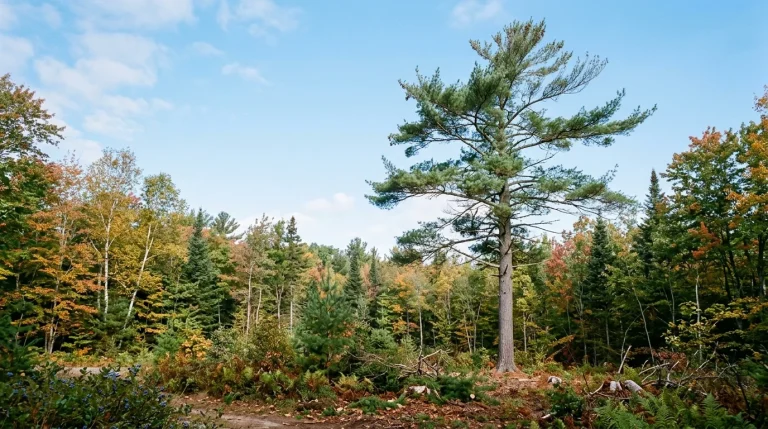
Virginia pine (Pinus virginiana) is a native eastern North American evergreen conifer in the pine family, Pinaceae. Also called scrub pine or Jersey pine, it is a familiar tree of abandoned fields, dry ridges, and disturbed ground. Its irregular crown, short twisted needles, and small prickly cones give it a somewhat untidy appearance that becomes useful once you learn the pattern.
Despite its name, this pine grows well beyond Virginia. For identification, concentrate on needle bundles and attached cones rather than the tree’s shape alone.

Quick Identification
- Needles: Usually two per bundle, about 1½–3 inches (4–8 cm) long, stiff, noticeably twisted, and yellow-green to gray-green.
- Cones: Roughly 1½–3 inches (4–7 cm) long, with a sharp, slender prickle on each exposed scale; older cones often remain attached.
- Form: A small to medium pine with an irregular, open crown and frequently persistent dead lower branches.
- Bark: Thin and reddish-brown to gray-brown, becoming scaly and shallowly furrowed.
- Setting: Sunny old fields, road cuts, rocky slopes, and other relatively dry, open sites.
The strongest field combination is short, twisted needles in pairs plus persistent, prickly cones. Examine several bundles: occasional unusual bundles should not outweigh the overall pattern.
Appearance
Mature Virginia pines commonly stand about 30–60 feet (9–18 m) tall, although favorable forest sites can produce taller trees. Open-grown crowns often spread roughly 20–35 feet (6–11 m). Crowded trees are narrower, with much of their living foliage concentrated near the top.
Young trees may be broadly pyramidal, but older trees often develop crooked limbs, uneven crowns, and a flattened or rounded top. Dead branches can remain along the trunk for years. This makes the species look less clean-limbed than some neighboring pines, especially in dense stands.
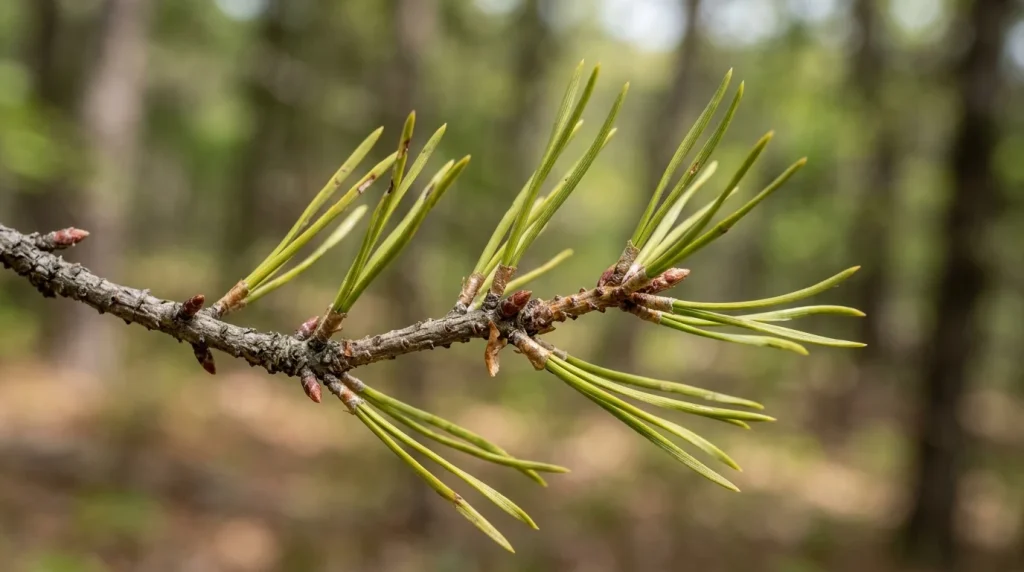
The needles grow in bundles called fascicles, each with a small sheath at its base. Their twists are easiest to see when you hold a sprig against the sky or a pale background. Foliage is naturally less deep green than that of many ornamental pines.
Young trees on suitable sites may add about 1–2 feet (30–60 cm) of height annually. Growth slows with age, shade, or poor growing conditions. Virginia pine is relatively short-lived, commonly reaching about 60–90 years, though some individuals live longer.
Bark, Twigs, and Buds
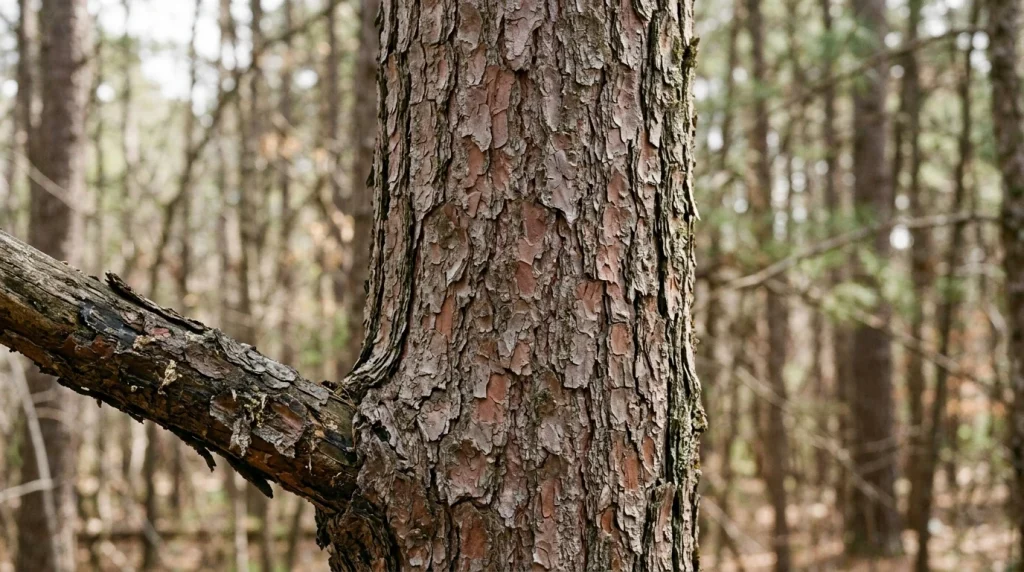
Young bark is comparatively smooth or finely scaly. As the trunk expands, it breaks into thin reddish-brown or gray-brown plates separated by shallow furrows. It generally lacks the deeply armored appearance of mature pitch pine or the broad, strongly developed plates of older loblolly pine.
Twigs are slender and become reddish-brown to purplish-brown. Look for the small fascicle sheaths around the needle bases and the roughened marks where older needles have fallen. Winter buds are small, pointed to egg-shaped, and often resinous.
Bark varies with age and exposure, so use it as supporting evidence. A bark-only identification is much less reliable than a twig carrying paired needles and an attached cone.
Range and Habitat
Virginia pine is native to the eastern United States, from southern New York and New Jersey south through the Appalachian and Piedmont regions to northern Georgia and Alabama. Its range extends west into parts of Ohio, Indiana, Kentucky, and Tennessee. Plantings occur outside this native distribution.
It is especially characteristic of dry, relatively infertile uplands, rocky ridges, eroded slopes, and abandoned farmland. It grows on a variety of soils, including acidic sites and some limestone-derived soils, provided competition and drainage are suitable. It is not a typical tree of permanently waterlogged ground.
This is a strongly light-demanding pioneer. Seedlings establish best where sunlight reaches exposed mineral soil or a thin ground layer. As hardwoods grow beneath an aging pine stand, they often replace the pines because Virginia pine seedlings struggle in deep shade. The U.S. ForestService’ss Virginia pine species review provides further detail on its habitat, succession, and fire relationships.

Flowers, Fruit, Nuts, or Cones
Virginia pine does not produce true flowers, fruits, or nuts. Instead, a single tree bears separate pollen cones and seed cones. Small pollen cones release windborne pollen in spring; the young seed cones develop elsewhere on the branches.
Seed cones mature in the autumn of their second growing season. Mature cones are brown, egg-shaped to somewhat conical, and usually nearly stalkless or short-stalked. Each scale ends in a noticeable prickle, so handle fallen cones carefully.
Dry conditions encourage mature cone scales to open and release small winged seeds. Empty cones frequently remain attached for several years, creating a mixture of cone ages on a branch. Their persistence does not mean they need fire to open. Virginia pine is not generally regarded as a strongly fire-dependent, closed-cone pine.

Wildlife Connections
The seeds feed squirrels and seed-eating birds, including finches and nuthatches where their ranges overlap. Pine-associated insects provide food for warblers, chickadees, and other foliage-searching birds. Evergreen branches offer year-round shelter, especially where young trees form dense patches.
As trees age, broken limbs, decaying wood, and standing dead trunks add another kind of habitat. Woodpeckers can excavate suitable softened wood, and other animals may later use their cavities. Where safety permits, retaining some dead wood benefits wildlife.
A Virginia pine stand is most valuable as part of a varied landscape. Adjacent hardwoods, shrubs, openings, and different-aged trees broaden the food and shelter available beyond what a uniform pine planting provides.
Seasonal Identification
Spring: Look for expanding shoots, fresh needles, and small pollen cones. Windblown yellow pollen is conspicuous but cannot identify this pine by itself.
Summer: Check several mature needle bundles for the paired arrangement and distinct twisting. Attached cones help separate it from other short-needled pines.
Autumn: Second-season cones mature and begin releasing seeds as conditions allow. Older interior needles may yellow and fall while younger outer needles remain green; this seasonal shedding is normal.
Winter: The evergreen crown, retained dead branches, and persistent cones remain useful. Foliage may look yellow-green or somewhat bronzed in exposed conditions. Extensive browning of shoot tips or whole branches deserves closer inspection rather than being dismissed as normal winter color.

Human Uses and History
Virginia pine readily colonized worn-out and abandoned agricultural land, making it a conspicuous part of the eastern landscape after farming declined on many marginal sites. Its presence can suggest past clearing, though natural disturbance can also create suitable habitat.
The wood has been used for pulpwood, rough lumber, and mine timbers. Branchiness and uneven stems can limit higher-grade lumber production. Managed plantings are also grown for Christmas trees, particularly in parts of the South, where pruning and shearing create a denser form than most wild trees develop.
For landscape planting, choose a sunny, well-drained location with room for an irregular mature crown. It is often better suited to naturalistic restoration than a formal specimen planting. NC State Extension’s Virginia pine profile describes its landscape characteristics and identification features.
Conservation and Threats
Virginia pine remains widespread and is not generally considered a species of conservation concern. Local stands can nevertheless decline through development, prolonged stress, or natural succession. Where hardwoods replace it, the change may reflect normal forest development rather than a new disease outbreak.
Bark beetles, root diseases, and other pests can damage weakened trees. Drought, crowding, root injury, and poorly drained planting sites may increase vulnerability. Ice and heavy snow can also break branches or stems.
Its relatively thin bark offers limited fire protection, especially in young trees. Although disturbance can expose seedbeds favorable for later establishment, an existing Virginia pine stand may suffer substantial fire mortality. Fire management should therefore follow local ecological guidance, not assumptions based on other pine species.
Similar Species
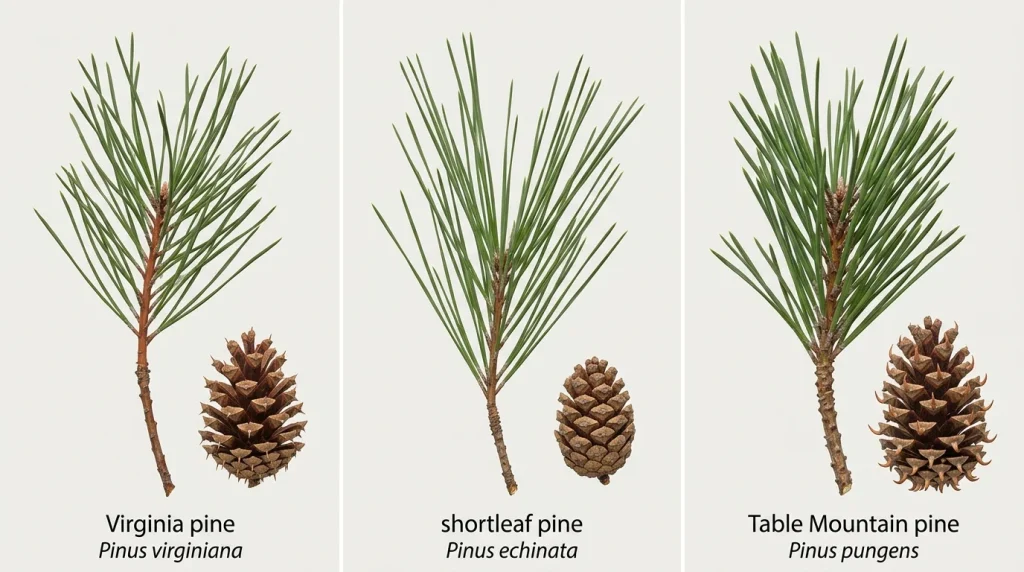
- Shortleaf pine (Pinus echinata): Usually has two or three needles per bundle. Needles tend to be straighter and somewhat longer. Mature bark often shows small resin pockets or pits; cone prickles are generally less conspicuous.
- Pitch pine (Pinus rigida): Usually has three needles per bundle, thicker bark, and sometimes conspicuous needle-bearing sprouts on the trunk. Its prickly cones and irregular form can otherwise be confusing.
- Table Mountain pine (Pinus pungens): Another Appalachian pine with mostly paired needles. Its cones are stouter, with much heavier, hooked prickles. Rocky mountain settings may support both species nearby.
- Loblolly pine (Pinus taeda): Usually has three much longer needles per bundle and larger cones. For young or stunted trees, check needle length and bundle count.
Use cones known to belong to the tree you are examining. On a mixed-forest floor, a fallen cone can easily come from a neighboring species.
Interesting Facts
- “Scrub pine” describes its frequent appearance on difficult sites, not a requirement that it remain shrubby.
- Retained cones provide identification clues long after their seeds have dispersed.
- A dense pine thicket can become a hardwood forest without another major disturbance.
- Its short lifespan and persistent branches help explain why older stands often contain abundant dead wood.
Frequently Asked Questions
What is the easiest way to identify Virginia pine?
Look for short, twisted needles in bundles of two, then confirm with small cones with sharp prickles. The irregular crown and retained dead branches support the identification.
Does Virginia pine lose its needles?
Yes. It is evergreen because it retains multiple needle age classes, not because every needle stays indefinitely. Older interior needles are shed as newer foliage remains.
Is Virginia pine a good yard tree?
It suits sunny, naturalized areas with well-drained soil. Its uneven form, retained dead branches, and relatively short lifespan make it less suitable where you want a tidy, long-lived shade tree.
Do its cones require fire to release seeds?
Generally, no. Mature cones normally open as they dry. Old cones remaining on branches should not be mistaken for proof of fire-triggered seed release.