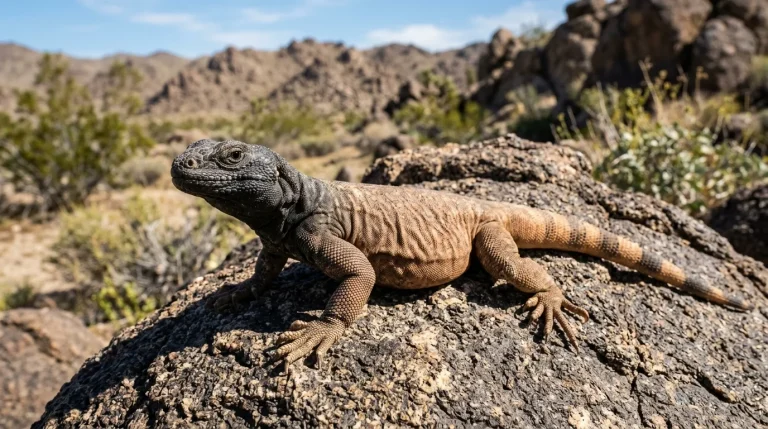
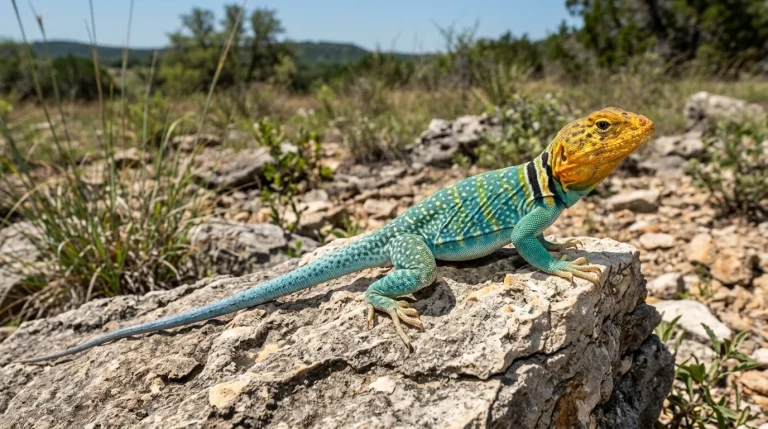
Geckos of North America Guide
Keep Track of What You See
Create a free Wild Things Guide membership to record this Geckos of North America in My Sightings and build your personal wildlife list.
Join to Add This SightingIntroduction
Geckos are a diverse group of small to medium-sized lizards belonging to the infraorder Gekkota. Because “gecko” refers to many species rather than one animal, no single binomial scientific name applies to the entire group. North American representatives include native banded geckos in the genus Coleonyx, native leaf-toed and dwarf geckos, and introduced house geckos such as the Mediterranean house gecko (Hemidactylus turcicus).
Mexico supports by far the continent’s greatest native gecko diversity. North of Mexico, native species are concentrated in the deserts and drylands of the southwestern United States. Several introduced tropical and subtropical species now occupy buildings and disturbed habitats in Florida, the Gulf Coast, Hawaii, southern California, and scattered inland cities.
Identification begins with the toes, eyes, skin, and setting. Native banded geckos are terrestrial, have movable eyelids, and lack the broad adhesive toe pads associated with familiar house geckos. Introduced Hemidactylus and related geckos generally climb walls and ceilings using expanded, pad-bearing toes.

Quick Identification
- Usually a small, soft-skinned lizard with a broad head, large eyes, and a long tail.
- Many species have vertically elliptical pupils suited to low-light activity.
- House geckos possess expanded adhesive toe pads and readily climb smooth-looking vertical surfaces.
- Banded geckos have slender, clawed toes without broad pads and usually remain on the ground.
- Color is commonly gray, tan, cream, pinkish, or brown, often with spots, bands, or mottling.
- Most North American species are nocturnal and hide during the day.
- The tail may be original—long and tapered—or regenerated, in which case it often appears shorter, thicker, and less distinctly patterned.
Appearance
Geckos typically have a flattened or moderately robust body, a distinct neck, a relatively broad head, and prominent eyes. Their skin is covered with small scales and may look smooth, granular, or softly pebbled. Some house geckos have enlarged tubercles that give the back a noticeably warty texture.
Native banded geckos are among the easiest North American forms to recognize. Adults usually have a pale cream, pinkish, or yellow-brown ground color marked with dark spots, blotches, or partial bands. Juveniles often show cleaner, more contrasting body and tail bands. Unlike most climbing house geckos, banded geckos have movable eyelids.
House geckos are usually gray, beige, translucent pink, or mottled brown. Their coloration can shift somewhat with temperature, light, and background. Expanded pads beneath the toes contain microscopic structures that provide adhesion; these pads are visible in a close view and may give each toe a widened or leaflike outline.

Size and Physical Characteristics
Most geckos routinely encountered in the United States measure about 3–6 inches (7.5–15 cm) in total length, including the tail. Small dwarf or reef geckos may be shorter, while tokay geckos and some other localized introductions can exceed 10 inches (25 cm).
The tail stores energy and is important in balance, signaling, and escape. Many geckos can shed it when seized. A replacement tail grows over time but normally differs from the original in scale arrangement, internal structure, shape, and pattern.
Most species have five toes on each foot. The presence of toe pads does not by itself identify a species: pad shape, divided or undivided plates beneath the toes, claws, body tubercles, and tail form may all be needed. Close examination is best done from sharp photographs rather than by capturing the animal.
Similar Species
Small anoles can resemble house geckos around buildings, but anoles are primarily active by day, usually have round pupils, and often show a throat fan or dewlap. Their bodies and heads tend to be more angular. Skinks have shiny, overlapping scales, relatively small eyes, and smooth cylindrical bodies rather than the granular skin typical of geckos.
Night lizards may be mistaken for terrestrial geckos in the Southwest. They generally have smaller eyes, a more elongated body, and no bold juvenile tail bands. Salamanders have moist, scaleless skin and four toes on the front feet; geckos are scaled reptiles with claws and five front toes.
Species-level identification among house geckos can be difficult. Mediterranean, tropical, common, and Indo-Pacific house geckos overlap in parts of the Southeast, and color alone is unreliable. Clear photographs of the back, tail, underside of the toes, and lower surface near the hind legs are often necessary.
Habitat
Native North American geckos occupy deserts, thorn scrub, rocky slopes, canyon margins, dry washes, coastal scrub, tropical forest, and other warm habitats. Terrestrial species shelter beneath rocks, dead vegetation, bark, or debris and may use rodent burrows or natural cracks.
Introduced house geckos thrive in human-altered settings. They occur on stucco walls, brick buildings, fences, bridges, sheds, warehouses, and vegetation near structures. Exterior lights create concentrated feeding sites by attracting moths and other insects. Humid tropical species are most successful in frost-free areas, although heated buildings can support individuals beyond the normal outdoor range.

Geographic Range
Mexico contains numerous native gecko lineages and represents the center of North American diversity. In the United States, native banded geckos occur from parts of California, Nevada, Utah, and Arizona eastward into New Mexico and Texas, with ranges differing by species. The peninsular leaf-toed gecko (Phyllodactylus nocticolus) reaches extreme southern California from Baja California.
Introduced geckos have irregular, shifting distributions. Mediterranean house geckos are established across many warm urban areas of the southern United States and have spread locally into some interior regions. Other introduced species occur chiefly in Florida, Hawaii, southern California, Texas, and Gulf Coast communities. Records from a new location may represent an isolated transported animal rather than an established population.

Behavior
Most geckos remain concealed by day and emerge after dusk. Terrestrial species walk or run across open ground in short bursts, often pausing beside cover. Climbing species patrol walls, windows, tree trunks, and ceilings. Their toe pads permit remarkable climbing ability, although performance varies with species, surface condition, and moisture.
Geckos communicate through posture, scent, tail movements, and sound. House geckos may chirp or click, especially during territorial or courtship encounters. Individuals sometimes gather near productive lights, but aggression and spacing can still occur.
Diet and Feeding
North American geckos primarily prey on small invertebrates. Typical prey includes moths, flies, mosquitoes, beetles, crickets, cockroaches, termites, spiders, and other arthropods small enough to overpower and swallow. Larger species may occasionally take small lizards or other vertebrates, but this is not typical of most local geckos.
Foraging methods range from slow stalking to rapid lunges. A gecko may wait beside a light, approach a moving insect, and seize it with a short forward strike. Some species also lick nectar, soft fruit, or plant fluids, particularly in tropical settings.

Activity and Seasonal Patterns
Activity usually begins around sunset and peaks on warm nights. In deserts, geckos may remain below ground during extreme daytime heat and emerge when surface temperatures become tolerable. Encounters often increase during warm, humid weather or after seasonal rains, when insect activity rises.
In cooler portions of the range, geckos become inactive during winter and shelter in protected crevices, burrows, or structures. Introduced house geckos may remain active near heated buildings during mild periods. Seasonal timing varies considerably with latitude, elevation, and local climate.
Reproduction and Life Cycle
Most geckos lay eggs, commonly in clutches of one or two. Females place the eggs beneath rocks, inside cracks, under bark, in wall cavities, or in other protected sites. Several females may use the same favorable shelter, producing a communal cluster of eggs.
Breeding generally occurs during the warmer months, but tropical populations may reproduce across a longer season. Incubation depends strongly on temperature and species. Some geckos produce multiple clutches in favorable years. Parthenogenetic species, including the introduced mourning gecko (Lepidodactylus lugubris), can establish populations largely or entirely from females without routine fertilization by males.
Young and Juveniles
Hatchlings are independent and receive no parental care. They hunt tiny insects and use narrow cracks that larger predators cannot enter. Young banded geckos often have crisp dark crossbands, including conspicuous bands on the tail; these markings commonly become spotted or less regular as the animal matures.
Juvenile house geckos resemble small adults but may have stronger tail bands or more contrasting patterns. Size should be judged cautiously because a gecko with a regenerated tail may appear unusually short.
Predators and Defense
Snakes, birds, small mammals, frogs, larger lizards, spiders, and other invertebrate predators eat geckos. Domestic cats also kill geckos around homes. Concealment and camouflage are the first defenses.
When threatened, a gecko may freeze, sprint into a crack, squeak, raise or wave its tail, open its mouth, or bite. Tail shedding can distract a predator because the detached tail keeps writhing. Never hold a gecko by the tail; forced tail loss consumes stored energy and is not harmless.

Tracks, Signs, and Other Evidence
Gecko tracks are tiny and seldom obvious on ordinary ground. Fine dust may preserve five-toed prints; pad-bearing species can leave widened toe impressions. Droppings are small, dark pellets with a white or cream urate cap, similar to those of other small lizards.
Other evidence includes shed skin, eggshells in crevices, nighttime chirps, and geckos waiting beside outdoor lights. Eggs are usually small and pale. Do not disturb them, because identification and viability are difficult to determine by appearance alone.
Where and How to Find It
Search after dark during warm weather. In desert country, walk slowly with a flashlight along rocky washes, road margins, canyon floors, and open ground beside shrubs. Watch where you step and never reach unquestioningly beneath rocks, since venomous animals may use the same cover.
For house geckos, examine exterior walls around porch lights, illuminated signs, eaves, window frames, bridge supports, and tree trunks. Scan from a distance before approaching; a gecko often retreats into a crack when illuminated for long. Photograph the entire animal and, when possible, capture detailed views of the toes, back, and tail.
Conservation Status and Threats
Geckos do not share one conservation status. Many widespread native and introduced species are commonly assessed as Least Concern, while narrow-range island, cave, desert, or tropical species may face greater risk. Habitat destruction, quarrying, development, pesticides, invasive predators, illegal collecting, and climate-related habitat changes can affect local populations.
Introduced geckos are not automatically harmless. They may compete with native lizards or alter small predator–prey relationships, though effects differ by species and location. Document new records with photographs and report them through appropriate state, provincial, territorial, or national invasive-species channels.
Relationship with Humans
House geckos commonly enter garages and homes but are nonvenomous and generally avoid people. They consume insects, although their presence does not provide reliable pest control. Droppings may accumulate below favored perches.
To exclude geckos, seal gaps around doors, pipes, vents, and windows; repair screens; reduce insect-attracting light near entrances; and remove clutter beside walls. Avoid glue traps, which can severely injure reptiles and other wildlife. Never release captive or pet geckos outdoors.
Interesting Facts
- Many geckos lack movable eyelids and clean the transparent scale over each eye with their tongue.
- Banded geckos are an important exception: they have functional eyelids and no broad climbing pads.
- Gecko adhesion depends on microscopic contact forces rather than glue or suction.
- Vocal communication is more developed in geckos than in many other lizard groups.
- A regenerated tail is functional but is not an exact replacement for the original.
- Human transportation of building materials, plants, and cargo has helped several house geckos expand their ranges.
Frequently Asked Questions
Are geckos native to North America?
Yes. Mexico has substantial native diversity, and several species are native to the southwestern United States. Many geckos seen on buildings in the Southeast and Hawaii are introduced.
Are North American geckos dangerous?
No commonly encountered North American gecko is venomous. A handled animal may bite, but serious injury is unlikely. Still avoid handling for the animal’s welfare.
How can I distinguish a native banded gecko from a house gecko?
Banded geckos are ground-dwelling, have movable eyelids, and possess narrow toes without broad adhesive pads. House geckos usually have widened toe pads and climb walls, windows, and ceilings.
Why is a gecko’s tail unusually thick or plain?
It may be a regenerated tail. Replacement tails are often shorter, thicker, smoother, or less distinctly marked than original tails.
Should I move a gecko found on my wall?
Usually not. An outdoor gecko can be left alone. If one is trapped indoors, guide it gently into a container without grasping its tail, but follow local guidance before releasing a potentially introduced species.