Fraser Fir Guide
Keep Track of What You See
Create a free Wild Things Guide membership to record this Fraser Fir in My Sightings and build your personal wildlife list.
Join to Add This SightingTree Name
Fraser fir (Abies fraseri) is an evergreen conifer in the pine family (Pinaceae). Native to the highest mountains of the southern Appalachians, it is closely associated with cool, cloudy summits and spruce–fir forests. Outside that small natural range, it is widely grown as a Christmas tree and occasionally planted in landscapes.
The name honors Scottish botanist John Fraser. For field identification, concentrate on its flattened needles, pale needle undersides, smooth young bark, and upright cones with conspicuously projecting bracts.

Quick Identification
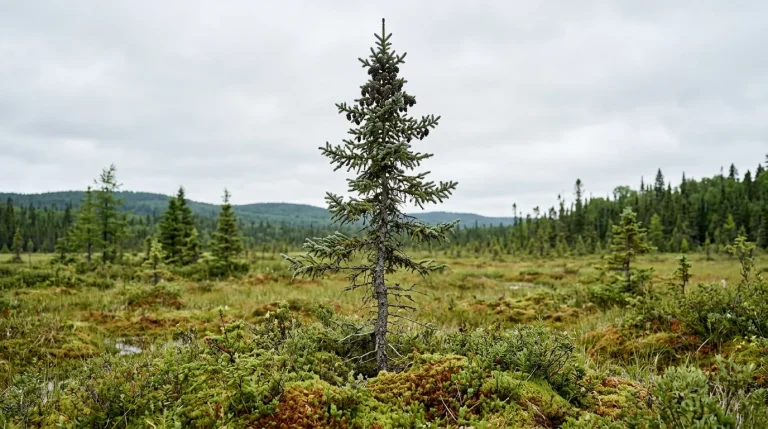
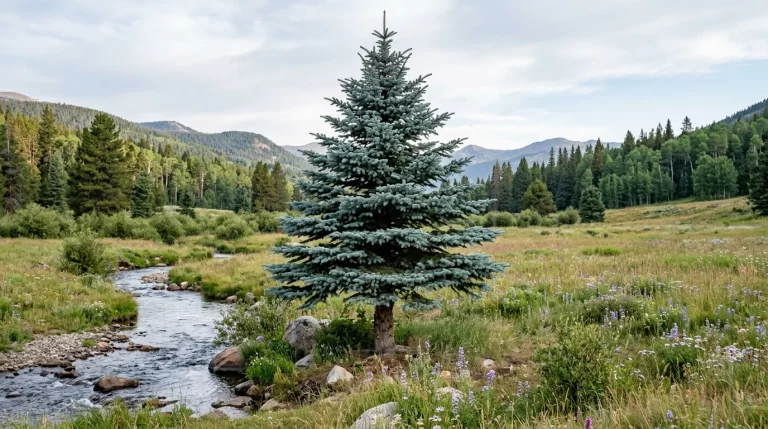
- Form: A narrow, roughly pyramidal evergreen with a straight trunk and layered branches; exposed summit trees may be irregular or wind-shaped.
- Needles: Usually about ½–1 inch (1–2.5 cm) long, flat, dark green above, and marked by two broad whitish bands beneath.
- Needle tips: Usually blunt or slightly notched rather than sharply pointed.
- Twigs: Relatively smooth after needles are removed, without the persistent woody pegs characteristic of spruce.
- Cones: Upright, usually 1½–2½ inches (4–6 cm) long, with bracts extending beyond the scales and bending backward.
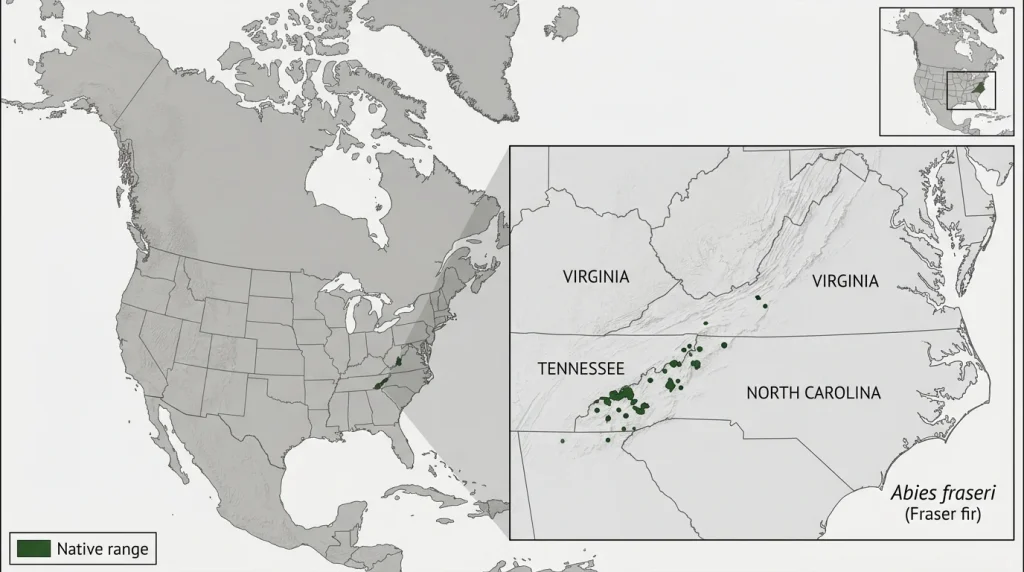
- Setting: Naturally occurring in isolated high-elevation forests in western North Carolina, eastern Tennessee, and southwestern Virginia.
Use several clues together. Two pale needle bands identify many conifers, not Fraser fir alone. Mature cones and geographic context are particularly valuable when separating it from other firs.
Appearance
Mature Fraser firs commonly reach about 30–60 feet (9–18 m), with taller individuals on favorable sites. A typical crown may spread roughly 10–25 feet (3–8 m), although crowded forest trees are narrower. Young trees have a tidy, pointed outline; older crowns can thin, become uneven, or break in storms.
Branches grow in recognizable tiers. The needles attach singly and often turn upward along the twig, creating a brushlike appearance above and exposing silvery undersides at the sides. Shaded shoots may look flatter and more distinctly two-ranked than sunny upper branches.
Growth varies strongly with elevation, exposure, competition, and cultivation. Established young trees may add around 6–12 inches (15–30 cm) in height annually under suitable conditions, sometimes more on managed sites. Suppressed seedlings can grow much more slowly. Trees surviving disease and disturbance may live roughly 100–150 years, with some living longer.

Bark, Twigs, and Buds
Young bark is thin, gray to gray-brown, and relatively smooth, with raised resin blisters. Older trunks develop shallow fissures and scaly plates, but generally lack the deeply furrowed bark of many mature pines. Avoid puncturing blisters: doing so wounds the tree and releases sticky resin.
Young twigs are yellowish brown to gray-brown and may carry fine hairs. Buds are small, rounded to broadly egg-shaped, and resinous. These are supporting characteristics rather than decisive distinctions from closely related firs.
A fallen twig offers a useful fir-versus-spruce test. Fir needles attach with an expanded, nearly circular base and leave a relatively smooth scar. Spruce needles sit on persistent woody pegs, making a bare spruce twig feel rough. Fraser fir needles also feel flatter and softer than the usually sharp, four-sided needles of red spruce.

Range and Habitat
Fraser fir has a naturally fragmented range restricted to high mountains in North Carolina, Tennessee, and Virginia. Its native forests include parts of the Great Smoky Mountains, Black Mountains, and other isolated southern Appalachian summit areas. A planted tree in a northern yard or Christmas tree farm does not indicate an additional native population.
It grows primarily in cool, moist, high-elevation environments, commonly above about 4,500 feet (1,370 m), although local conditions allow lower occurrences. Frequent fog, abundant precipitation, and relatively cool summers help sustain these forests. Red spruce often accompanies Fraser fir, while fir becomes especially prominent near some of the highest summits.
Preferred soils are acidic, moist, and well aerated, often with a substantial organic layer. Moisture-loving does not mean tolerant of stagnant water. The U.S. Forest Service’s Fraser fir silvics account provides detailed context on its mountain habitat and regeneration.
Flowers, Fruit, Nuts, or Cones
Fraser fir does not produce true flowers, fruits, or nuts. It bears separate pollen cones and seed cones on the same tree. Small pollen cones release windborne pollen in spring, with timing influenced by elevation and weather.
Seed cones stand upright, mostly on branches in the upper crown. Young cones may be purple or greenish before turning brown as they mature. Look for the bracts: these structures project beyond the rounded cone scales, and their tips curve backward. This conspicuous feature is one of the strongest clues separating Fraser fir from typical balsam fir.
Cones mature during their first growing season and disintegrate on the tree, releasing winged seeds. A bare central cone axis may remain afterward. Consequently, intact cones are seldom found beneath a fir unless animals, weather, or people have removed them prematurely. Binoculars are often more useful than searching the ground.

Wildlife Connections
Fraser fir contributes food, cover, and forest structure rather than a single specialized wildlife resource. Small mammals and seed-eating birds, including crossbills when crops are available, eat its seeds. Evergreen branches provide shelter from wind and snow and offer nesting sites for forest birds.
Southern Appalachian spruce–fir forests support distinctive high-elevation wildlife communities. Red squirrels use conifer seeds, while birds such as red-breasted nuthatches and golden-crowned kinglets forage among the branches. The value lies partly in the whole habitat: cool conditions, dense foliage, mossy ground, standing dead trees, and fallen wood.
Dead firs remain ecologically useful, providing insect habitat and eventually contributing decaying wood. Nevertheless, widespread canopy loss can alter the cool, sheltered conditions associated with healthy spruce–fir forest.
Seasonal Identification
Spring: Pale new shoots contrast with older dark foliage. Look for developing cones high in the crown, but remember that young or shaded trees may not bear cones.
Summer: Fresh growth expands and hardens. Upright developing cones and their projecting bracts can be particularly helpful where the upper branches are visible.
Fall: Seed cones turn brown and break apart. Fraser fir stays green; some older inner needles may yellow and drop as part of normal foliage turnover.
Winter: Evergreen foliage, layered branching, resin-blistered young bark, and smooth needle scars remain useful. Snow and rime can obscure details, so examine sheltered lower twigs without breaking them.

Human Uses and History
Fraser fir is a major Christmas tree crop, especially in the southern Appalachians. Its fragrance, relatively soft needles, strong branches, and good needle retention make it popular. However, the closely sheared outline of a farm-grown tree should not be mistaken for the more variable form of a wild individual.
Its wood has had uses similar to other light, soft fir woods, but the species’ restricted mountain distribution limits its role as a timber tree. Today, Christmas tree production, horticulture, and the ecological importance of native stands are more prominent associations.
As a landscape tree, it suits cool climates and appropriate soils. The NC State Extension Plant Toolbox’s Fraser fir profile is useful when evaluating its ornamental characteristics and growing requirements.
Conservation and Threats
The introduced balsam woolly adelgid is a major threat to native Fraser fir. These tiny sap-feeding insects can appear as white, woolly spots on bark. Infestation disrupts normal growth and can kill mature trees. Widespread mortality has substantially changed parts of the southern Appalachian spruce–fir landscape.
Seedlings and saplings sometimes regenerate abundantly after canopy loss, but visible regeneration does not mean the threat has disappeared. Trees may become vulnerable as they grow, and outcomes vary by site.
Other pressures include warming temperatures, drought stress, severe storms, and root diseases. Because the species already occupies isolated mountaintops, opportunities to shift into cooler habitat are limited. In cultivation, poorly drained soils increase the risk of destructive root problems, including Phytophthora root rot. Protect native stands by staying on designated trails and leaving seedlings and branches undisturbed.
Similar Species
- Balsam fir (Abies balsamea): The closest common comparison, native mainly farther north. Needles can be very similar. Typical balsam fir cones have bracts largely hidden beneath their scales; Fraser fir has conspicuously projecting, recurved bracts. Some balsam fir populations, including trees called Canaan fir, complicate this distinction.
- Red spruce (Picea rubens): A frequent mountain companion. Its needles are generally sharper and four-sided, its twigs retain woody needle pegs, and its cones hang downward and fall intact.
- Eastern hemlock (Tsuga canadensis): Also has flat needles with pale undersides, but usually shows short needle stalks, a more feathery spray, and small hanging cones that remain intact.
In cultivated settings, other planted firs broaden the possibilities. Don’t identify a cone-free ornamental tree by its Christmas-tree shape alone.

Interesting Facts
- The silvery bands beneath each needle contain rows of stomata, the pores involved in gas exchange.
- Fir cone scales separate while still on the tree, helping explain why familiar intact ground cones usually belong to other conifers.
- A species with a very small wild range can be widely familiar because of cultivation.
- Natural Fraser fir forests occupy cool mountain environments separated by much warmer lowlands.
Frequently Asked Questions
Is Fraser fir native to North America?
Yes. Its natural range is confined to high-elevation areas of North Carolina, Tennessee, and Virginia, although cultivated trees occur much more widely.
What is the best identification clue?
Upright cones with strongly projecting, backward-curving bracts are especially useful. Combine them with flat needles, two pale underside bands, and smooth needle scars.
Can Fraser fir grow in a warm backyard?
It often struggles with hot summers, drought, or poorly drained soil. A cool site with acidic, moist but well-drained soil is more suitable; local extension advice can help assess your conditions.
Why are there no whole cones beneath the tree?
Fraser fir cones normally disintegrate on the branches as their seeds mature. Missing ground cones are therefore expected, not evidence that the tree never produced seeds.