
Common Hackberry Guide
Keep Track of What You See
Create a free Wild Things Guide membership to record this Common Hackberry in My Sightings and build your personal wildlife list.
Join to Add This SightingTree Name
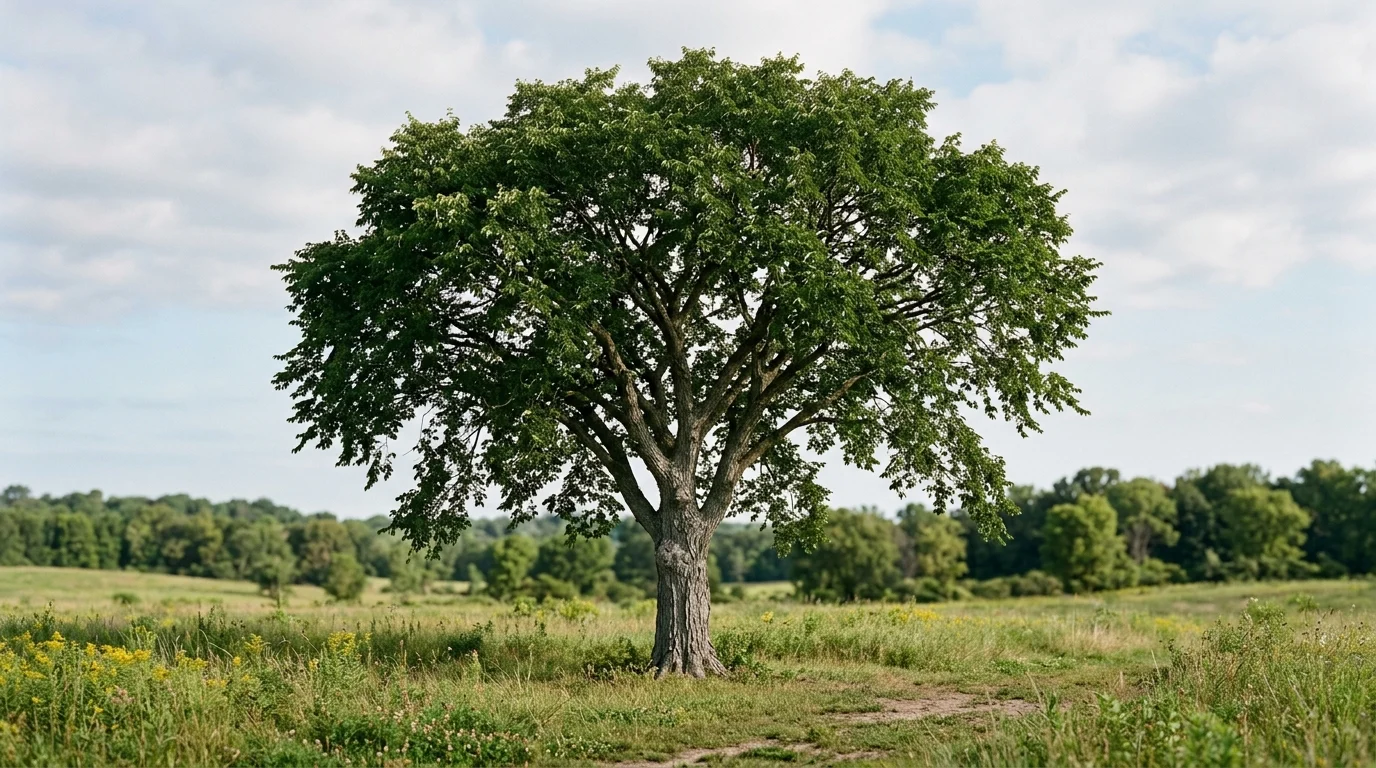
Common hackberry (Celtis occidentalis) is a large deciduous tree native to North America. Also called northern hackberry, it belongs to the hemp family (Cannabaceae), although older references often place it in the elm family. It is a familiar shade tree along rivers, woodland edges, streets, and farmsteads across much of the central and eastern continent.
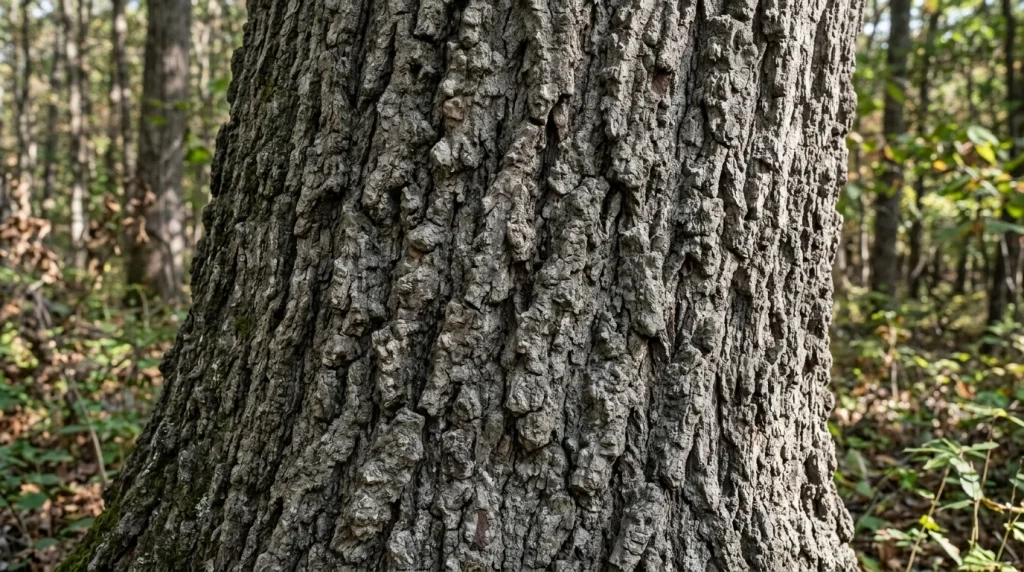
Its strongest identification feature is usually the bark: gray surfaces develop conspicuous corky knobs and irregular ridges. Combine that texture with alternate, uneven-based leaves and small, round fruits, and identification becomes much more dependable.
Quick Identification
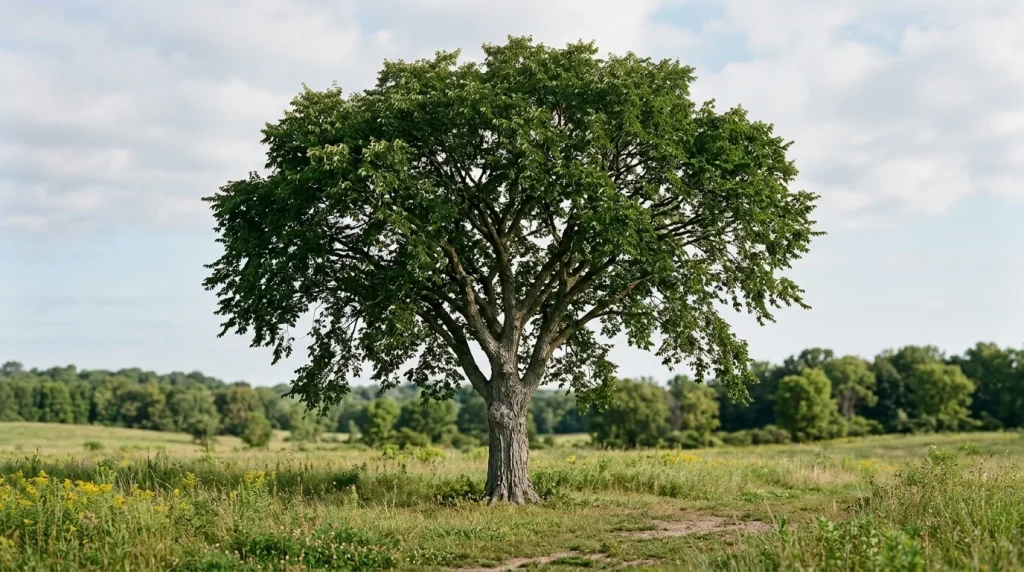
- Form: Usually 40–60 feet (12–18 m) tall, with a rounded or somewhat vase-shaped crown; favorable woodland sites can produce taller trees.
- Bark: Gray to brownish gray, with raised corky warts and winding ridges.
- Leaves: Alternate, simple, usually 2–5 inches (5–13 cm) long, with pointed tips, unequal bases, and toothed upper margins.
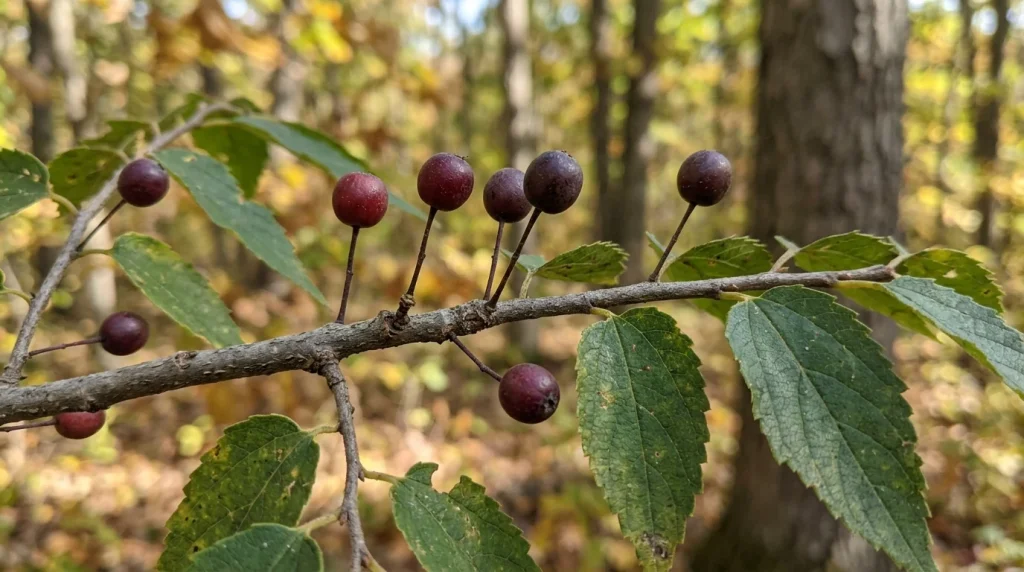
- Fruit: Small, stalked, rounded drupes that ripen reddish purple to dark purple-brown.
- Winter clue: Corky bark, fine zigzag twigs, and occasional persistent fruits or dense twig clusters.
Check several features rather than relying on a single leaf or patch of bark. Young trees and closely related hackberries can be less distinctive.
Appearance
An open-grown common hackberry often develops a broad crown about 40–60 feet (12–18 m) across. Major branches may rise steeply before spreading, while smaller branches sometimes droop toward their tips. Trees competing in woods tend to have narrower crowns and longer clear trunks.
The leaves are oval to lance-shaped, tapering to a noticeably long point. Their bases are asymmetric: one side extends farther down the leaf stalk than the other. Three prominent veins arise near the base, a useful feature when examining a fresh leaf against the light.
Leaf margins are usually sharply toothed above the base, while the lowest portion may be nearly smooth. Upper surfaces often feel somewhat rough; undersides are paler and may have hairs, especially along veins. Texture varies, so roughness alone is not a reliable identification test.
Established young trees commonly add roughly 1–2 feet (30–60 cm) in height annually under favorable conditions. Growth slows with age, drought, restricted rooting space, or poor establishment.

Bark, Twigs, and Buds
Common hackberry bark looks unusually sculpted. Corky projections may resemble scattered warts on smaller trunks, then merge into short ridges and irregular networks as the tree grows. Older trunks can become deeply furrowed, but raised corky patches usually remain visible.
Very young stems may be comparatively smooth. If a sapling lacks the classic bark, examine nearby older branches and use its leaves, buds, and fruits to support the identification.
Twigs are slender, brownish, and often slightly zigzag. Small pointed buds alternate along them and sit close to the stem. No true terminal bud; an upper lateral bud continues growth. Clusters of unusually dense branching, called witches’ brooms, are fairly common but are not unique to this species.
Range and Habitat
The native range extends through parts of southern Canada and much of the central and eastern United States, reaching west into the Great Plains and south into Texas and portions of the Southeast. Distribution becomes patchier near the edges of this broad range. Planted trees occur beyond it, so a street-tree location does not establish local native status.
Look for common hackberry in river bottoms, floodplain woods, stream corridors, limestone landscapes, woodland margins, and sheltered prairie ravines. It grows especially well in fertile, moist, well-drained soil, but established trees also tolerate considerable drought and a range of soil textures.
Its tolerance of alkaline soils, wind, and urban conditions helps explain its use as a shade and street tree. Tolerance is not immunity: prolonged waterlogging, severe compaction, and repeated injury can still cause decline.

Flowers, Fruit, Nuts, or Cones
Small greenish flowers appear in spring as the leaves unfold. They are inconspicuous, lack showy petals, and are pollinated by wind. Most observers notice the tree’s developing leaves long before its flowers.
The fruit is a drupe, not a true berry or nut: a thin layer of flesh surrounds one hard stone containing the seed. Fruits are generally about ¼–⅜ inch (6–10 mm) across and hang singly on slender stalks from leaf axils.
Initially green, they mature in late summer or fall to reddish purple or dark purple-brown. Some remain after leaf fall, providing a useful winter clue. The flesh can taste sweet, but it is thin, and the hard stone makes this a modest wild food rather than a substantial fleshy fruit.
Wildlife Connections
Hackberry fruits feed many birds, including cedar waxwings, American robins, and several woodpeckers. Small mammals also consume them. Animals that carry fruits away or pass the seeds help distribute new trees along fence lines, beneath perches, and into woodland openings.
The foliage supports caterpillars of hackberry emperor and tawny emperor butterflies, among other insects. These relationships make the tree valuable even when its leaves look imperfect. Galls, feeding marks, and a few missing leaf edges often indicate ordinary ecological activity rather than a failing tree.
For a university overview of its identification and landscape wildlife value, see NC State Extension’s common hackberry profile. Mature crowns also provide shade, nesting locations, and shelter, while cavities in older trees can add habitat where retaining them is safe.
Seasonal Identification
- Spring: Watch for unfolding pointed leaves and tiny greenish flowers. Corky bark remains the easiest feature to inspect.
- Summer: Compare alternate leaves, uneven bases, basal veins, and toothed margins. Developing green fruits may be partly hidden by foliage.
- Fall: Leaves generally turn yellow or yellow-green, rather than brilliant red. Ripe dark fruits become easier to find.
- Winter: Study the knobby bark, twig arrangement, and remaining stalked fruits. Witches’-brooms may stand out as dense clusters in the bare crown.
Seasonal timing varies with latitude, elevation, weather, and individual trees. Fruit abundance also changes from year to year; a fruitless tree is not necessarily a different species.

Human Uses and History
Common hackberry has long served as a shade tree and, in suitable regions, a windbreak component. Its adaptability makes it useful where less tolerant trees struggle, although its eventual size requires generous space away from buildings and overhead utilities.
The wood is used for furniture components, boxes, pallets, and interior woodworking. It is not naturally very decay-resistant, so untreated wood is a poor choice for persistent ground contact or exposed outdoor construction.
Ethnobotanical accounts record food uses of hackberry fruits by Indigenous peoples, with preparation varying among communities. Some preparations used crushed fruits rather than only the thin outer flesh. Anyone sampling wild fruit should first confirm the identification and avoid trees exposed to pesticide applications or roadside contamination.
Conservation and Threats
Common hackberry is widespread and is not generally considered a species of broad conservation concern. Local mature trees nevertheless matter: removing them can eliminate shade, seed sources, and habitat that young replacements take decades to restore.
Hackberry nipple galls, produced by small psyllid insects, often create raised bumps on leaves. They can look alarming but usually cause little meaningful harm to an otherwise healthy tree. Witches’ broom is associated with mite and powdery mildew interactions; it is often primarily an appearance issue.
More consequential problems include trunk damage, root disturbance, decay, and weak or damaged branches over occupied areas. Avoid routine pesticide treatment for cosmetic symptoms. For major dieback, cracks, or suspected structural problems, have a qualified arborist assess the individual tree.
Similar Species
Sugarberry (Celtis laevigata): Particularly important in the southern United States. Its leaves are often narrower and smoother, with margins mostly entire or bearing relatively few teeth. Bark commonly has scattered corky warts rather than the extensive ridging of mature common hackberry. These features overlap; some southern trees require a regional botanical key.
Netleaf hackberry (Celtis reticulata): A western relative, often smaller, with thick, rough leaves and strongly conspicuous netted veins beneath. Leaf size, texture, stature, and geography help, but forms can be variable.
American elm (Ulmus americana): Also has alternate leaves with unequal bases. Elm leaves typically show more clearly double-toothed margins and numerous straight lateral veins. Elms produce flat, winged samaras, not rounded drupes, and their bark lacks hackberry’s characteristic corky knobs.

Interesting Facts
- Its modern placement in Cannabaceae reflects botanical relationships that are not obvious from the tree’s appearance.
- A hackberry “berry” contains a hard stone, making it structurally closer to a tiny cherry than to a true botanical berry.
- The characteristic corky bark can identify a mature tree even when leaves and fruits are absent.
- Bird-dispersed seedlings frequently appear beneath established perches, sometimes far from the parent tree.
Frequently Asked Questions
How long does common hackberry live?
Many trees can live roughly 100–150 years, and some survive longer. Site conditions, storm damage, decay, and human disturbance strongly affect longevity.
Are hackberry fruits edible?
Ripe common hackberry fruit flesh is edible, but there is little of it around the hard stone. Confirm identification before tasting, and do not bite forcefully into the stone.
Are leaf bumps a sign the tree is dying?
Usually not. Typical nipple galls are insect-induced growths that generally do little damage. Widespread wilting, major branch death, or trunk injury deserves a separate assessment.
What is the quickest way to recognize it?
Start with gray, corky-warted bark, then check for alternate, pointed leaves with uneven bases. Small round drupes provide a strong additional clue when present.


