Convergent Lady Beetle Guide
Keep Track of What You See
Create a free Wild Things Guide membership to record this Convergent Lady Beetle in My Sightings and build your personal wildlife list.
Join to Add This Sighting
The Convergent Lady Beetle is one of North America’s most familiar native beneficial insects. Recognizing it accurately, however, requires more than counting spots. This practical guide explains the markings, immature stages, habitat, behavior, diet, seasonal movements, and look-alikes that matter in the field.
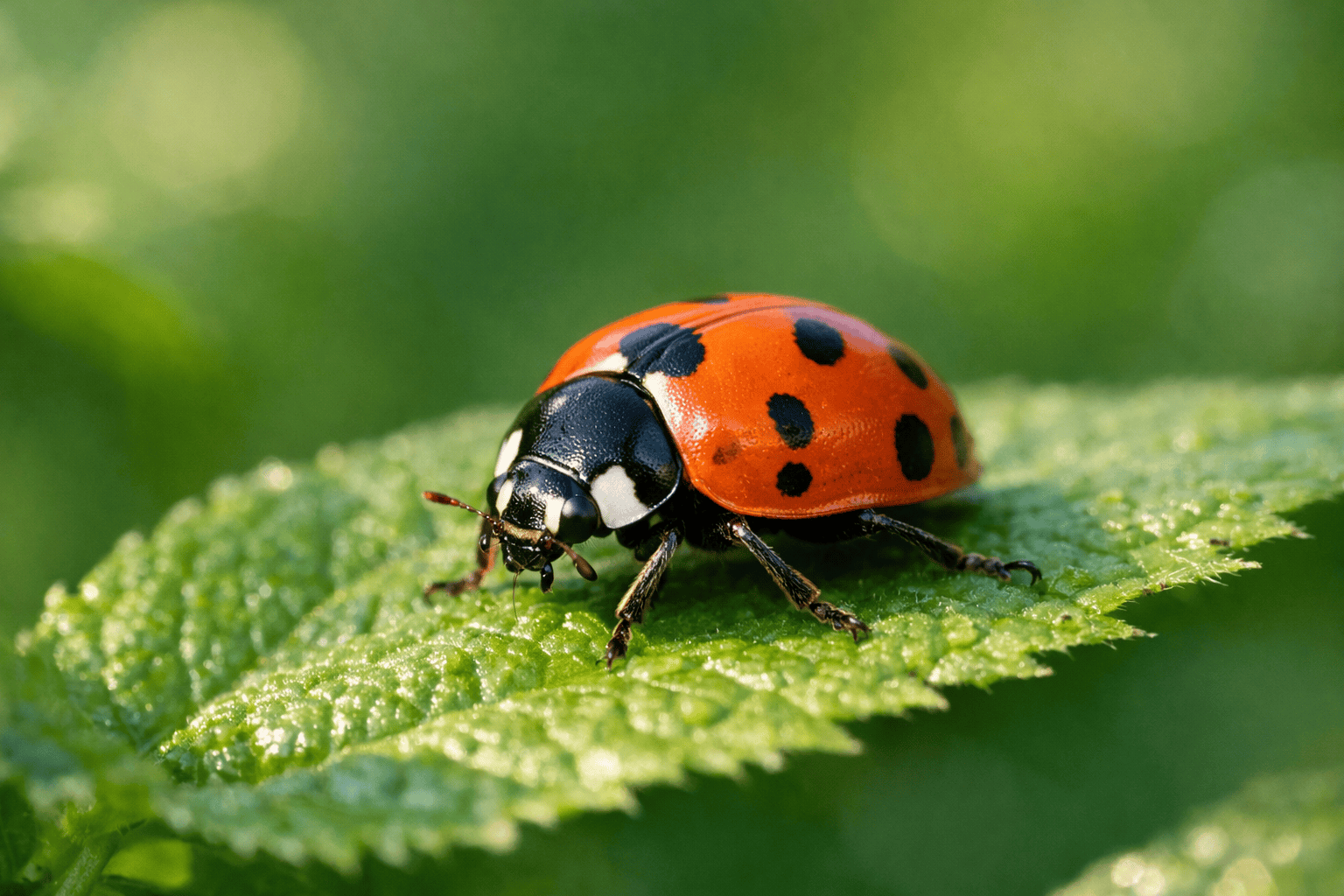
An adult in typical garden habitat, showing its domed body and orange-red wing covers.
Known scientifically as Hippodamia convergens, this beetle is frequently encountered wherever aphids gather. Adults are compact and rounded, while the larvae look dramatically different: dark, elongated, and almost alligator-like. Both stages are active predators and can be valuable residents of farms, gardens, meadows, and other vegetated habitats.
The best identification feature is not the number of spots. Look first for two pale lines on the black pronotum that angle inward toward one another behind the head.
Quick Identification
An adult Convergent Lady Beetle is a small, strongly domed insect measuring approximately 4–7 millimeters long. Its oval wing covers, called elytra, are usually orange or red, though some individuals appear yellowish. They may carry anywhere from zero to thirteen black spots. 
The paired cream-white lines on the black pronotum provide the most dependable field mark.
At-a-glance field checklist
- Size: roughly 4–7 millimeters from head to wing-tip.
- Shape: oval, compact, and noticeably domed.
- Color: orange, red, or occasionally yellowish elytra.
- Spots: variable in number, size, darkness, and visibility.
- Key mark: two pale lines converging on a mostly black pronotum.
- Typical setting: foliage occupied by aphids or similar soft-bodied prey.
How to Identify the Convergent Lady Beetle
Begin with the pronotum—the shield-like section immediately behind the head. On this species it is predominantly black, with pale markings along the front and outer corners.
Most importantly, two cream-white lines angle inward toward the center. They may not touch, but their converging direction gives the beetle its common name. Next, examine the elytra. Color alone is a poor diagnostic feature because it changes among individuals and can also overlap with other lady beetles.
Spot count is equally unreliable. A nearly spotless adult can belong to the same species as a heavily spotted individual. The head is dark and often bears pale facial markings. Antennae are short and end in subtle clubs.
For a useful observation, photograph the insect directly from above and, if possible, from a low frontal angle. Avoid gripping it; instead, allow it to walk onto a leaf or card. Confirm identification from the pronotum, body proportions, elytral pattern, and geographic location together.
Key takeaway
Use a combination of traits. A red beetle with black spots is not automatically this species, and a spotless individual should not automatically be excluded.
Immature Stage
A Convergent Lady Beetle larva bears little resemblance to the adult. It is elongated, flattened, and tapered, with a dark gray to black segmented body. Small projections or spines create a rough texture, while orange patches appear on portions of the abdomen. 
The dark, alligator-like larva is an active predator rather than a plant-eating pest.
Larvae patrol stems, flower heads, leaf undersides, and tender crop foliage in search of aphids. Their unfamiliar appearance causes some gardeners to mistake them for harmful insects. Leaving them undisturbed allows this beneficial life stage to continue feeding. After completing several larval growth stages, the insect attaches its rear end to vegetation and becomes a pupa. The pupa is rounded, immobile, and commonly marked with dark and orange coloration retained from the larval stage. It may twitch when disturbed, but it neither hunts nor feeds. For comparison with another insect whose young look very different from the adult, see the Monarch Caterpillar field guide.
Similar Species and Look-Alikes
Several lady beetles overlap in color, size, and habitat. Reliable identification therefore depends on structural markings rather than a quick impression of “red with spots.” 
Compare pronotal patterns and overall form before relying on the spots across the wing covers.
- Seven-spotted Lady Beetle: Usually has a recognizable seven-spot arrangement and different pale pronotal markings. It lacks the characteristic pair of inward-angled lines. Explore the detailed Seven-Spotted Lady Beetle guide for a closer comparison.
- Asian Lady Beetle: Highly variable in color and spots. Its pale pronotum commonly carries a dark M- or W-shaped mark, essentially reversing the light-on-dark impression of the native species discussed here.
- Other Hippodamia species: These may be genuinely difficult to separate. Evaluate pronotal pattern, body proportions, elytral markings, range, and several clear photographs.
If the pronotum is hidden by glare or the camera angle, label the observation tentative. Spot count by itself is not sufficient for a confident record.
Range and Distribution
The Convergent Lady Beetle is native and widespread across most of North America, with a range extending through portions of Central and South America. It occurs across much of the United States and southern Canada, although its abundance varies greatly with weather, season, prey, and local land use. Adults are capable fliers and may disperse considerable distances among breeding areas, lowland agricultural fields, feeding sites, and mountain overwintering locations. Commercial collection and release further complicate distribution records because purchased adults may appear far from the place where they naturally gathered.
Habitat
This adaptable predator occupies gardens, farms, grasslands, meadows, orchards, shrublands, roadsides, and weedy field margins. The common denominator is usually vegetation that supports aphids or other soft-bodied prey. Search tender new growth, curled leaves, flower stems, crop foliage, and weeds. Aphids often concentrate on nutrient-rich plant tips, making those areas especially productive. During colder periods, adults use protected sites such as mountain canyons, leaf litter, rock crevices, and dense vegetation. Move slowly and scan sunlit leaves from several angles. Avoid breaking stems or stripping aphid-covered growth simply to obtain a photograph; the prey colony is part of the beetle’s feeding habitat.
Behavior
Adults and larvae hunt primarily by walking over plant surfaces. They respond to physical contact and chemical cues associated with prey, often spending more time in patches where aphids are concentrated. Their movements are influenced by temperature, sunlight, wind, reproductive condition, and recent feeding success. When threatened, an adult may fly, drop from a plant, or tuck its legs beneath its body. It can also release yellowish “reflex blood” from its leg joints. This defensive fluid has an unpleasant taste and odor intended to discourage predators. One of the species’ most dramatic behaviors is mass overwintering. In suitable western locations, enormous numbers gather in sheltered canyons and mountain sites, remaining relatively inactive until seasonal conditions trigger dispersal.
Diet and Feeding
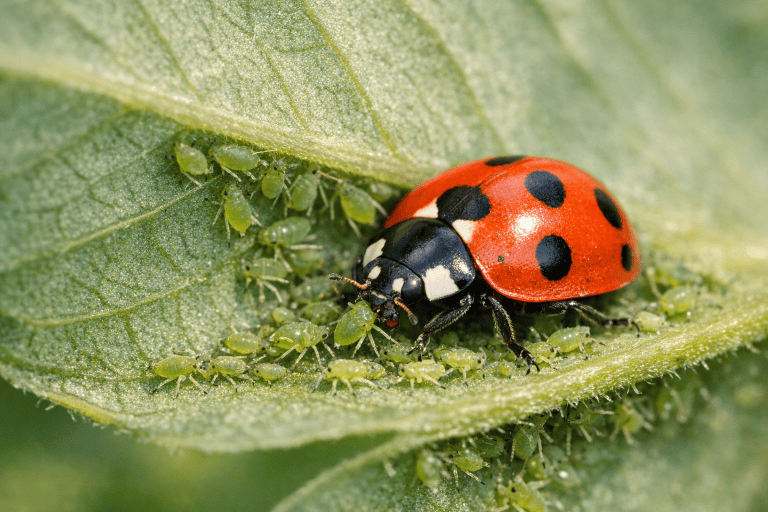
Aphids are the principal food of both adult and larval Convergent Lady Beetles. They may also consume mites, scale insects, whiteflies, insect eggs, and other small, soft-bodied arthropods. Adults can supplement this animal prey with pollen, nectar, honeydew, and plant-derived foods when insects are scarce. 
Aphid colonies provide food for adults and developing larvae.
Predation can help suppress garden and crop pests, but its effect depends on prey density, weather, vegetation, and the presence of other natural enemies. Before treating an aphid outbreak, inspect it closely for eggs, larvae, pupae, and adults. Broad-spectrum sprays can kill the predators along with the pests.
Life Cycle and Reproduction
The Convergent Lady Beetle undergoes complete metamorphosis in four distinct stages:
- Egg: Females place clusters of small, spindle-shaped yellow or orange eggs on vegetation, often near suitable prey.
- Larva: The mobile larva hatches and feeds actively, molting through several progressively larger instars.
- Pupa: The mature larva attaches to a surface and transforms inside an exposed, immobile pupa.
- Adult: A soft, pale adult emerges, then hardens and develops its mature coloration.
Development speeds up in warm, favorable conditions and slows in cool weather or when food is limited. Generation number varies with latitude, climate, and prey availability, so one universal calendar does not apply across the entire range.
Seasonal Activity: When to Look for It
Across much of the range, spring through early fall is the best period for observation. Adults emerge or depart from overwintering sites in spring, then disperse toward gardens, fields, and other lowland locations where prey is becoming abundant. Warm, sunny, calm days offer the best viewing conditions. Look late in the morning after foliage has warmed, particularly around active aphid colonies. As temperatures fall and food becomes less dependable, adults begin moving toward protected aggregation sites. Exact timing shifts with elevation and regional climate.
Ecological Importance
As a native predator, the Convergent Lady Beetle helps regulate aphids and other herbivorous insects in both natural and managed ecosystems. It is an important component of biological control, but it should not be presented as a guaranteed one-step cure for every infestation. Conserving resident predators is often more effective than repeatedly introducing purchased insects. Diverse vegetation and selective pest management create a resilient food web involving prey, competing predators, parasitoid wasps, birds, and flowering plants. Pollinator-friendly planting can support a broader community too; the Honey Bee field guide explains how flower resources serve another familiar garden insect.
Risk to People and Pets
The Convergent Lady Beetle is not venomous, does not sting, and is not known to transmit disease. It poses very little risk to people or domestic animals. An adult may occasionally pinch exposed skin with its mouthparts, but this is uncommon and usually produces no more than brief, minor irritation. Defensive fluid may smell unpleasant and leave a small stain, another reason to observe without squeezing or handling. Prevent pets from deliberately eating large numbers of any insects. If unusual symptoms follow ingestion, contact a veterinarian for species-appropriate advice.
Conservation Status and Threats
This widespread species is not generally regarded as globally threatened, though populations can fluctuate substantially at local scales. Potential pressures include broad-spectrum insecticides, drought, extreme weather, habitat disturbance, loss of diverse vegetation, and reduced prey availability. Harvesting huge overwintering aggregations for commercial sale raises additional concerns. Collection can disrupt natural populations, and released adults often disperse away rather than remaining in the buyer’s garden. Conservation assessments should rely on reputable regional information because monitoring coverage and environmental conditions differ among locations.
How to Attract or Support It
The most dependable strategy is to create habitat rather than purchase a container of adults. A garden with food, shelter, and low pesticide exposure can support successive generations of local predators.
- Grow diverse flowering plants that supply pollen and nectar from spring through fall.
- Tolerate small aphid colonies on selected, nonvaluable plants when damage is manageable.
- Avoid broad-spectrum sprays, systemic insecticides, and preventive treatments.
- Check plants for eggs, larvae, pupae, and adults before taking pest-control action.
- Maintain layered vegetation, undisturbed edges, leaf litter, and sheltered crevices.
Flower diversity also benefits native pollinators, including the species covered in the American Bumble Bee identification guide. Choose locally appropriate plants and avoid cultivars treated with persistent systemic pesticides.
A practical gardening rule
If aphids are present but plant damage remains tolerable, wait and watch. Predatory eggs or larvae may already be present nearby, and immediate spraying can disrupt their natural response.
Interesting Facts
- The word “convergent” refers to the pale pronotal lines, not the arrangement of spots on the wing covers.
- Adults may show numerous dark spots, faint spots, or no obvious spots at all.
- Favorable overwintering sites can hold thousands or even millions of adults.
- The species has a long association with agricultural biological control.
- Despite its familiar adult form, its predatory larva is frequently mistaken for a plant pest.
Frequently Asked Questions
Is the Convergent Lady Beetle beneficial?
Yes. Adults and larvae consume aphids and may also eat mites, scales, whiteflies, and insect eggs. Their benefit is greatest when gardens provide prey, flowering resources, and protection from broad-spectrum pesticides.
How is a Convergent Lady Beetle different from an Asian Lady Beetle?
Inspect the pronotum. The native species usually has a black pronotum crossed by two pale lines that angle inward. The Asian Lady Beetle commonly has a pale pronotum marked by a dark M or W. Because both can vary, confirm several features rather than relying on color or spots alone.
Can a Convergent Lady Beetle bite?
It may rarely pinch skin with its chewing mouthparts, but the effect is generally minor and temporary. It does not sting or inject venom.
Where does the Convergent Lady Beetle go in winter?
Adults enter dormancy in protected locations. In some western regions they form spectacular aggregations in mountain canyons, beneath debris, or among rock crevices. Overwintering behavior varies with local climate.
Should gardeners buy and release Convergent Lady Beetles?
Usually, habitat improvement is the better long-term investment. Purchased beetles may disperse soon after release, and some are collected from wild aggregations. Diverse flowers, modest prey populations, shelter, and pesticide-free management support established local predators.
Conclusion: Identify with Confidence
To recognize the Convergent Lady Beetle, start with the black pronotum and its paired inward-angled pale lines. Then confirm the domed oval body, variable orange-red elytra, size, habitat, and association with aphids. Never depend on spot count alone. Remember that the dark, spiny larva and attached pupa are beneficial life stages, not plant pests. On your next garden walk, inspect aphid-covered stems before reaching for a treatment. A resident predator may already be doing the work—and documenting each life stage can turn an ordinary patch of foliage into a rewarding field study.