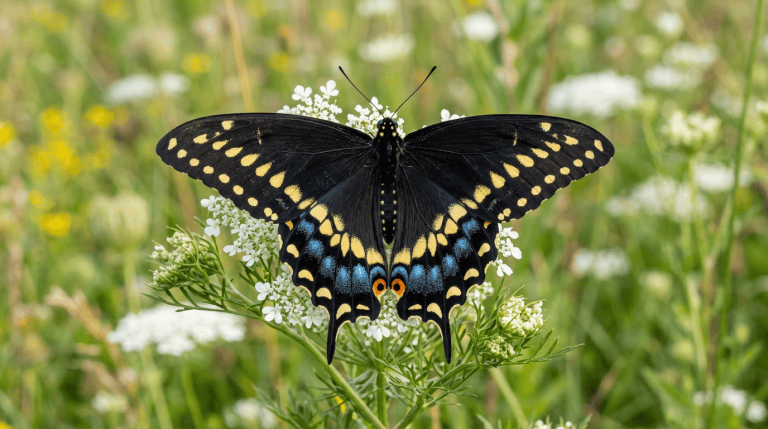
Clouded Sulfur Butterfly Guide
Keep Track of What You See
Create a free Wild Things Guide membership to record this Clouded Sulfur Butterfly in My Sightings and build your personal wildlife list.
Join to Add This SightingIntroduction
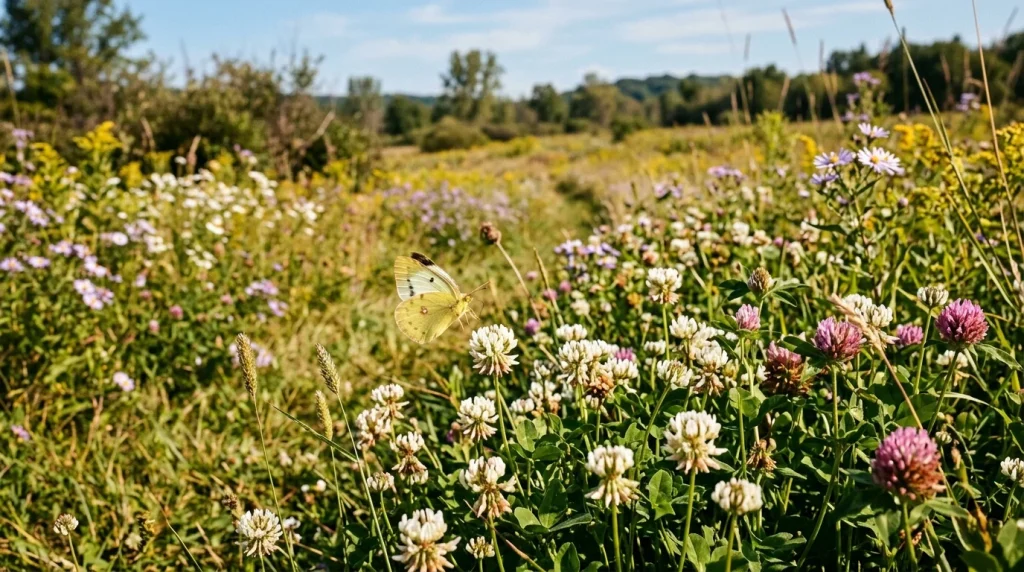
The Clouded Sulfur Butterfly (Colias philodice) is a familiar yellow butterfly of North American meadows, roadsides, lawns, and farm fields. It is especially common where clovers, alfalfa, and other plants in the pea family grow. Adults fly low over vegetation with a quick, somewhat erratic motion, pausing frequently at flowers.
Although often described simply as a small yellow butterfly, the species varies by sex and season. Males are generally bright lemon yellow, while females may be yellow or creamy white. Closed-wing views can also be confusing because the similar Orange Sulfur frequently occupies the same habitats. Wing color, border pattern, size, and the markings beneath the hindwing should therefore be considered together.
Quick Identification
- Size: A small to medium butterfly with a wingspan of approximately 32–51 mm (1.25–2 in).
- Male upperwings: Usually clear lemon yellow with solid black outer borders, a black spot near the center of each forewing, and an orange central spot on each hindwing.
- Female upperwings: Yellow or creamy white, with wider, less solid dark borders containing pale spots.
- Underwings: Yellow to greenish yellow, often dusted with fine dark scales. The hindwing has a silvery white central spot outlined in reddish brown, frequently accompanied by a smaller spot.
- Shape: Rounded hindwings and moderately rounded forewings, without long tails or strongly pointed tips.
- Flight: Rapid, low, and irregular, usually over open vegetation.
A resting Clouded Sulfur usually holds its wings closed above its back. A clear view of the upper surface may be possible when it basks briefly or slows its wingbeats while feeding. The absence of a strong orange wash helps separate a typical Clouded Sulfur from an Orange Sulfur, but worn individuals and possible hybrids can be difficult to identify with certainty.

Caterpillar Identification
The mature caterpillar is slender, cylindrical, and usually green, allowing it to blend closely with clover or alfalfa foliage. A pale cream or whitish stripe runs along each side of the body. Small pink or reddish marks may occur within or beside this stripe, although their prominence varies. The body is covered with fine, short hairs that may be difficult to see without magnification.
Young caterpillars are smaller and less distinctly marked. They feed mainly on leaves of plants in the pea family, including clovers, alfalfa, vetches, and related legumes. Because Orange Sulfur caterpillars can look very similar and use many of the same hosts, caterpillar identification based only on a photograph is often tentative. Rearing the individual to adulthood or documenting fine structural details may be necessary for a firm identification.

Eggs, Chrysalis, or Cocoon
Females place eggs singly on host-plant leaves or stems, often selecting tender growth. Each egg is upright, narrow, and spindle-shaped, with fine vertical ribs. Fresh eggs are pale cream or yellowish and may deepen in color as development proceeds.
Like other butterflies, the Clouded Sulfur forms a chrysalis rather than a cocoon. The chrysalis is angular and generally green, yellow-green, or occasionally pinkish brown. It is attached to a stem or other support at the tip of the abdomen and held upright by a fine silk girdle around the middle. Its color and shape provide effective camouflage among plant stems.
Life Cycle
The life cycle has four stages: egg, caterpillar, chrysalis, and adult. After hatching, the caterpillar passes through several growth stages, shedding its skin between each one. Development can be completed relatively quickly in warm weather, while cool temperatures slow the process.
There are usually several generations each year. Northern populations may produce two or three main broods, while butterflies in warmer regions can remain active through a longer season and produce additional generations. Generations often overlap, so eggs, caterpillars, chrysalises, and adults may all be present during summer.
In colder parts of its range, the species commonly overwinters as a partly grown caterpillar sheltered near its host plants. The exact timing of dormancy and spring development varies with latitude, elevation, weather, and local conditions.
Range and Distribution
The Clouded Sulfur occurs across a broad portion of North America. Its range includes much of Canada and the United States, extending from parts of Alaska and northern Canada south through temperate regions of the continent. It also reaches parts of northern Mexico, although distribution becomes more localized toward the southern and western margins.
The species is most consistently encountered in open, grassy regions of the Northeast, Great Lakes, Great Plains, and other areas where suitable legumes are abundant. It may be scarce or irregular in deserts, densely forested landscapes, and the hottest parts of the Southeast. Adults are capable fliers and may wander beyond established breeding areas. Regional observations can be explored through the Butterflies and Moths of North America species account.

Habitat
Clouded Sulfurs favor sunny, open habitats rather than closed forest. Typical locations include hayfields, pastures, prairies, old fields, vacant lots, road verges, utility corridors, gardens, and the grassy margins of wetlands. Agricultural landscapes can support large numbers when alfalfa or clover is present, and pesticide exposure is limited.
The best habitat combines larval host plants with a sequence of nectar-producing flowers. Short vegetation is often used for courtship and egg laying, while taller field margins can provide shelter from wind and severe weather.
Adult food sources
Adults drink nectar from a wide range of low, open flowers. Common sources include red and white clovers, alfalfa, asters, goldenrods, thistles, milkweeds, ironweeds, blazing stars, dogbanes, and various members of the mint family. Flower use changes with location and season.
Males may also gather on damp soil, muddy paths, or the edges of puddles. This behavior, known as puddling, allows them to obtain dissolved salts and other minerals. Several sulfur may gather at the same damp patch.
When and Where to Look
Begin watching for adults in spring after sustained warm weather. In northern areas, sightings often increase from late spring through early fall. Farther south, adults may appear earlier and remain active later, with local peaks following favorable rainfall and fresh plant growth.
Search sunny clover lawns, alfalfa fields, meadow paths, and flower-rich roadsides during late morning and afternoon. Cooler adults may bask with their bodies angled toward the sun, but they seldom hold their wings fully open for long. Overcast conditions can make them easier to approach while they rest beneath leaves or among stems.
Is It Harmful?
The Clouded Sulfur is harmless to people and pets. It does not bite, sting, or damage structures. Caterpillars eat legume foliage and can occur in alfalfa or clover fields, but they are not usually regarded as a serious pest. Noticeable feeding damage should not automatically be attributed to this species because many insects use the same crops.
In gardens, control is rarely appropriate. Broad-spectrum insecticides can kill sulfur caterpillars as well as bees, predatory insects, and other beneficial wildlife.
Conservation and Ecological Importance
The Clouded Sulfur is widely regarded as globally secure and is not federally listed as threatened or endangered in the United States or Canada. Local abundance can nevertheless fluctuate with drought, mowing, herbicide use, pesticide exposure, and the loss of flower-rich fields.
Adults contribute to pollination while visiting flowers, although they are not necessarily the primary pollinators of every plant they use. Eggs, caterpillars, chrysalises, and adults also provide food for birds, spiders, predatory insects, and parasitoid wasps or flies. The species is therefore a visible part of open-land food webs.
How to Attract or Support It
- Allow clovers, native vetches, and other appropriate legumes to grow in part of the yard or meadow.
- Provide nectar from spring through fall using regionally native asters, goldenrods, blazing stars, milkweeds, and other unsprayed flowers.
- Avoid insecticides, especially systemic products that can enter leaves, pollen, and nectar.
- Mow meadows in sections rather than cutting the entire area at once. Leave some host plants standing through winter.
- Maintain a sunny, damp patch of bare soil where butterflies can obtain moisture and minerals.
- Obtain native plants from reputable nurseries rather than collecting them from wild populations.
A tidy ornamental garden may provide nectar but no place for caterpillars. Supporting the full life cycle requires accepting some feeding on host leaves and retaining patches of less intensively managed vegetation.
Similar Species
Orange Sulfur: Often shows a noticeable orange area on the upper wings, especially in males. It also tends to have a warmer orange-yellow appearance in flight. White females occur, however, and worn adults can be nearly indistinguishable from Clouded Sulfurs without close examination.
Pink-edged Sulfur: Primarily northern and associated with acidic bogs, barrens, and blueberry habitats. It often has pink wing fringes and a different overall pattern, but range and habitat are important supporting clues.
Cloudless Sulfur: Much larger, with longer and more pointed forewings. It is especially characteristic of the southern United States and often undertakes seasonal movements northward.
Sleepy Orange: Usually deeper orange-yellow and marked beneath with brown lines or patches. Its wing shape and flight can also appear more angular.
Clouded and Orange Sulfurs may interbreed where they occur together, further complicating identification. For difficult individuals, record both wing surfaces, habitat, size, and several viewing angles rather than relying on color alone.
Interesting Facts
- The pale female form is often called the alba form and can initially resemble a white butterfly.
- Its genus name, Colias, includes many cold-tolerant sulfurs found in temperate and northern regions.
- The butterfly’s yellow-green underwings provide camouflage when it rests among leaves with its wings closed.
- Males patrol open habitat in search of females rather than defending a small permanent territory.
- Introduced forage crops such as alfalfa and clover have created abundant host-plant habitat in many agricultural regions.
Frequently Asked Questions
How can I tell a Clouded Sulfur from an Orange Sulfur?
Look for clear lemon-yellow upperwings without a broad orange wash, then check the size, border pattern, and underwing markings. Some females, worn butterflies, and possible hybrids cannot be identified confidently in the field.
Why are some Clouded Sulfurs white?
Females occur in both yellow and creamy white forms. The white form is a normal color variation, not a separate species.
What plants do the caterpillars eat?
They feed on legumes, particularly clovers, alfalfa, vetches, and related members of the pea family. Host use varies regionally.
Does the Clouded Sulfur migrate?
It is not generally considered a long-distance migrant comparable to the Monarch. Adults do disperse and may appear beyond regular breeding areas, especially during favorable seasons.
Where does it spend the winter?
In colder regions, it commonly passes winter as a partly grown caterpillar near host vegetation. Overwintering timing may differ in milder climates.