Boxelder Tree Guide
Keep Track of What You See
Create a free Wild Things Guide membership to record this Boxelder Tree in My Sightings and build your personal wildlife list.
Join to Add This SightingTree Name
Boxelder (Acer negundo) is a fast-growing deciduous maple native to much of North America. It is also called ash-leaved maple, Manitoba maple, or three-leaf maple. The name “ash-leaved maple” describes its unusual compound foliage, which looks more like an ash leaf than the familiar single, lobed leaf of most maples.
Boxelder belongs to the soapberry family (Sapindaceae). Although its foliage can be misleading, its opposite buds and paired winged seeds reveal its relationship to other maples. The USDA PLANTS profile for boxelder provides additional taxonomic and distribution information.

Quick Identification
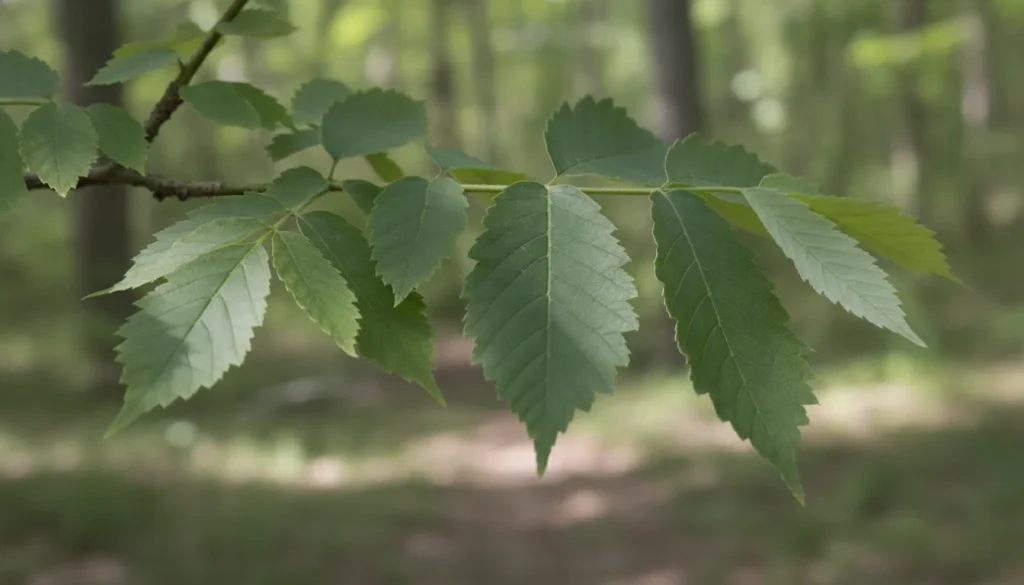
- Opposite, pinnately compound leaves, usually with three to seven leaflets
- Young twigs commonly green to purplish green and sometimes covered with a pale waxy bloom
- Paired, V-shaped winged seeds on female trees
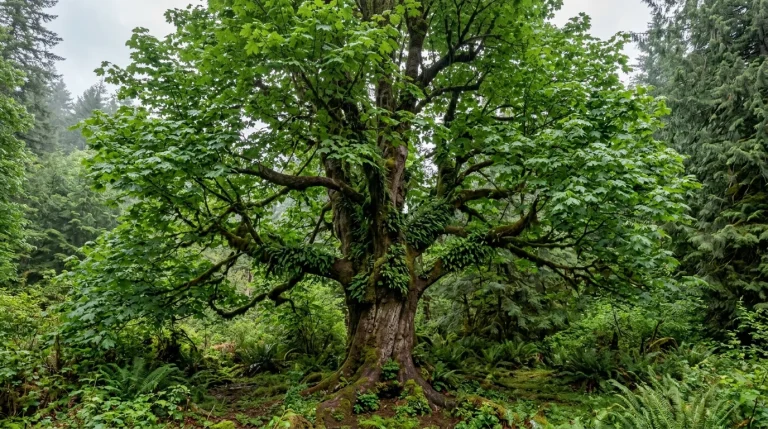
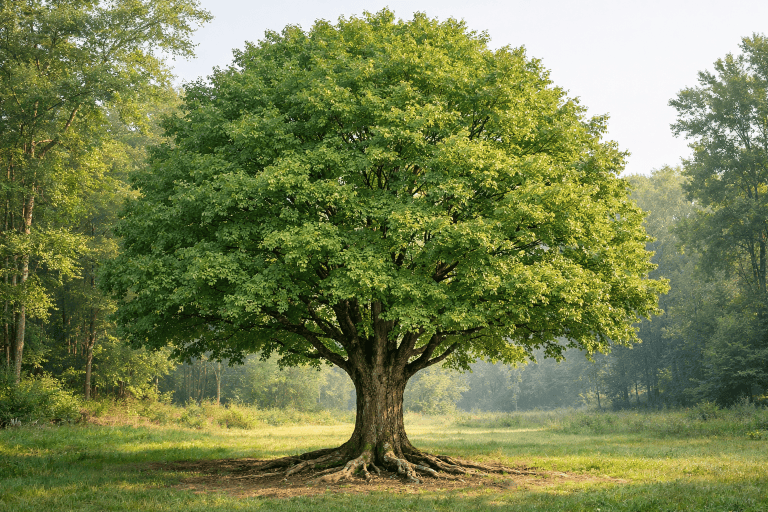
- Irregular, broad crown with multiple trunks or low, spreading limbs
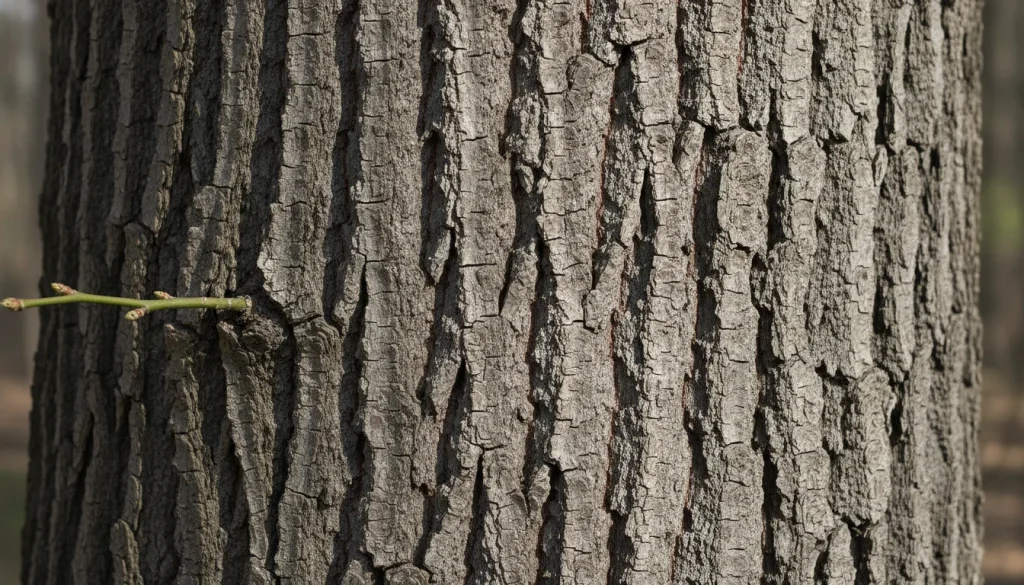
- Gray-brown bark divided into narrow, interlacing ridges on mature trunks
The best field mark is the combination of opposite branching and compound leaves. Boxelder is the only widespread North American maple that normally has pinnately compound foliage.
Appearance
Boxelder is usually a small to medium-sized tree, commonly reaching 30 to 50 feet tall with a crown of similar width. Trees on productive, moist sites may grow taller. Open-grown specimens often develop short trunks, low forks, and broad, irregular crowns. In crowded stands, the trunk may be straighter and the crown narrower.
The leaves are arranged opposite one another on the twig. Each leaf is compound and typically bears three to seven leaflets, though more may occur. Leaflets are generally 2 to 4 inches long, oval to lance-shaped, and coarsely toothed. Their form is variable: some are shallowly lobed, while others are nearly unlobed. The terminal leaflet is usually the largest and may have a short stalk.
Upper leaf surfaces are medium to bright green, while the undersides are paler. New leaves can have a reddish or bronze cast. Variegated horticultural forms exist, but wild trees normally have green foliage. Boxelder grows rapidly when young, often adding roughly 1 to 2 feet in height during a favorable year and sometimes more on rich, moist ground.
Bark, Twigs, and Buds
Young bark is smooth and gray to gray-brown. With age, it becomes furrowed and develops narrow, somewhat interlacing ridges. The ridges are less blocky than those of many mature ashes, although old boxelders can become deeply roughened near the base.
Current-season twigs are especially useful for identification. They are moderately stout, green, olive green, or purplish and often appear glossy or lightly coated with a whitish wax. Twigs may remain green through winter. The leaf scars meet or nearly meet around the twig, and the pith is pale and continuous.
Buds are opposite, small, and usually blunt or egg-shaped. They may be grayish, reddish, or covered with fine pale hairs. Opposite buds narrow the possibilities to maples, ashes, dogwoods, buckeyes, and a few other woody plants; the green twig and compound leaf strongly favor boxelder.
Flowers, Fruit, Nuts, or Cones
Boxelder usually has male and female flowers on separate trees, although occasional exceptions may occur. The flowers appear in early spring, generally before or as the leaves unfold. They lack showy petals and are pollinated mainly by wind.
Male flowers hang in clusters on slender stalks, with prominent reddish or yellowish anthers. Female flowers occur in drooping greenish clusters. Because only female trees normally produce abundant seeds, mature trees can look quite different in late summer and winter.
The fruit is a paired samara—the familiar winged “helicopter” fruit of maples. Each half contains one seed attached to an elongated wing. Boxelder samaras are commonly 1 to 1.5 inches long, and the two wings form a relatively narrow angle. They mature from late summer into autumn and turn tan as they dry. Many remain hanging in clusters well into winter, providing one of the easiest identification clues.

Range and Habitat
Boxelder is native across a broad portion of North America, from southern Canada through much of the contiguous United States and into Mexico. Its original limits are difficult to define in some regions because people have planted it widely, and it readily escapes cultivation.
In natural settings, boxelder is strongly associated with rivers, streams, floodplains, lakeshores, moist ravines, and low woods. It often occupies disturbed alluvial soil, recently deposited sediment, woodland edges, and sunlit openings. It tolerates periodic flooding but can also persist on considerably drier sites once established.
The species is common along fence lines, rail corridors, vacant lots, farmyards, roadsides, and other disturbed places. Its wind-carried seeds germinate readily on exposed soil. It grows in full sun or partial shade and accepts a wide range of soil textures, though growth is usually strongest in moist, fertile soil.

Wildlife Connections
Boxelder contributes seeds, buds, sap, foliage, and shelter to its surroundings. Squirrels and several seed-eating birds consume the samaras, particularly when other foods are limited. Deer and other browsing mammals may feed on twigs or young growth. Mature trees can provide nesting sites, cavities, and protective cover, especially along waterways where structural diversity is valuable.
Boxelder is also the primary host for boxelder bugs. These black-and-red insects feed mainly on developing seeds and other plant tissues, often gathering on female trees. They rarely injure a healthy tree, but they may become conspicuous around buildings when adults seek sheltered overwintering sites.
Like other native maples, boxelder supports a variety of leaf-feeding insects. Those insects can in turn become prey for birds and other wildlife. Its early flowers may offer pollen to some insects, although wind—not insects—is the tree’s main pollination agent.
Seasonal Identification
Spring: Look for dangling flower clusters before leaf-out, followed by opposite young leaves. Male flowers often show reddish anthers, while female clusters are greener and less conspicuous. New twigs may be vivid green or purplish.
Summer: Identify the tree by its opposite compound leaves with three to seven irregularly toothed leaflets. Female trees carry developing green samaras in hanging clusters. The crown often looks loose, uneven, and somewhat coarse.
Fall: Foliage usually changes to yellow, sometimes with muted orange tones, before dropping. Fall color is variable and generally less intense than that of red or sugar maple. The samaras turn tan and become more visible as the leaves fall.
Winter: Check for opposite buds, stout greenish twigs, and persistent clusters of paired samaras. Mature trees often show low forks, crooked limbs, and gray-brown ridged bark. Broken branches are common because the wood is relatively weak.

Human Uses and History
Boxelder was widely planted as a shade and shelterbelt tree, particularly in regions where rapid growth and tolerance of difficult conditions were valued. It can establish where slower-growing trees struggle, but its weak limbs, abundant seedlings, shorter lifespan than many larger maples, and attraction to boxelder bugs limit its modern use near buildings.
The sap contains sugar and can be boiled into syrup. Its sugar concentration is often lower than that of sugar maple, so more sap may be needed for a similar quantity of syrup. Indigenous peoples have used boxelder sap and wood in regionally varied ways; specific practices belong to distinct nations and should not be treated as a single universal tradition.
The wood is light, soft, and not particularly durable outdoors. People have used it for inexpensive woodenware, boxes, pulp, fuel, and small turned objects. Occasionally, reddish streaking caused by pigments associated with fungal activity creates a decorative figure prized by some woodworkers.
Conservation and Threats
Boxelder is widespread and is not generally considered at risk across its North American range. In fact, it can act as an aggressive colonizer in disturbed ground or outside its local historical range. Management goals therefore depend on context: it may be a useful native streamside tree in one location and an unwanted volunteer in another.
Individual trees may be affected by cankers, verticillium wilt, heart rot, borers, aphids, and other pests or diseases. Drought, compacted soil, and mechanical injury can increase stress. The most frequent practical concern is structural weakness. Narrow branch unions, multiple trunks, internal decay, and fast growth can make old trees prone to splitting in wind, snow, or ice.
Near homes and paths, mature specimens benefit from inspection by a qualified arborist. Removing hazardous limbs is different from removing every boxelder: sound trees in appropriate natural settings can provide shade, bank cover, wildlife habitat, and rapid revegetation.
Similar Species
Ashes (Fraxinus species): Ashes also have opposite, pinnately compound leaves. Their leaves more often have five to eleven leaflets of relatively consistent shape. Ash fruits are single, paddle-shaped samaras rather than paired maple samaras. Boxelder’s green or purplish twigs and frequently three-part leaves are useful distinctions.
Elderberries (Sambucus species): Elderberries have opposite compound leaves, but they are usually shrubs or small, multi-stemmed trees. Their leaflets are more regularly toothed, and they produce broad flower clusters followed by clusters of small berries rather than winged seeds.
Poison ivy (Toxicodendron radicans): A three-leaflet boxelder seedling is sometimes confused with poison ivy. Boxelder leaves occur in opposite pairs, while poison ivy leaves are alternate. Poison ivy is usually a vine or low shrub and may have aerial rootlets when climbing.
Other maples: Most native North American maples have simple, palmately lobed leaves. If a tree has opposite compound foliage and paired maple samaras, boxelder is the leading identification.

Interesting Facts
- Boxelder is a true maple despite having ash-like compound leaves.
- Female trees can retain large clusters of samaras through much of the winter.
- Branches may root where they contact moist soil, helping some trees spread locally.
- The species readily resprouts after cutting or injury, especially while young.
- Its rapid growth makes it an early occupant of flood deposits and disturbed streambanks.
- “Manitoba maple” is a widely used Canadian common name.
Frequently Asked Questions
How can I identify a boxelder quickly?
Look for opposite compound leaves, usually with three to seven leaflets, on a tree with greenish young twigs. Paired winged seeds confirm that it is a maple.
Is boxelder native to North America?
Yes. It is native across much of the continent, although planting and naturalization have extended or obscured its historical range in some areas.
Is boxelder the same as an ash tree?
No. Boxelder is a maple in the genus Acer. It resembles an ash because both can have opposite compound leaves, but boxelder produces paired maple samaras.
Are boxelder bugs harmful to the tree?
They usually cause little lasting damage. Large groups can be a household nuisance when they gather on sunny walls or enter buildings to overwinter.
Should I plant a boxelder near a house?
Usually not close to a building, driveway, or utility line. Its fast growth is useful in some settings, but weak branches, decay, volunteer seedlings, and a broad crown can create maintenance concerns.
How long does a boxelder live?
Many live about 60 to 75 years. Some survive for a century or more under favorable conditions, but decay and storm damage often shorten the lives of urban or structurally weak trees.